ARCs bolstering India's financial ecosystem, says DFS Secretary Nagaraju
Synopsis
At the ASREC logo launch in New Delhi, DFS Secretary M Nagaraju made the case that ARCs are no longer peripheral players — they are a structural pillar of India's financial system. With RBI opening ARCs to 100% FDI via the automatic route and FPIs now allowed in security receipts, the sector is being repositioned for a larger, better-capitalised role in resolving India's legacy stressed assets.
Key Takeaways
DFS Secretary M Nagaraju called ARCs a 'key pillar' of India's financial ecosystem at the ASREC logo launch in New Delhi on 18 May 2025 .
ARCs help banks clean up balance sheets through debt restructuring , security enforcement , and debt-to-equity conversions .
ARCs complement the Insolvency and Bankruptcy Code (IBC) by offering a faster alternative route for stressed asset resolution.
The sector faces challenges including limited capital , regulatory overlaps , prolonged litigation , and valuation mismatches .
The RBI has permitted up to 100% FDI in ARCs via the automatic route and allowed FPIs to invest in security receipts.
Union Bank of India and Bank of India were acknowledged as key partner institutions.
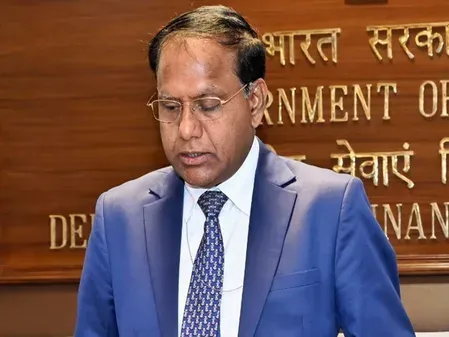
M Nagaraju, Secretary of the Department of Financial Services (DFS), on Monday, 18 May said that asset reconstruction companies (ARCs) have become a key pillar of India's financial ecosystem, helping banks and financial institutions resolve stressed assets efficiently and making the overall financial system stronger and more stable.
Nagaraju made these remarks while addressing an industry gathering at the ASREC logo launch event in New Delhi, where he outlined the sector's achievements, ongoing challenges, and the regulatory measures being taken to strengthen ARC operations.
Role of ARCs in Stabilising the Banking System
The DFS Secretary underscored that ARCs play a central role in acquiring non-performing assets (NPAs) from banks, thereby restoring confidence in the banking system. 'ARCs play a major role in acquiring non-performing assets from banks and restoring confidence in the banking system,' Nagaraju said.
He added that these institutions help banks clean up their balance sheets, improve liquidity, and redirect focus toward fresh lending — a critical driver of economic growth. The remarks signal the government's continued emphasis on resolving legacy stressed assets as a prerequisite for sustainable credit expansion.
Mechanisms and Complementarity with IBC
Nagaraju highlighted that ARCs offer multiple debt resolution mechanisms, including debt restructuring, enforcement of security interests, and debt-to-equity conversions. Importantly, he noted that ARCs complement the Insolvency and Bankruptcy Code (IBC) by providing an alternative — and often faster — route for resolving stressed assets, reducing pressure on already-stretched tribunals.
This complementarity is increasingly significant as the IBC ecosystem grapples with case backlogs, making ARC-led resolutions a practical parallel track for lenders seeking quicker outcomes.
Challenges Facing the ARC Sector
Nagaraju acknowledged that the sector continues to face headwinds. He cited limited capital availability, regulatory overlaps, prolonged litigation, and valuation mismatches between banks and ARCs as persistent challenges that delay recovery processes and reduce transaction opportunities.
These structural constraints have long been flagged by industry participants. Valuation gaps, in particular, have been a sticking point — banks are often reluctant to sell NPAs at the discounts ARCs require to make acquisitions viable.
Government and RBI Measures to Strengthen ARCs
On the policy front, Nagaraju said both the Government of India and the Reserve Bank of India (RBI) have taken several steps to build a more robust ARC ecosystem. Notably, the RBI has permitted up to 100 per cent foreign direct investment (FDI) in ARCs through the automatic route. Additionally, foreign portfolio investors (FPIs) have been allowed to invest in security receipts issued by ARCs, broadening the capital base available to the sector.
He also acknowledged the contributions of partner institutions, specifically citing Union Bank of India and Bank of India, for their support and cooperation in advancing the sector's objectives.
Broader Transformation of India's Financial Sector
Stepping back, Nagaraju noted that India's financial sector has undergone a major transformation in recent years, driven by continuous efforts toward transparency, accountability, and financial stability. 'The government and regulators have consistently acted in the national interest to address stressed assets and maintain financial discipline,' he stated.
He added that stronger institutional cooperation, improved regulatory frameworks, and better industry networks have positioned the ARC sector for sustained future growth. With FDI norms eased and FPI access expanded, the sector's next phase will depend on whether capital inflows translate into meaningful NPA resolution at scale.
Point of View
But the sector's structural problems — valuation mismatches, capital constraints, and litigation delays — have been on the table for years without a decisive fix. Allowing 100% FDI via the automatic route is a meaningful signal, yet foreign capital will only flow if exit certainty improves. The real question is whether the regulatory overlap between RBI, SEBI, and IBC tribunals gets rationalised — without that, ARCs remain a complementary mechanism rather than the primary resolution engine India needs them to be.
NationPress
3 Oct 2026
Frequently Asked Questions
What are asset reconstruction companies (ARCs) and what do they do?
Asset reconstruction companies are specialised financial entities that acquire non-performing assets (NPAs) from banks and financial institutions and work to resolve them through mechanisms such as debt restructuring, enforcement of security interests, and debt-to-equity conversions. They help banks clean up balance sheets and improve liquidity for fresh lending.
What did DFS Secretary M Nagaraju say about ARCs at the ASREC event?
Nagaraju said ARCs have emerged as a key pillar of India's financial ecosystem and play a major role in restoring confidence in the banking system by acquiring NPAs from banks. He also acknowledged ongoing challenges such as limited capital, regulatory overlaps, and valuation mismatches that delay recoveries.
How do ARCs complement the Insolvency and Bankruptcy Code (IBC)?
ARCs offer an alternative and often faster route for resolving stressed assets outside the IBC framework, reducing the burden on tribunals already dealing with case backlogs. This makes them a parallel track for lenders seeking quicker resolution outcomes.
What regulatory measures has the RBI taken to strengthen ARCs?
The RBI has allowed up to 100% foreign direct investment in ARCs through the automatic route and has permitted foreign portfolio investors to invest in security receipts issued by ARCs, broadening the sector's capital base.
What challenges does the ARC sector still face in India?
The ARC sector faces limited capital availability, regulatory overlaps, prolonged litigation, and valuation mismatches between banks and ARCs. These issues delay recovery processes and reduce transaction opportunities, according to DFS Secretary Nagaraju.