How is the Ayush Ministry Elevating Indian Traditional Medicines to the Global Arena?
Click to start listening
Synopsis
In a significant move, the Ayush Ministry is forging international partnerships, establishing academic chairs, and promoting traditional medicines globally. This initiative not only showcases India's rich heritage but also aims to integrate traditional medicine into international health strategies.
Key Takeaways
- 25 bilateral MoUs for cooperation in Traditional Medicine.
- 15 agreements for establishing Ayush Academic Chairs abroad.
- 52 collaborative research agreements with international institutes.
- 43 Ayush Information Cells set up in 39 countries.
- Collaboration with WHO for a Global Traditional Medicine Centre.
New Delhi, Dec 28 (NationPress) The Ministry of Ayush has finalized 25 bilateral agreements for collaboration in the realm of Traditional Medicine and homeopathy. Additionally, it has established 15 agreements with international institutions to create Ayush Academic Chairs in various countries. Furthermore, 52 institute-to-institute agreements have been made to promote collaborative research and academic partnerships. The ministry has also facilitated the establishment of 43 Ayush Information Cells across 39 nations, aimed at enhancing the global presence of Ayush.
In a recent statement, the ministry highlighted the development of a Central Sector Scheme designed to bolster international cooperation in Ayush.
The ministry actively supports Indian Ayush product manufacturers and service providers to enhance the export of Ayush products and services, while also promoting global recognition and development of the Ayush medicinal system.
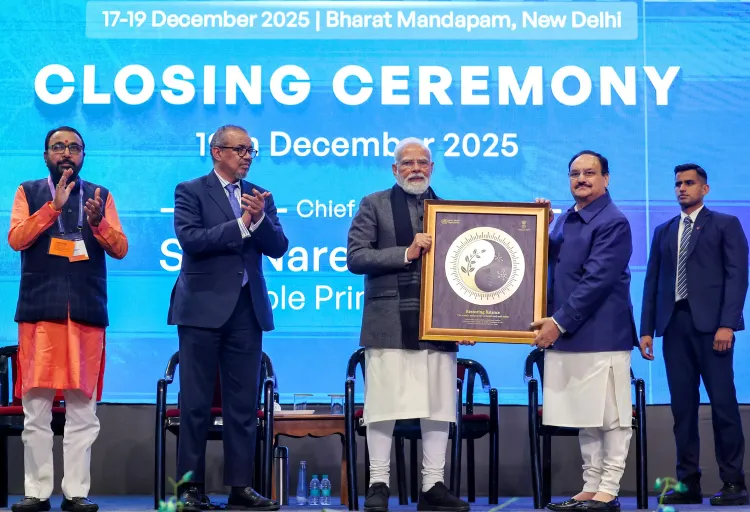
A significant agreement was signed between the Ayush Ministry and the WHO to set up the WHO-Global Traditional Medicine Centre in Jamnagar, Gujarat.
This center is intended to assist in implementing the WHO's traditional medicine strategy (2014-23) and will aid countries in formulating policies and action plans to integrate traditional medicine into their goals for universal health coverage.
An agreement was also executed on May 24, 2025, between the Ayush Ministry and the WHO to develop Traditional Medicine intervention categories and an index for the International Classification of Health Interventions (ICHI), focusing on the holistic approach towards Ayurveda, Siddha, and Unani.
This agreement signals the commencement of the development of a dedicated Traditional Medicine module under ICHI, aligning with India’s objective of integrating its rich traditional knowledge into the global healthcare framework, supported by scientific classification and international standards, according to the ministry.
Point of View
It is essential to recognize the Ayush Ministry's efforts to elevate Indian traditional medicine on a global platform. This initiative not only reflects India's commitment to its rich heritage but also addresses the increasing global interest in alternative healthcare systems. By fostering international collaborations, India is taking significant steps toward mainstreaming traditional medicine.
NationPress
03/01/2026
Frequently Asked Questions
What is the purpose of the MoUs signed by the Ayush Ministry?
The MoUs aim to foster cooperation in Traditional Medicine and establish academic chairs abroad, enhancing the global reach of Indian traditional health systems.
What role does the WHO play in these initiatives?
The WHO collaborates with the Ayush Ministry to set up the Global Traditional Medicine Centre, supporting the integration of traditional medicine into health policies worldwide.
How does the Ayush Ministry support Indian manufacturers?
The ministry provides assistance to Indian Ayush product manufacturers to boost exports and facilitate international recognition of the Ayush system.
What is the significance of the Ayush Information Cells?
These cells are crucial for promoting and disseminating knowledge about Ayush in foreign nations, enhancing its global presence.
How does this initiative align with India's healthcare goals?
This initiative aims to integrate traditional medicine into universal health coverage, emphasizing the importance of diverse healthcare systems.