Bihar CM Choudhary targets 1 crore jobs by 2030, backs local products in govt procurement
Synopsis
Bihar CM Samrat Choudhary is betting big on homegrown enterprise: a 25% purchase preference for Bihar-made products, relaxed tender rules for local firms, and ₹3,500 crore committed under the Mukhyamantri Udyami Yojana — all pointed at a one-crore-jobs-by-2030 target that doubles as Bihar's most direct answer yet to its chronic out-migration problem.
Key Takeaways
Bihar CM Samrat Choudhary announced a one crore employment target by 2030 at an event in Patna on 8 October 2026 .
A 25% purchase-preference for qualifying Bihar-made products has been introduced in government procurement.
For government tenders up to ₹50 crore , Bihar-based entrepreneurs ranked L2–L4 can win contracts by matching the L1 rate .
Around ₹3,500 crore is earmarked for the initiative; 7,000 beneficiaries received financial assistance instalments at the event.
The Mukhyamantri Udyami Yojana provides up to ₹10 lakh per beneficiary — ₹5 lakh as grant and ₹5 lakh as loan — covering SC, ST, EBC, women, youth, and minority communities.
If 44,000 entrepreneurs each employ five people, the scheme could directly generate 2.2 lakh jobs , with the total rising as the programme scales.
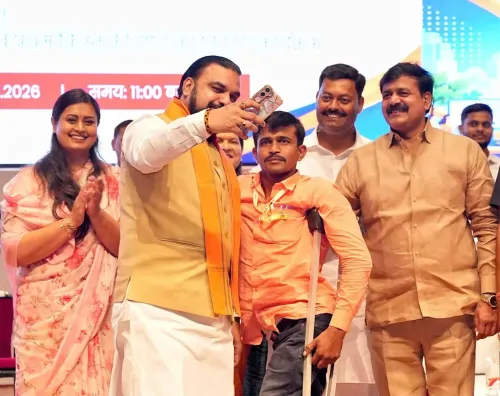
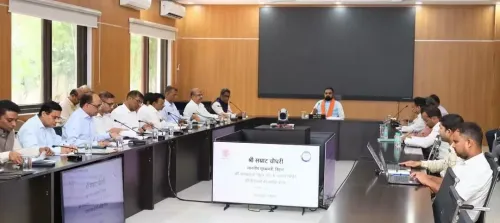
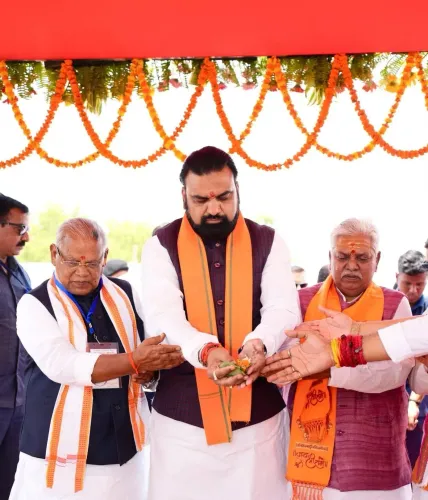
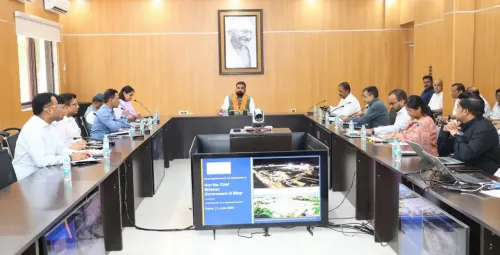
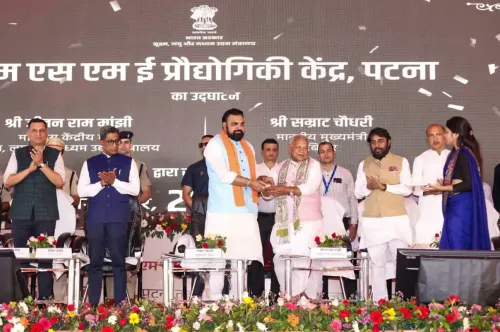
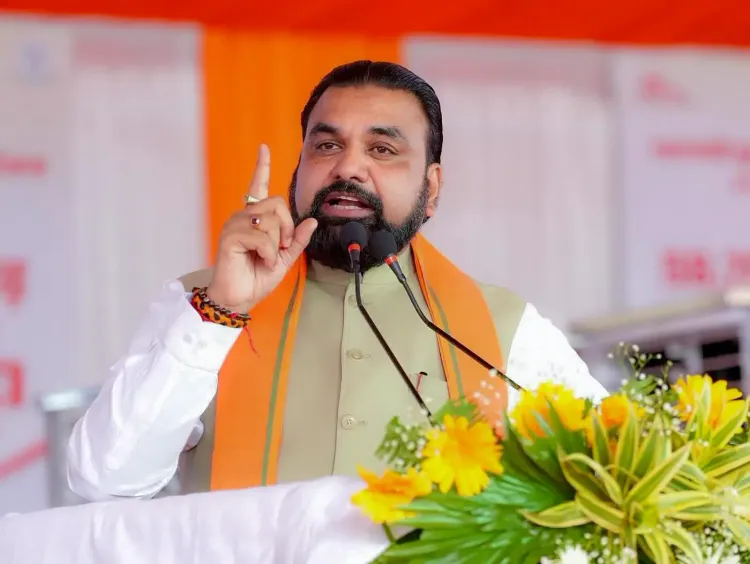
Bihar Chief Minister Samrat Choudhary on 8 October 2026 unveiled a sweeping set of measures to boost entrepreneurship, local manufacturing, and employment across the state, with a stated goal of generating livelihood opportunities for one crore people by 2030. The announcements were made at Bapu Sabhagar in Patna during an orientation programme for beneficiaries of the Mukhyamantri Udyami Yojana.
Purchase Preference for Bihar-Made Products
The most significant policy shift announced was the introduction of a purchase-preference mechanism under which products manufactured in Bihar and meeting prescribed quality standards will receive priority in government procurement. According to reports, qualifying products from Bihar-based industries will receive an assured procurement share of 25%, provided they meet the prescribed standards.
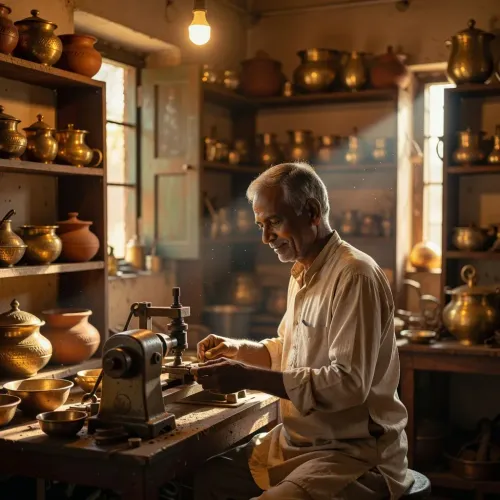
Choudhary underscored the intent behind the move: the government wants production to happen within Bihar rather than having entrepreneurs manufacture goods elsewhere and merely sell them in the state. Bicycles were cited as one example of goods that should ideally be produced locally. The policy is designed to use public spending as a lever to build a stable market for local industries.
Easing of Tender Norms for Local Entrepreneurs
Choudhary also announced changes to government tender rules aimed at widening participation by Bihar-based businesses. Under the revised framework, for government tenders valued at up to ₹50 crore, a Bihar-based entrepreneur ranked L2, L3, or L4 may be awarded the contract if they agree to execute it at the L1 rate. The objective, as stated by the Chief Minister, is to ensure local enterprises are not systematically edged out by lower bids from outstation firms.
Mukhyamantri Udyami Yojana: Scale and Coverage
The government is currently preparing approximately 45,000 new entrepreneurs under its entrepreneurship initiatives. During the orientation programme, around 7,000 beneficiaries received the first or subsequent instalments of financial assistance. The government has earmarked roughly ₹3,500 crore for the initiative overall.
Under the Mukhyamantri Udyami Yojana, eligible beneficiaries can receive up to ₹10 lakh to set up an enterprise — comprising up to ₹5 lakh as a grant or subsidy and up to ₹5 lakh as a loan, subject to scheme category and conditions. The scheme covers beneficiaries from Scheduled Castes, Scheduled Tribes, Extremely Backward Classes, women, youth, and minority communities.
Jobs Arithmetic and Migration Concern
Choudhary laid out a direct calculation: if around 44,000 entrepreneurs each employ an average of five people, the initiative could generate roughly 2.2 lakh direct jobs — a figure that would climb further as the programme expands. The broader one-crore employment target by 2030 encompasses both government jobs and private-sector opportunities.
The Chief Minister acknowledged that migration driven by lack of livelihoods remains a central challenge for Bihar. The scheme is explicitly framed as a way to retain talent within the state by creating enterprises and employment locally rather than exporting labour to other parts of the country.
GeM Linkage and What Comes Next
Choudhary also encouraged entrepreneurs to list their products on the Government e-Marketplace (GeM), viewing public procurement platforms as a ready-made distribution channel for Bihar-based manufacturers. The government believes linking local producers to GeM can provide a stable, recurring market while incentivising investment and production within the state.
With ₹3,500 crore committed and tens of thousands of entrepreneurs in the pipeline, the initiative's success will ultimately depend on how consistently the procurement preferences are enforced and whether quality standards can be met at scale — the two variables that have historically determined whether state-level MSME pushes translate into durable employment or remain headline targets.
Point of View
A model that worked in pockets of South India and is increasingly being replicated at the state level. The credibility test, however, lies in enforcement: procurement preferences on paper have historically been diluted by quality disputes and procedural workarounds. Bihar's one-crore-jobs target also carries the weight of the state's long migration history — if MSMEs absorb even a fraction of the annual outflow of working-age adults, the demographic dividend could compound. But the 2.2-lakh direct-jobs projection from 44,000 entrepreneurs hinges on each sustaining five employees, an assumption that demands close monitoring rather than periodic headline announcements.
NationPress
8 Oct 2026
Frequently Asked Questions
What is the Mukhyamantri Udyami Yojana in Bihar?
The Mukhyamantri Udyami Yojana is a Bihar government scheme that provides up to ₹10 lakh in financial assistance to eligible entrepreneurs — ₹5 lakh as a grant or subsidy and ₹5 lakh as a loan. It targets beneficiaries from Scheduled Castes, Scheduled Tribes, Extremely Backward Classes, women, youth, and minority communities.
What is Bihar's 25% purchase preference for local products?
Under the new policy announced by CM Samrat Choudhary, the Bihar government will reserve an assured 25% share of qualifying procurement for products manufactured within Bihar that meet prescribed quality standards. The aim is to create a stable government-backed market for local industries.
How do the revised tender rules benefit Bihar-based entrepreneurs?
For government tenders valued at up to ₹50 crore, a Bihar-based entrepreneur ranked L2, L3, or L4 can be awarded the contract if they agree to execute it at the lowest-quoted L1 rate. This prevents local firms from being systematically outbid by lower quotes from outstation competitors.
What is Bihar's one crore jobs target by 2030?
Bihar CM Samrat Choudhary has set a broader target of providing government jobs and employment opportunities to one crore people by 2030, combining direct government employment with private-sector jobs generated through MSME expansion and entrepreneurship schemes.
How much money has Bihar committed to its entrepreneurship initiative?
The Bihar government has earmarked approximately ₹3,500 crore for its entrepreneurship initiative. Around 45,000 new entrepreneurs are being prepared under the programme, and about 7,000 beneficiaries received financial assistance instalments at the Patna event on 8 October 2026.