CM Samrat Choudhary Pushes MSME Growth as Bihar's Economic Spine
Synopsis
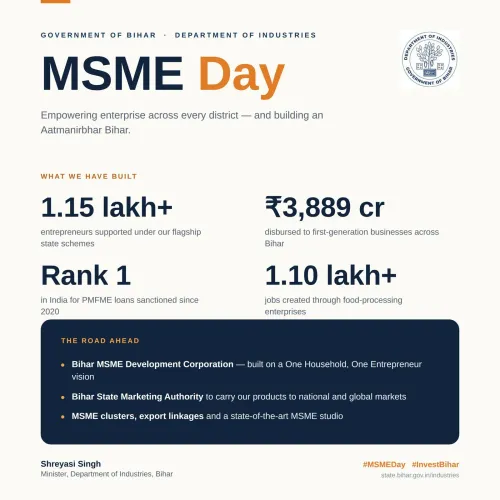
Bihar CM Samrat Choudhary on October 9, 2026 reaffirmed his government's focus on MSME promotion, arguing that empowering entrepreneurs from all social sections is the cornerstone of Bihar's economic rise.
Key Takeaways
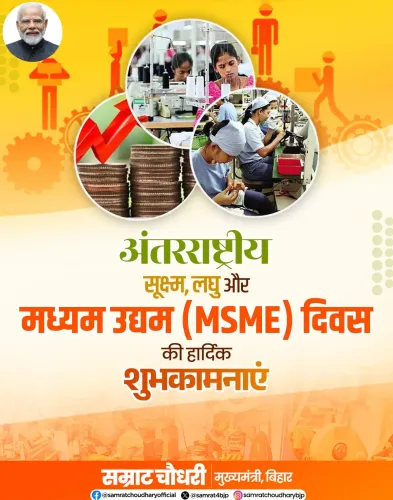
Bihar Chief Minister Samrat Choudhary posted on X on October 9, 2026 , reaffirming the state's commitment to MSME sector growth.
He stated that encouraging entrepreneurs from 'every section of society' is the government's top priority.
The CM linked MSME empowerment directly to Bihar's broader economic strength and development trajectory.
His language emphasised continuity — 'continuously working' — framing this as sustained policy, not a one-time push.
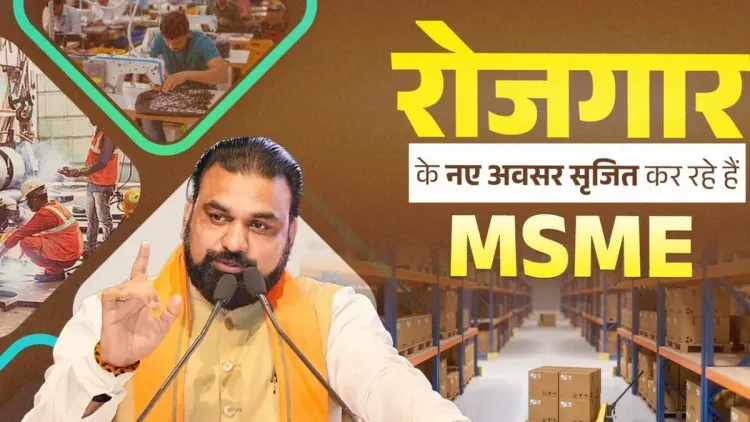
The post carried an accompanying video, suggesting an active outreach campaign around the MSME agenda.
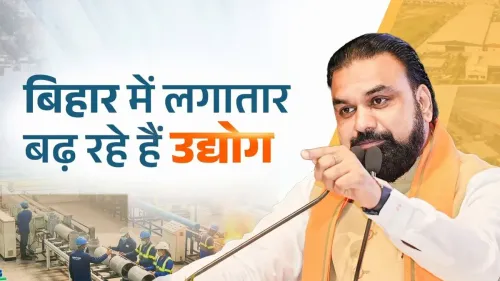
Bihar's engine of enterprise is being tuned from the top. Bihar Chief Minister Samrat Choudhary on Friday, October 9, 2026, declared that empowering entrepreneurs from every section of society is the state government's primary mission — and that a strong MSME sector is the surest road to Bihar's economic transformation.
Posting in Hindi on X, CM Choudhary put it plainly: 'जब उद्यम सशक्त होंगे, तभी प्रदेश की आर्थिक शक्ति मजबूत होगी' — 'When enterprises are empowered, only then will the state's economic strength be strengthened.' The message is unambiguous: Bihar's development trajectory runs directly through its small and medium businesses.
Why MSME Bets Pay Off for a State Like Bihar
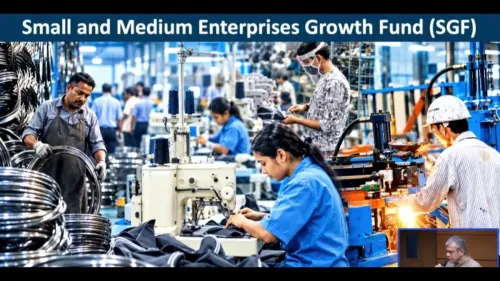
Bihar has long carried one of India's highest labour-surplus profiles — a large working-age population with historically limited local employment options, pushing millions into seasonal migration to other states. MSMEs, by nature, are the most efficient job-creation machines in such a setting: low capital intensity, high labour absorption, and roots in local supply chains. A government that bets on MSMEs is, in effect, betting on keeping workers home and building wealth locally.
CM Choudhary's framing goes a step further. By explicitly naming 'entrepreneurs from every section of society' — समाज के हर वर्ग से आने वाले उद्यमियों — he signals an inclusive enterprise push, one that cuts across caste, class, and geography. That phrase carries political as well as economic weight in a state as socially layered as Bihar.
The Stakes Behind the Slogan
The commitment to 'continuously working' — निरंतर काम कर रहे हैं — on MSME promotion sets this up not as a one-off announcement but as an ongoing policy posture. For Bihar's entrepreneurial class, that continuity matters: small businesses thrive or wither on the reliability of government support, from credit linkages and infrastructure to ease-of-registration and market access.
Whether through dedicated MSME parks, preferential procurement, or skilling pipelines, the direction is clear: Patna wants Bihar's economic story rewritten by its own entrepreneurs, not just by the remittances its migrants send back. That ambition, if backed by on-ground execution, could mark a genuine inflection point for a state long defined by what it sends out rather than what it builds within.
Point of View
The CM also addresses a political imperative: broadening the party's base among aspirational OBC and marginalised communities who increasingly see business ownership as upward mobility. The real test will be whether ground-level policy infrastructure — credit access, industrial land, skilling — keeps pace with the rhetoric.
NationPress
9 Oct 2026
Frequently Asked Questions
What did Bihar CM Samrat Choudhary say about MSMEs?
CM Samrat Choudhary said on October 9, 2026 that his government is continuously working to advance new entrepreneurs in Bihar through the MSME sector, calling enterprise empowerment the foundation of the state's economic strength.
Why is MSME development important for Bihar?
Bihar has a large labour-surplus population with limited local employment; MSMEs create jobs with lower capital investment, helping retain workers within the state and build local economic wealth.
Who is Samrat Choudhary?
Samrat Choudhary is the Chief Minister of Bihar and a senior leader of the Bharatiya Janata Party (BJP).
What does Bihar's MSME policy focus on?
According to CM Choudhary's statement, the focus is on encouraging entrepreneurs from all sections of society and providing them better opportunities — not limiting support to any particular group or region.
What is the connection between MSMEs and Bihar's economic growth?
CM Choudhary directly linked MSME strength to state economic power, stating: 'When enterprises are empowered, only then will the state's economic strength be strengthened and Bihar will move rapidly towards new heights of development.'