CM Samrat Choudhary Pushes Bihar Industrial Growth Agenda
Synopsis
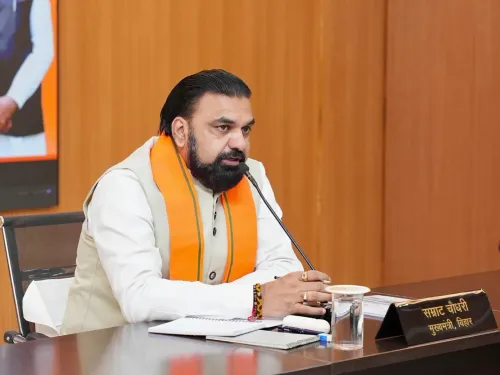
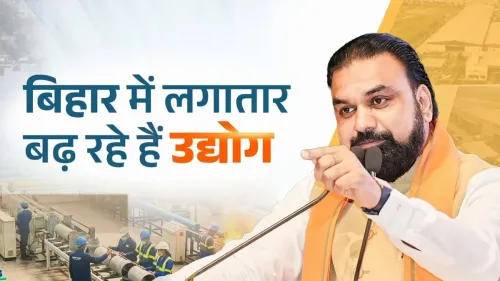
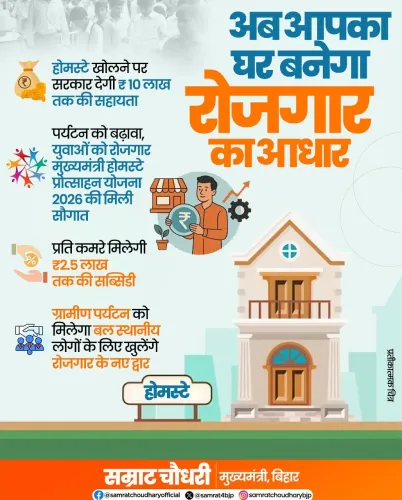
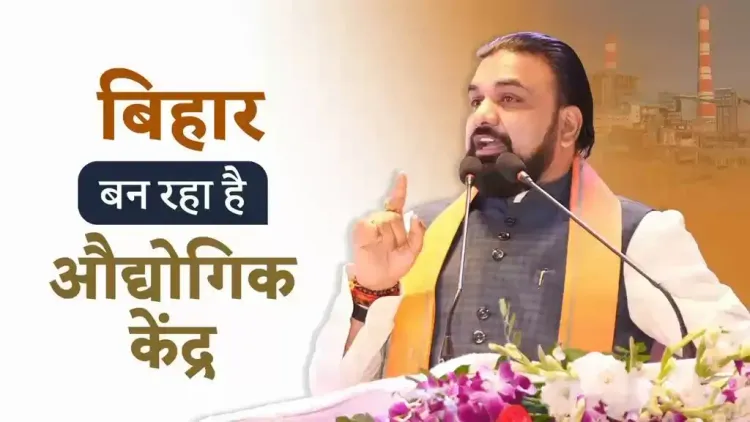
Bihar Chief Minister Samrat Choudhary has publicly reaffirmed his government's industrial expansion agenda, citing multiple policy initiatives aimed at attracting investment, establishing new industries, and generating employment for Bihar's youth under the #NewBihar vision.
Key Takeaways
Bihar CM Samrat Choudhary posted on October 25, 2026 reaffirming the state's industrial expansion push under #NewBihar .
The government's stated goals are attracting investment, establishing new industries, and creating youth employment.
The post frames Bihar's long-term ambition as becoming a recognised industrial hub , moving beyond its agrarian identity.
Youth employment is explicitly cited as a primary objective of industrial development policy.
No specific scheme names, fiscal figures, or project timelines were detailed in the post.
Watch for upcoming investment summits or specific incentive announcements as concrete follow-through.
Bihar's push to shed its agrarian-only identity just got another public signal. Bihar Chief Minister Samrat Choudhary took to X on Sunday, October 25, 2026, reaffirming the state government's drive to attract investment, seed new industries, and carve out employment for Bihar's youth under the banner of #NewBihar.
In his post, Choudhary wrote: 'Several policy initiatives have been taken for the expansion of industries in Bihar. The government's goal is to promote investment in the state, establish new industries, and create employment opportunities for the youth. Efforts are ongoing to establish Bihar as an industrial hub.' The message is brief — but the ambition it sketches is anything but small.
From Farms to Factories: Bihar's Long Industrial Deficit
Bihar has long ranked among India's most agrarian states, its economy tethered to agricultural output and vulnerable to monsoon cycles. For decades, every administration has acknowledged the same structural gap: too few industrial jobs, too many young people leaving the state for work in Gujarat, Maharashtra, or Delhi. Choudhary's post signals that closing that gap remains the defining political and economic project of his tenure.
State governments in India typically compete for private capital through a mix of fiscal incentives — land subsidies, tax holidays, power tariff concessions — and administrative reforms such as single-window clearance systems that promise faster approvals. Bihar has deployed versions of these tools in previous industrial policy cycles, with varying results.
Youth Employment as the Central Metric
The explicit mention of youth employment is deliberate framing. Bihar's demographic profile — a young, large population — makes job creation a political imperative as much as an economic one. The state has repeatedly used investment summits and sector-specific incentive packages to signal readiness to domestic and foreign investors. What the latest round of 'policy initiatives' involves in specific terms — named schemes, fiscal outlays, targeted sectors — was not detailed in the post, and no verified specifics are available at this stage.
What is clear is the direction: Choudhary is publicly anchoring his government's identity to industrialisation, positioning Naya Bihar ('New Bihar') as a state in transformation rather than stasis.
The Investment Summit Question
Observers watching Bihar's industrial trajectory will be looking for concrete follow-through: investment summits, project groundbreakings, or specific incentive announcements that translate the CM's messaging into measurable commitments. The pattern of public signalling followed by formal policy events is well established in Indian state politics — the real test is always in the rollout. Bihar's ability to compete with more industrially mature states for manufacturing investment will ultimately rest on infrastructure, logistics connectivity, and the speed of on-the-ground implementation.
Point of View
Industrial development doubles as electoral currency: a state that has historically exported labour rather than manufactured goods is fertile ground for a 'transformation' message. The #NewBihar hashtag functions as a brand, not just a slogan, tying individual announcements to a larger identity project. The harder question — whether policy intent translates into factory floors and payroll — will define Choudhary's legacy and the BJP's pitch in the state's next electoral cycle.
NationPress
25 Oct 2026
Frequently Asked Questions
What is Bihar CM Samrat Choudhary's plan for industrial development?
Choudhary has stated that the Bihar government is pursuing multiple policy initiatives to attract investment, set up new industries, and create employment opportunities for youth, with the goal of establishing Bihar as an industrial hub.
Why is industrial development important for Bihar?
Bihar has historically been one of India's most agrarian states with limited industrial output. Industrial growth is seen as essential to creating jobs locally, reducing out-migration of youth, and diversifying the economy beyond farming.
What kind of industries is Bihar trying to attract?
The post does not specify particular sectors. Generally, Bihar's industrial policy has targeted manufacturing, agro-processing, and infrastructure-linked industries, supported by incentives like single-window clearance and fiscal concessions.
Who is Samrat Choudhary?
Samrat Choudhary is the Chief Minister of Bihar and a senior leader of the Bharatiya Janata Party (BJP).