CM Dhami: Drug Fight Is Society's Shared Duty, Not Just Police
Synopsis
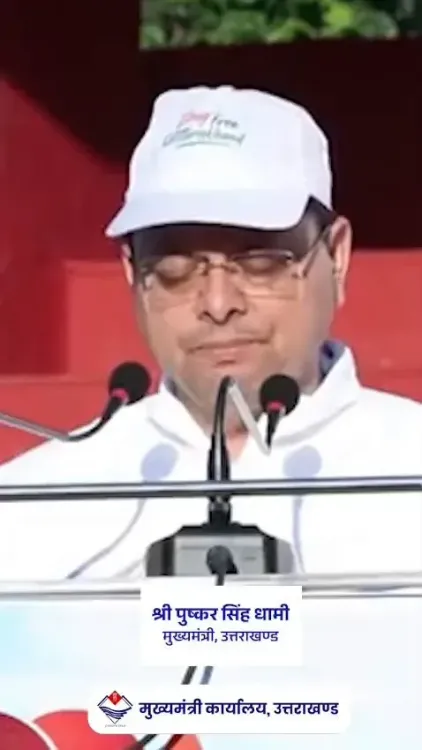
Chief Minister Pushkar Singh Dhami called the fight against drugs a shared societal responsibility, not just a government or police task, reinforcing Uttarakhand's Nasha Mukt Uttarakhand campaign on 25 October 2026.
Key Takeaways
CM Pushkar Singh Dhami stated on 25 October 2026 that combating drugs is every citizen's shared responsibility, not only the government's or police's.
The statement is linked to the ongoing Nasha Mukt Uttarakhand state campaign combining enforcement, awareness, and community participation.
It mirrors the national Nasha Mukt Bharat Abhiyan launched in 2020 , which mainstreamed civil society into anti-drug efforts.
Dehradun , the state capital, was specifically tagged, indicating focus at the state's administrative and urban centre.
The framing signals a possible next phase involving district-level committees or NGO-led outreach under the existing campaign.
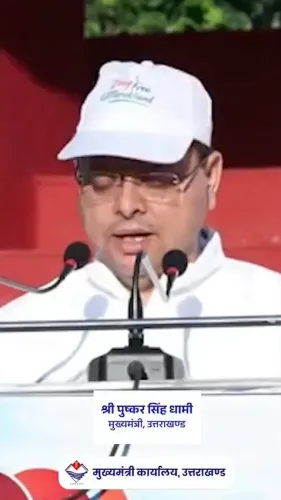
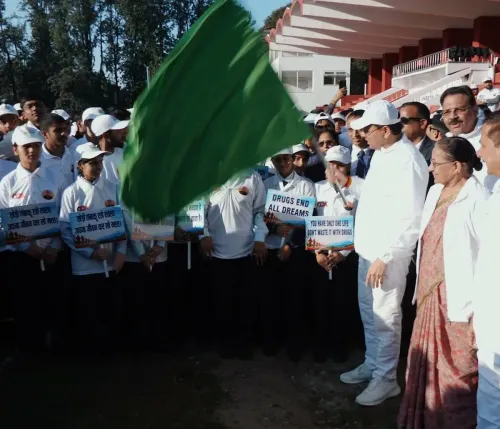
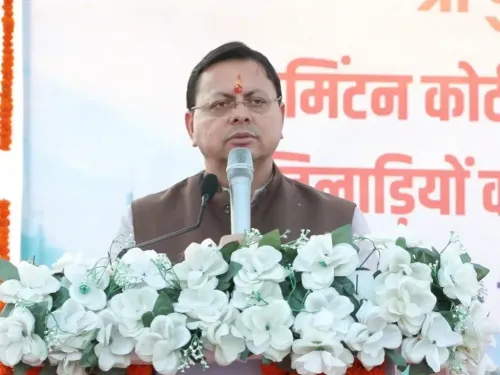
The war on drugs in Uttarakhand just got a wider call to arms. Chief Minister Pushkar Singh Dhami on Sunday, 25 October 2026, declared that fighting narcotics is not the sole responsibility of the government or the police — it is a shared obligation of the entire society, sharpening the state's appeal for civilian ownership of the Nasha Mukt Uttarakhand campaign.
What Dhami Said — and Why It Matters
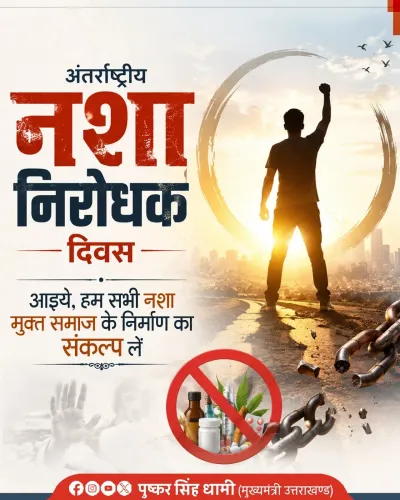
Speaking through the Chief Minister's Office, Dhami stated: 'Nashe ke khilaf ladai keval sarkar aur police ki hi nahin hai, balki poore samaj ki saajha jimmedari hai' — 'The fight against drugs is not only the responsibility of the government and the police, but the shared responsibility of the entire society.' The framing is deliberate: enforcement alone cannot win this battle. Communities must.
The remarks were tagged #DrugFreeUttarakhand and #NashaMuktUttarakhand, hashtags that have anchored the state's ongoing anti-narcotics branding. Dehradun, the state capital, was explicitly cited in the post, signalling that the campaign's urgency is felt at the administrative heart of the state.
Nasha Mukt Uttarakhand — The Campaign Behind the Call
The appeal draws on an established policy architecture. The Nasha Mukt Uttarakhand initiative has run as a state-level drive combining awareness, enforcement, and community mobilisation. It mirrors the national Nasha Mukt Bharat Abhiyan, launched in 2020, which was designed to bring civil society, educational institutions, and local bodies into the anti-drug fold alongside law-enforcement machinery.
Uttarakhand's geography adds a particular edge to the challenge: the state sits along routes that have historically seen transit of contraband, and urban centres like Dehradun have faced growing concerns around youth consumption. Community-level intervention — parents, teachers, neighbourhood networks — becomes essential precisely because police cannot be present everywhere.
The Push Toward Civilian Ownership
Across Indian states, the anti-narcotics framing has shifted. The older model — enforcement-first, police-led — is giving way to one that places civil society at the centre. Dhami's statement is a textbook example of that shift: the government names the problem, sets the campaign banner, but explicitly hands moral responsibility to citizens.
What follows this kind of statement, in the pattern seen in other states, is often the formation of district-level awareness committees, NGO partnerships, and school-college outreach drives. Whether Uttarakhand formalises such structures under the existing campaign framework is the next move to watch.
If the state means what its Chief Minister said, the next phase of Nasha Mukt Uttarakhand will be measured not in arrests, but in neighbourhoods that choose to act.
Point of View
The government insulates itself from being judged solely on enforcement outcomes. This is a well-worn playbook in Indian governance — frame a hard problem as a community compact, then measure success in participation rather than crime statistics. For Uttarakhand specifically, with its transit geography and growing urban youth population, the shift toward civilian-led vigilance fills a genuine operational gap that policing alone cannot. The sharper question is whether the campaign moves beyond hashtags into funded, structured community institutions — or remains principally a communications exercise.
NationPress
25 Oct 2026
Frequently Asked Questions
What is the Nasha Mukt Uttarakhand campaign?
Nasha Mukt Uttarakhand is an ongoing state government initiative in Uttarakhand aimed at creating a drug-free society through a combination of law enforcement, public awareness drives, and community participation.
What did CM Pushkar Singh Dhami say about drugs?
CM Dhami stated that the fight against drugs is not solely the responsibility of the government and police but is the shared responsibility of the entire society.
What is Nasha Mukt Bharat Abhiyan?
Nasha Mukt Bharat Abhiyan is a national campaign launched in 2020 to mobilise communities, educational institutions, and civil society groups alongside enforcement agencies to combat drug abuse across India.
Why is drug abuse a concern in Uttarakhand?
Uttarakhand's geography along transit routes has historically posed challenges related to the movement of contraband, while urban centres like Dehradun have seen rising concerns around substance use among youth.
What could follow CM Dhami's drug-free society appeal?
Based on the pattern seen in similar state campaigns, the next steps could include formation of district-level awareness committees, partnerships with NGOs, and outreach programmes in schools and colleges under the existing Nasha Mukt Uttarakhand framework.