CM Samrat Choudhary Reviews Bihar Industries Dept, Pushes Land Acquisition

Synopsis
Bihar Chief Minister Samrat Choudhary chaired an Industries Department review at Lok Sevak Avas on 16 October 2026, directing officials to accelerate land acquisition, ensure timely landowner payments, and strengthen the state's investment climate under the Viksit Bharat framework.
Key Takeaways
Bihar CM Samrat Choudhary held an Industries Department review meeting at Lok Sevak Avas on 16 October 2026 .
Directives issued to accelerate land acquisition for industrial projects across the state.
Timely compensation to landowners placed as an explicit priority to reduce project delays.
Meeting aligns with the central government's Viksit Bharat vision targeting industrial expansion in eastern India by 2047 .
Bihar has pursued industrial investment policies since 2016 to improve ease of doing business and attract manufacturing units.
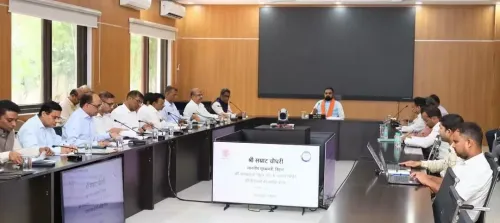
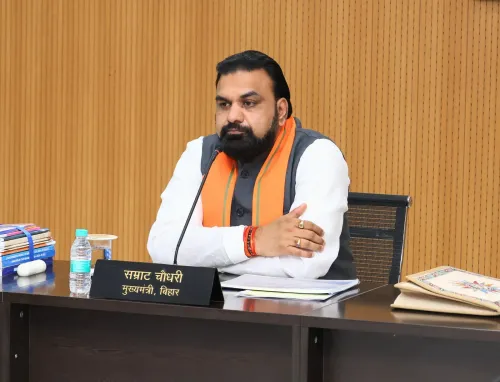
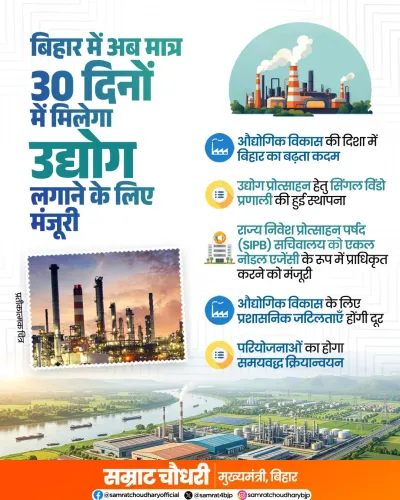
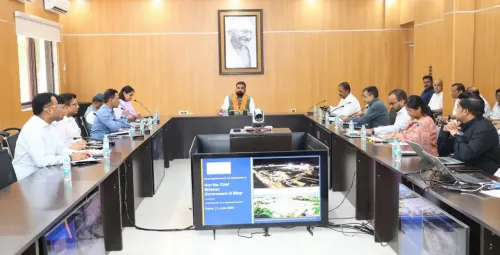
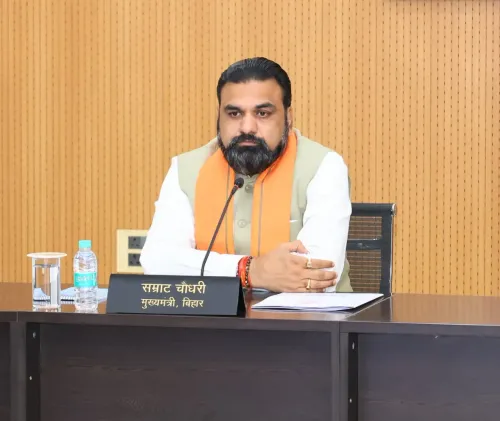
Land bottlenecks have long been Bihar's Achilles heel for industrial investment — and on Friday, 16 October 2026, Bihar Chief Minister Samrat Choudhary moved to change that calculus. Chairing a review meeting of the Industries Department at the Sankalp Sabhagar (Resolution Hall) within his official Lok Sevak Avas residence, he issued pointed directives to accelerate land acquisition, ensure timely compensation to landowners, and sharpen Bihar's pitch for fresh investment.
Posting on X with the hashtags #SamridhBihar, #IndustrialGrowth, #InvestInBihar, and #ViksitBharat, the Chief Minister framed the session around three clear mandates: faster land acquisition, on-time payment to land-givers (jameendaaron ko samay par bhugtan), and a stronger environment for investment across the state.The Land Acquisition Knot Bihar Has Struggled to Untie
Bihar's industrial ambitions have, for years, run headlong into the same wall: delays in acquiring land for project sites. Successive administrations since the Bihar Industrial Investment Promotion Policy of 2016 have tried to streamline clearances, but private investors — particularly in manufacturing — have repeatedly cited land uncertainty as a deal-breaker. By convening a department-level review and placing compensation timelines at the top of the agenda, CM Choudhary is directly targeting the friction point that has cost the state jobs and GSDP growth.
The logic is straightforward: an investor who sees a clear, time-bound land handover — and a landowner who receives compensation without bureaucratic delay — both have reason to trust the system. That trust, more than any single policy, is what converts an investor summit pledge into a factory on the ground.
Bihar's Industrial Push and the Viksit Bharat Frame
The meeting sits squarely within the national Viksit Bharat vision — the central government's roadmap for a developed India by 2047 — which explicitly banks on expanding manufacturing and infrastructure across eastern India. Bihar, as one of the most populous states in the east, carries outsized weight in that equation. Faster project facilitation at the state level directly feeds national employment and output targets.
The Industries Department Bihar is the nodal body responsible for translating these policy ambitions into ground-level action — from approving industrial zones to shepherding investor proposals through clearance pipelines. A CM-chaired review signals that execution, not just policy framing, is now under the highest-level scrutiny.
What happens next will matter: whether the directives issued in the Sankalp Sabhagar produce measurable timelines, published compensation disbursement data, or a follow-up investor conclave will determine whether Friday's meeting is a milestone or a memo.
Point of View
Not merely an administrative inconvenience. By tying landowner compensation to investment attraction in a single directive, he is attempting to square a historically difficult circle: appeasing communities who lose land while simultaneously reassuring corporates who need it. The Viksit Bharat framing gives this state-level push a national legitimacy hook that BJP governments have increasingly leaned on to present local governance moves as part of a larger civilisational project. The proof of intent will come in whether the Industries Department publishes measurable timelines and disbursement data in the weeks ahead.
NationPress
16 Oct 2026
Frequently Asked Questions
What did Bihar CM Samrat Choudhary announce at the Industries Department review?
He directed officials to speed up land acquisition for industrial projects, ensure landowners receive compensation on time, and create a more investor-friendly environment in Bihar.
Where was the Bihar Industries Department review meeting held?
The meeting was held at Sankalp Sabhagar inside Lok Sevak Avas, the Chief Minister's official residence in Patna.
Why is land acquisition a problem for Bihar's industrial growth?
Delays in acquiring land and paying compensation to landowners have historically deterred private investors from committing to manufacturing projects in Bihar, slowing job creation and GSDP growth.
What is Viksit Bharat and how does it connect to Bihar's industrial push?
Viksit Bharat is the central government's vision for a developed India by 2047, which includes expanding manufacturing in eastern states like Bihar. CM Choudhary's directives directly support these national targets.
What is Bihar's industrial policy history?
Bihar has had successive industrial investment promotion policies since 2016 aimed at attracting manufacturing units, improving ease of doing business, and streamlining project clearances.