CM Dhami runs Adi Kailash ultramarathon, announces 100-mile Himalayan race
Synopsis
Chief Minister Pushkar Singh Dhami joined the Adi Kailash Parikrama Run 2.0 at Gunji in Pithoragarh on 25 October 2026, awarded winners of 70-km and 42-km races, honoured Army, ITBP and SSB personnel, and announced a '100 Miles Himalayan Endurance Ultra Run' from Mana Pass to Auli for May 2027.
Key Takeaways
Adi Kailash Parikrama Run 2.0 was held at Gunji, Pithoragarh on 25 October 2026 , with races of 70 km and 42 km .
CM Pushkar Singh Dhami personally awarded winners and felicitated officers from the Indian Army, ITBP and SSB .
The first edition in 2025 drew more than 700 runners ; Inner Line Permit issuances for the Adi Kailash region have risen notably year-on-year.
Dhami announced a '100 Miles Himalayan Endurance Ultra Run' in May 2027 , starting at Mana Pass (~5,600 m) and finishing at Auli via Badrinath and Joshimath.
The events align with PM Modi's Vibrant Village Programme , aiming to develop border settlements as economic and tourism hubs and curb out-migration.
Beneficiaries include homestay operators, local guides, transport businesses and food vendors in frontier communities.
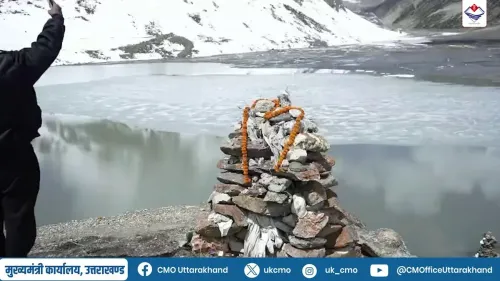
At 5,000-plus metres above sea level, where oxygen thins and every step costs more than it does on the plains, Uttarakhand Chief Minister Pushkar Singh Dhami stood at Gunji in Pithoragarh district on Sunday, 25 October 2026, to flag off and felicitate winners of the Adi Kailash Parikrama Run 2.0 — and walked away having announced the state's most ambitious ultra-endurance event yet.
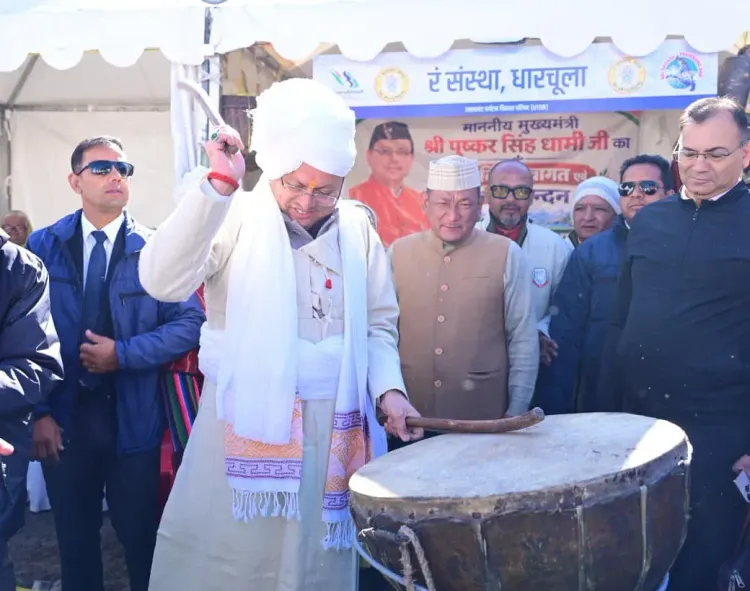
Dhami participated in the run and personally handed prizes to winners of both the 70-kilometre and 42-kilometre categories, energising runners who had arrived from states across the country. The moment carried its own symbolism: a sitting Chief Minister, at a border hamlet most Indians have never heard of, cheering competitors who chose the high Himalayas over a city stadium.
A greeting from the Rang community and a stage for living heritage
Before the prizes were handed out, it was the Rang community of Gunji that set the tone. Dressed in traditional attire, community members welcomed Dhami in a ceremony that put the region's distinct cultural identity front and centre. The Rang people, one of Uttarakhand's tribal groups native to the upper Dhauliganga and Kali river valleys, rarely find themselves on the national spotlight — this event gave them precisely that platform.
Dhami framed the run in terms that went well beyond sport. 'Adi Kailash Parikrama Run keval ek marathon nahin' (the Adi Kailash Parikrama Run is not merely a marathon), he said, calling it a test of 'courage, resolve, self-confidence and iron will.' Running through treacherous mountain paths, unpredictable weather and reduced oxygen, he argued, is an achievement in itself — irrespective of rank at the finish line.
Army, ITBP and SSB: the invisible infrastructure behind the race
Dhami singled out the Indian Army, the Indo-Tibetan Border Police (ITBP) and the Sashastra Seema Bal (SSB) for making the event operationally possible, honouring their officers and jawans at the ceremony. His words pointed to a broader pattern: security forces in India's Himalayan frontier are no longer only sentinels — they are also logistics partners for civilian events that double as soft-power tools for border integration.
'Our brave jawans are guarding the nation's borders under difficult geographical conditions while also contributing significantly to events like these,' Dhami said, a line that collapsed the civilian-military distinction in a way that resonated deeply in a town that sits within kilometres of the India-China border.
From 700 runners in 2025 to a surge in Inner Line Permits
The first edition of the Adi Kailash Parikrama Run, held in 2025, drew more than 700 participants. Dhami noted that the event's success has unlocked a fresh awareness of adventure tourism potential in the Adi Kailash corridor. He also pointed to a notable rise in Inner Line Permits (ILPs) issued for the Adi Kailash region compared to the previous year — a metric that tracks how many Indians and foreign nationals are officially entering this restricted border zone — as evidence of growing pilgrim and tourist interest.
The permit surge matters economically. Every additional visitor means more bookings at homestays, more contracts for local guides, more rides for transport operators and more meals at local dhabas. Dhami was explicit: the state wants tourism revenue to flow directly to border communities, not to operators based in distant cities.
The '100 Miles Himalayan Endurance Ultra Run' — May 2027, Mana Pass to Auli
The headline announcement came towards the end of Dhami's address. In the first week of May 2027, the Uttarakhand government will organise the '100 Miles Himalayan Endurance Ultra Run' — a race that will begin at Mana Pass at approximately 5,600 metres altitude and wind its way through Badrinath and Joshimath before finishing at Auli. The route is not merely scenic; it passes through some of the most spiritually significant and geographically forbidding terrain in the Indian Himalayas.
Dhami also noted that a successful ultra run had already been held this year in the Niti Valley, and flagged the state's broader push to scale up trekking, mountaineering, river rafting, kayaking, paragliding, mountain cycling and angling as a portfolio of adventure tourism products rather than isolated events.
Vibrant Villages, border economics and the logic of 'first villages'
Threading through Dhami's remarks was a direct invocation of Prime Minister Narendra Modi's Vibrant Village Programme, launched by the central government in 2022 with precisely this ambition: to reframe border villages as India's 'first villages' — gateways to the nation — rather than its last, neglected outposts. The programme funds infrastructure, connectivity and livelihood opportunities in frontier settlements.
Events like the Adi Kailash run operationalise that policy on the ground. They generate footfall, demand for homestays and guide services, and — crucially — give young people in border villages a reason to stay rather than migrate to the plains. Migration from Uttarakhand's high-altitude villages has been a chronic concern for successive state governments; adventure tourism is now a serious plank in the answer.
Senior officials present included Ashok Singh Nabyal, Vice-Chairman of the Uttarakhand Tribal Advisory Council; Dhiraj Singh Garbiyal, Secretary (Tourism); and officers from the Army, ITBP and SSB, alongside local elected representatives.
The race route from Mana Pass to Auli is already on the international ultra-running calendar in the making. If the state delivers on its promise, the world's toughest runners may soon know Gunji the way they know Chamonix.
Point of View
Where adventure tourism serves as both an economic lifeline for remote communities and a soft-power assertion of civilian presence in frontier zones. By personally attending and announcing a far more ambitious race for 2027, Dhami is binding his government's identity to Uttarakhand's adventure-tourism brand at a moment when the Vibrant Village Programme is still seeking tangible, photogenic wins on the ground. The involvement of the Army, ITBP and SSB signals that the civil-military partnership in high-altitude logistics is deepening — a model other Himalayan border states will watch closely. Whether the 100-mile ultra run can attract the international field needed to shift global perceptions of the India-China border corridor from contested to coveted is the real test ahead.
NationPress
25 Oct 2026
Frequently Asked Questions
What is the Adi Kailash Parikrama Run?
The Adi Kailash Parikrama Run is a high-altitude ultramarathon held in the Pithoragarh district of Uttarakhand near the India-China border. The 2026 edition (Run 2.0) offered 70-km and 42-km races through Himalayan terrain at Gunji, and followed the first edition in 2025 which attracted more than 700 runners.
What did CM Dhami announce at the Adi Kailash run 2026?
Chief Minister Pushkar Singh Dhami announced a '100 Miles Himalayan Endurance Ultra Run' to be held in the first week of May 2027, starting from Mana Pass at approximately 5,600 metres altitude and ending at Auli via Badrinath and Joshimath.
What is the Vibrant Village Programme and how does it connect to this event?
The Vibrant Village Programme is a central government scheme launched in 2022 to develop infrastructure, connectivity and livelihoods in India's border villages, reframing them as the nation's 'first villages'. CM Dhami explicitly linked the Adi Kailash run to this programme, saying tourism events help create local employment and reduce out-migration from frontier settlements.
Who are the Rang community of Gunji?
The Rang (also called Shauka) are a tribal community native to the upper river valleys of Uttarakhand's Pithoragarh district, traditionally known as trans-Himalayan traders. They welcomed CM Dhami in traditional attire at the Gunji event, highlighting their distinct cultural heritage.
What is an Inner Line Permit and why is its increase significant for Adi Kailash?
An Inner Line Permit (ILP) is an official travel document required to enter certain restricted border areas in India. CM Dhami noted a significant rise in ILPs issued for the Adi Kailash region, indicating growing interest from tourists and pilgrims and translating directly into higher economic activity for local homestay and service providers.