BMC to impose ₹25,000 fine on illegal debris disposal from Monday
Synopsis
Mumbai generates over 8,000 tonnes of construction waste daily but can process only 1,200 tonnes — a gap that has made illegal dumping endemic. The BMC's ₹25,000 per-violation fine, backed by a GPS tracking mandate and a new digital portal, is the civic body's most concrete enforcement push yet, but with only 220 registrations in seven weeks, compliance remains thin.
Key Takeaways
The BMC will levy a ₹25,000 fine per violation on vehicles transporting construction debris without an authorised VTMS device from Monday .
Construction sites not registered on the MDCTS portal also face a ₹25,000 penalty per violation.
Mumbai generates over 8,000 tonnes of C&D waste daily; treatment capacity stands at only 1,200 tonnes across facilities at Dahisar and Shilphata .
The MDCTS portal, launched on 24 August , recorded 220 registrations by 9 October — none from individual citizens.
Enforcement circulars have been issued to all 26 municipal wards for immediate inspections.
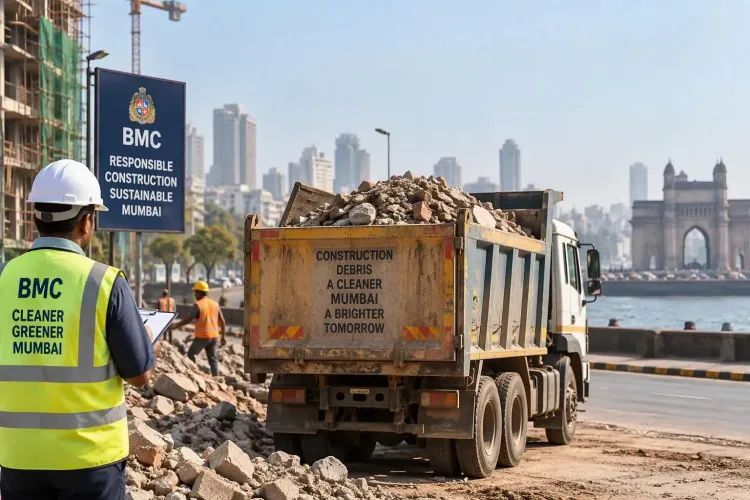
The Brihanmumbai Municipal Corporation (BMC) is set to tighten enforcement of construction and demolition (C&D) waste management rules across Mumbai from Monday, 13 October 2025, as air quality concerns resurface following the withdrawal of the monsoon. Vehicles found transporting construction debris without an active, authorised Vehicle Tracking and Monitoring System (VTMS) will face a penalty of ₹25,000 per violation.
Key Enforcement Measures
Construction sites failing to register on the BMC's Mumbai Debris Control and Tracking System (MDCTS) portal will also attract a fine of ₹25,000 per violation. In a circular issued to all 26 municipal wards, the civic body has directed officials to launch inspections and enforcement drives with immediate effect. Contractors, government agencies, and private developers undertaking construction activities are required to register on the portal and submit detailed waste management plans.
Vehicles transporting debris must be fitted with GPS-enabled VTMS devices and adhere to approved transportation routes. The system allows civic authorities to monitor debris-carrying vehicles in real time, detect route deviations, and flag suspected illegal dumping.
The Scale of Mumbai's C&D Waste Problem
Mumbai reportedly generates more than 8,000 tonnes of construction and demolition waste every day — a figure that far exceeds the city's treatment capacity. The two processing facilities at Dahisar and Shilphata can collectively handle only around 1,200 tonnes of debris daily, leaving a significant gap that has fuelled rampant illegal dumping. According to civic officials, debris is frequently discarded along roadsides, vacant plots, drains, creeks, water bodies, and mangrove areas.
MDCTS Portal: Registrations So Far
The BMC launched the MDCTS portal on 24 August as a digital platform designed to track C&D waste from its point of generation to authorised disposal or processing facilities. According to BMC data, the portal recorded 220 registrations between 24 August and 9 October. These comprised 109 builders and developers, 44 transporters, 19 BMC contractors, 17 external buyers of debris and soil, 15 corporate entities, and four government agencies. Notably, no registrations were received from individual citizens during this period.
Why This Matters for Mumbai's Environment
This enforcement drive comes amid growing concerns over illegal dumping and its dual impact on Mumbai's air quality and ecology — particularly wetlands and mangrove zones that serve as natural buffers. The move represents an escalation from the monitoring phase to active penalisation, signalling that the BMC intends to close the long-standing gap between policy and ground-level compliance. With the post-monsoon period historically associated with a spike in construction activity, the timing of the crackdown is deliberate.
Point of View
The compliance base is too thin to sustain meaningful enforcement. The 8,000-tonne-a-day waste load versus 1,200-tonne processing capacity is not a new statistic — it has been cited for years without a commensurate expansion in treatment infrastructure. Fines without investment in processing facilities shift the burden onto transporters and builders but do not resolve the structural bottleneck. The real test will be whether the BMC uses MDCTS data to prosecute systematic dumpers or whether enforcement remains episodic.
NationPress
11 Oct 2026
Frequently Asked Questions
What is the BMC's new fine for illegal debris disposal in Mumbai?
The BMC will impose a ₹25,000 fine on every vehicle found transporting construction or demolition debris without an active, authorised Vehicle Tracking and Monitoring System (VTMS). Construction sites not registered on the MDCTS portal face an equal ₹25,000 penalty per violation.
What is the MDCTS portal and how does it work?
The Mumbai Debris Control and Tracking System (MDCTS) is a digital platform launched by the BMC on 24 August to track construction and demolition waste from its source to authorised disposal sites. It enables real-time monitoring of debris vehicles, detects route deviations, and helps identify illegal dumping.
Who is required to register on the MDCTS portal?
Contractors, government agencies, and private developers undertaking construction activities in Mumbai must register on the MDCTS portal. Registered entities are required to submit waste management plans and ensure their vehicles are fitted with GPS-enabled VTMS devices.
How severe is Mumbai's construction waste problem?
Mumbai generates more than 8,000 tonnes of construction and demolition waste daily, but the city's two processing facilities at Dahisar and Shilphata can handle only around 1,200 tonnes per day combined. The shortfall has led to widespread illegal dumping along roadsides, drains, creeks, and mangrove areas.
How many entities have registered on the MDCTS portal so far?
As of 9 October, the MDCTS portal had recorded 220 registrations since its launch on 24 August. These included 109 builders and developers, 44 transporters, 19 BMC contractors, 17 external buyers of debris and soil, 15 corporate entities, and four government agencies, with no registrations from individual citizens.