BRICS economies drive global growth, face private capital gap: FM Sitharaman
Synopsis
At a BRICS finance summit in Jaipur, FM Sitharaman reframed the bloc's investment problem: it is not a capital shortage but a confidence deficit. India's own toolkit — VGF, HAM, InvITs, and the 2026-27 Budget measures — was held up as a replicable model for unlocking private finance across emerging economies.
Key Takeaways
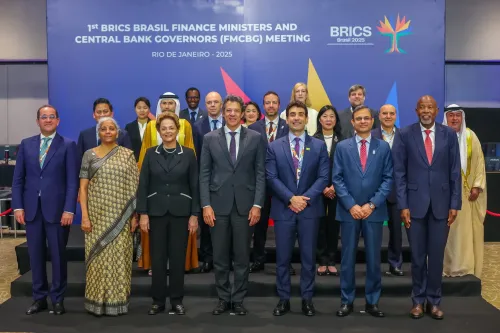
Finance Minister Nirmala Sitharaman addressed the BRICS seminar in Jaipur on 12 August , on the sidelines of the BRICS Finance Ministers' and Central Bank Governors Meeting.
She said BRICS nations share structural constraints in mobilising private capital, citing the need for confidence, stability, and predictable long-term frameworks.
India's infrastructure tools — VGF , HAM , InvITs , and credit enhancement mechanisms — were presented as models for member countries.
The Union Budget 2026-27 introduced new rail freight corridors, high-speed rail corridors, National Waterways operationalisation, and a coastal cargo promotion scheme.
DEA Secretary Anuradha Thakur stressed that durable multilateral frameworks, not just favourable conditions, are the key to sustained capital mobilisation.
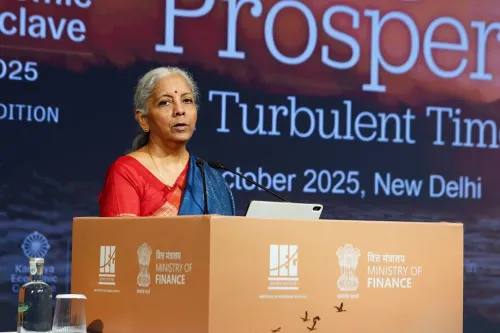
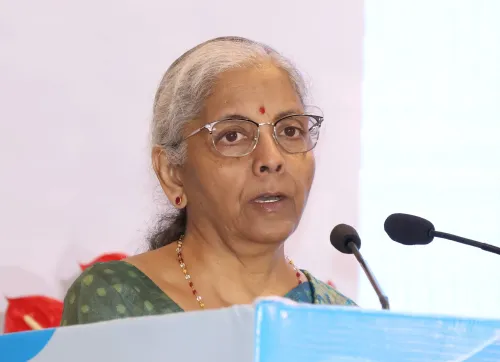
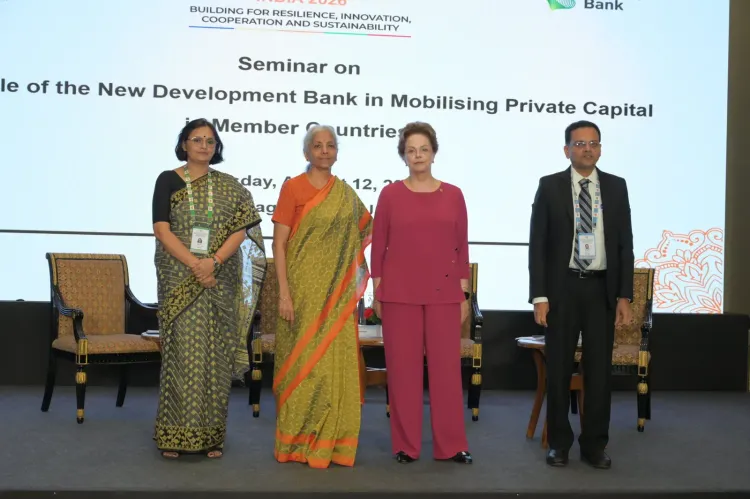
Finance Minister Nirmala Sitharaman on Wednesday, 12 August said that BRICS economies are major engines of global economic growth, but cautioned that member nations share deep structural constraints in mobilising private capital at scale. She made the remarks in her keynote address at a seminar on 'The Role of the New Development Bank in Mobilising Private Capital in Member Countries', held in Jaipur on the sidelines of the BRICS Finance Ministers' and Central Bank Governors Meeting — hosted under India's chairship.
The Core Challenge: Confidence, Not Capital
Sitharaman argued that the fundamental problem is not a shortage of capital but an absence of the conditions needed to deploy it. 'The challenge is not merely the availability of capital, but the creation of confidence, stability, predictability, and credible long-term frameworks which are essential to unlock sustained private participation across member countries,' she said.
She underscored the pivotal role that multilateral development banks play in de-risking investments, improving project bankability, and reinforcing investor confidence — prerequisites, she said, for mobilising private capital at any meaningful scale.
India's Infrastructure Push as a Template
Drawing on India's own experience, the Finance Minister pointed to sustained public capital expenditure and structural reforms as the foundation of the country's infrastructure build-out. Public investment has expanded significantly over the past decade, she noted, creating productive national assets across highways, railways, ports, logistics systems, digital infrastructure, and energy networks.
Sitharaman was emphatic that public capital must act as a catalyst — not a substitute — for private investment. To operationalise this principle, the government has deployed several instruments: Viability Gap Funding (VGF) for socially desirable but financially constrained projects; the Hybrid Annuity Model (HAM) for balanced risk-sharing in road infrastructure; and credit enhancement mechanisms to improve project bankability. The establishment of Infrastructure Investment Trusts (InvITs) has further helped recycle capital and draw in long-term institutional investors.
Union Budget 2026-27 Measures
Building on this foundation, Sitharaman informed the gathering that the Union Budget 2026-27 introduced targeted measures to accelerate private sector participation. These include new dedicated rail freight corridors, new high-speed rail corridors, operationalisation of new National Waterways, and a coastal cargo promotion scheme.
What Other Officials Said
Anuradha Thakur, Secretary of the Department of Economic Affairs, echoed the Finance Minister's framing in her welcome address, stating that capital mobilisation cannot rest on favourable conditions alone. 'It must be anchored in frameworks that endure,' she said, adding that multilateral collaboration is best placed to strengthen such frameworks over the long term.
The seminar brought together senior policymakers, representatives of multilateral institutions, and private-sector leaders, and was followed by a panel discussion featuring delegates from BRICS nations, financial institutions, think tanks, and academia. How BRICS members translate these frameworks into binding commitments will determine whether the bloc can close its infrastructure financing gap in the years ahead.
Point of View
Not capital — is a sharper diagnosis than BRICS summits typically produce, but it sidesteps a harder question: why, despite India's own VGF and InvIT architecture, private infrastructure investment as a share of GDP has remained stubbornly below pre-2012 peaks. Holding up India as a template is politically convenient under India's chairship, but the NDB's credibility depends on whether the model travels to economies with weaker institutional capacity. The real test of this meeting is not the keynote but the binding commitments, if any, that follow the panel discussions.
NationPress
12 Aug 2026
Frequently Asked Questions
What did FM Nirmala Sitharaman say at the BRICS meeting in Jaipur?
Sitharaman said BRICS economies are major drivers of global growth but face shared structural barriers to mobilising private capital at scale. Speaking at a seminar on the New Development Bank's role, she argued the core challenge is building confidence and predictable frameworks, not finding capital.
What is the New Development Bank seminar about?
The seminar focused on 'The Role of the New Development Bank in Mobilising Private Capital in Member Countries.' It was held in Jaipur on the sidelines of the BRICS Finance Ministers' and Central Bank Governors Meeting, hosted under India's chairship.
What instruments has India used to attract private infrastructure investment?
India has deployed Viability Gap Funding (VGF), the Hybrid Annuity Model (HAM), credit enhancement mechanisms, and Infrastructure Investment Trusts (InvITs) to catalyse private capital in infrastructure. The Union Budget 2026-27 added new rail freight corridors, high-speed rail corridors, new National Waterways, and a coastal cargo promotion scheme.
Why does Sitharaman say public capital must be a catalyst, not a substitute?
She argued that if governments simply replace private investment with public spending, it crowds out the private sector rather than enabling it. The goal is to use public instruments to reduce risk and improve project bankability so private capital flows in alongside, not instead of, government funding.
Who else spoke at the BRICS seminar in Jaipur?
DEA Secretary Anuradha Thakur delivered the welcome address, stressing that capital mobilisation must be anchored in enduring frameworks rather than favourable conditions alone. The seminar also featured a panel discussion with representatives from BRICS countries, financial institutions, think tanks, and academia.