C-DOT, IISc launch Centre of Excellence for 6G, quantum telecom R&D
Synopsis
C-DOT and IISc have formalised a Centre of Excellence at Bengaluru dedicated to 6G, quantum communication, and AI-native networks — putting India's two most prominent telecom R&D institutions under one roof for the first time. The initiative signals a deliberate shift from policy ambition to institutional infrastructure in India's race to lead global 6G standardisation.
Key Takeaways
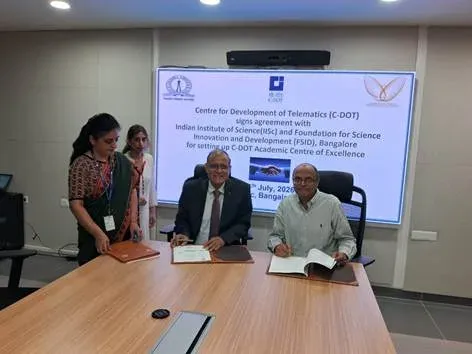
C-DOT has signed a tripartite agreement with FSID and IISc Bengaluru to establish a Centre of Excellence (CoE) for advanced telecom research, announced on 30 July 2025 .
The CoE will focus on 6G , 5G Advanced , quantum communication , AI-native networks , and cybersecurity .
Rajkumar Upadhyay highlighted India's strategic push for trusted, indigenous communication technologies.
The centre will generate intellectual property, support deep-tech start-ups , and run training programmes for next-gen telecom talent.
The initiative is part of C-DOT's expanding CoE network, aligned with India's 6G Vision Document released in 2023.
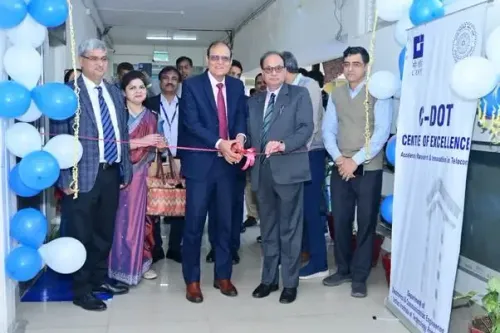
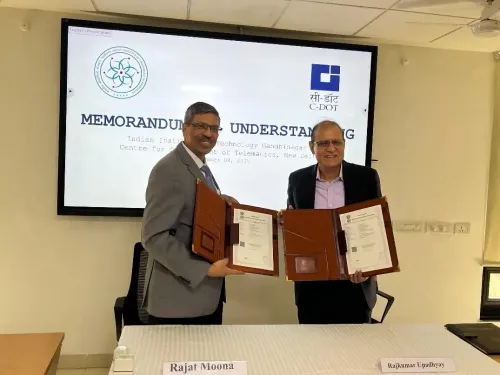
The Centre for Development of Telematics (C-DOT) has signed a tripartite agreement with the Foundation for Science Innovation and Development (FSID) and the Indian Institute of Science (IISc), Bengaluru, to establish a Centre of Excellence (CoE) aimed at accelerating indigenous research, innovation, and commercialisation of advanced communication technologies, according to an official statement released on Thursday, 30 July 2025. The CoE will be housed at FSID, IISc Bengaluru, and is positioned as a flagship initiative in India's push for telecom self-reliance.
Key Research Focus Areas
The CoE will concentrate on wireless communications, quantum technologies, cybersecurity, and AI-driven communication systems. Its research agenda spans emerging frontiers including 5G Advanced and 6G technologies, very large-scale MIMO systems, integrated sensing and communication, AI-native network architectures, and quantum and post-quantum communication technologies.
These domains are widely regarded as the defining battlegrounds for the next decade of global telecom infrastructure, and India's ability to develop indigenous intellectual property in these areas carries both economic and strategic significance.
What the Partnership Brings Together
The collaboration pairs IISc's globally recognised academic research capabilities with C-DOT's deep expertise in indigenous telecom research and development. By combining these strengths, the CoE aims to generate intellectual property, support deep-tech start-ups, and facilitate sustained knowledge exchange between academia and industry.
The platform will host workshops, training programmes, and structured academic-industry engagements to build a pipeline of skilled talent in strategic communication domains. This model — linking university research directly to commercialisation pathways — reflects a broader shift in India's science and technology policy toward translational R&D.
What the Government Said
Dr. Rajkumar Upadhyay, CEO of C-DOT, highlighted India's rapid digital and telecom transformation and underscored the strategic importance of developing trusted, indigenous communication technologies. He also pointed to C-DOT's pioneering role in next-generation telecom networks and spoke of India's growing leadership in shaping the future of global telecommunications, including its active participation in 6G standardisation efforts.
The official statement described the agreement as 'another significant milestone in strengthening India's indigenous telecom innovation ecosystem through collaborative research and technology development.'
Broader Context: India's 6G Ambitions
This CoE is part of C-DOT's expanding network of centres of excellence, reflecting the organisation's sustained commitment to building a national innovation ecosystem. India has publicly targeted a leadership role in 6G deployment, with the government having released a 6G Vision Document in 2023. Establishing deep-tech research infrastructure at premier institutions like IISc is a critical step toward translating that vision into deployable technology.
Notably, this is not an isolated initiative — C-DOT has been systematically expanding its collaborative R&D footprint across Indian academic institutions, signalling a long-term institutional strategy rather than a one-off partnership.
What Comes Next
The CoE is expected to begin structured research programmes and its first cohort of academic-industry engagements in the coming months. Industry observers will watch closely for early intellectual property filings and start-up incubation outcomes as indicators of the initiative's real-world impact beyond the partnership announcement.
Point of View
But India's telecom R&D history is littered with well-intentioned collaborations that stalled between the lab and the market. The real test will be whether this CoE produces deployable intellectual property and viable start-ups — not just research papers. India's 6G ambitions are credible only if backed by a domestic IP stack; that requires commercialisation discipline, not just academic output. Watching the start-up incubation numbers and patent filings over the next two years will tell more than any MoU ceremony.
NationPress
13 Sept 2026
Frequently Asked Questions
What is the C-DOT and IISc Centre of Excellence?
It is a jointly established research centre at FSID, IISc Bengaluru, created through a tripartite agreement between C-DOT, FSID, and IISc. The CoE focuses on 6G, quantum communication, AI-native networks, and cybersecurity, with the goal of generating indigenous intellectual property and supporting deep-tech start-ups.
What technologies will the CoE research?
The CoE will work on 5G Advanced and 6G technologies, very large-scale MIMO systems, integrated sensing and communication, AI-native communication networks, and quantum and post-quantum communication technologies. These areas are considered critical to India's digital and telecom future.
Why does this partnership matter for India?
India has publicly committed to a leadership role in 6G standardisation, and developing trusted indigenous technology is central to that goal. By combining IISc's academic excellence with C-DOT's telecom R&D expertise, the CoE creates a direct pipeline from research to commercialisation — a gap that has historically limited India's telecom innovation output.
Who leads C-DOT and what did they say?
Dr. Rajkumar Upadhyay is the CEO of C-DOT. He highlighted India's rapid digital transformation, the strategic importance of indigenous communication technologies, and C-DOT's role in next-generation telecom networks, while also pointing to India's growing influence in shaping global 6G standards.
How does this fit into C-DOT's broader strategy?
This CoE is part of C-DOT's expanding network of centres of excellence across Indian academic institutions, reflecting a long-term institutional strategy to build a national telecom innovation ecosystem rather than isolated research projects.