C-DOT must carry 'Made in India' telecom tech to global markets: Scindia
Synopsis
India's telecom research body C-DOT has been given a new mandate: stop building only for home, and start building for the world. At its 43rd Foundation Day, Communications Minister Scindia tied C-DOT's 1-lakh-tower 4G success to a bigger ambition — shaping global 6G standards and exporting sovereign telecom technology, with a workforce where more than half are under 40.
Key Takeaways
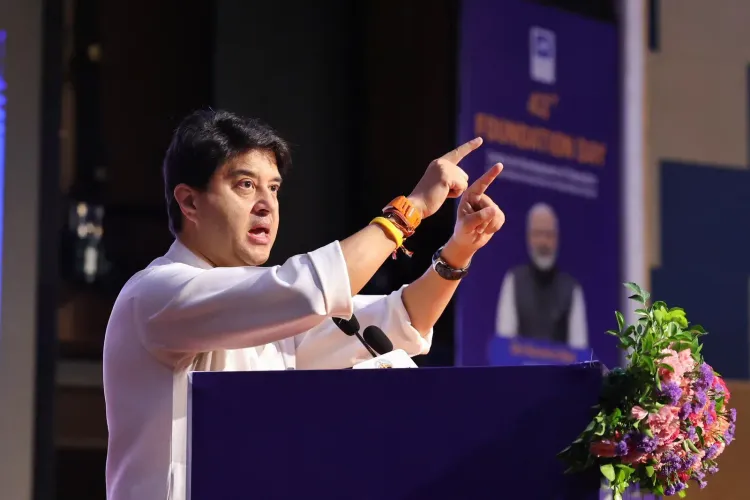
Scindia addressed C-DOT's 43rd Foundation Day on 25 August in New Delhi .
He urged C-DOT to take India's indigenous telecom technologies to global markets , not just domestic deployment.
C-DOT's indigenous 4G stack is live across approximately 1 lakh towers across India.
Priority areas identified: 6G , artificial intelligence , quantum technology , and cybersecurity .
C-DOT has 1,565 employees ; more than half are under 40 years old .
The push aligns with India's Viksit Bharat 2047 developed-nation goal.
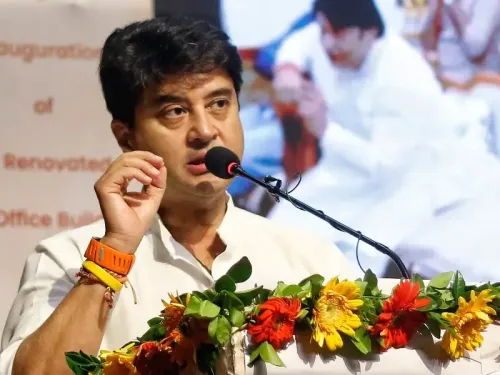
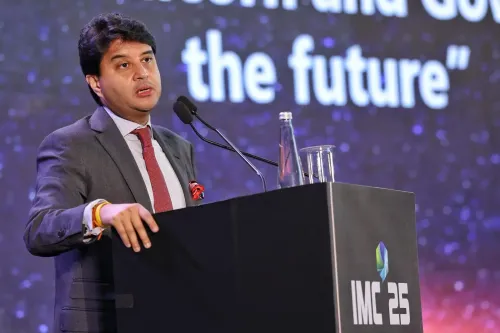
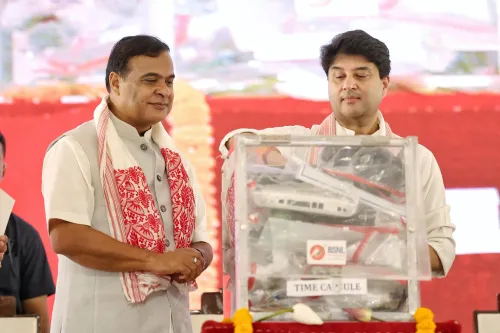
Union Minister for Communications Jyotiraditya M. Scindia on Tuesday, 25 August called on the Centre for Development of Telematics (C-DOT) to take India's homegrown telecom technologies beyond domestic borders and fast-track the journey from research labs to commercially viable, globally competitive products. The appeal came at C-DOT's 43rd Foundation Day in New Delhi.
The Minister's Core Message
Addressing C-DOT scientists and engineers, Scindia laid out a clear mandate: the organisation must develop technologies that are affordable, reliable, scalable, and globally competitive. 'We must create technologies that are affordable, dependable, scalable, and globally competitive, providing that intellectual foundation for India to move from the “Made in India” product to “Made in India, but made for the world,’' he said.
The minister stressed that C-DOT's ambitions must extend well beyond serving the domestic market. Emerging frontiers — 6G, artificial intelligence, quantum technology, and cybersecurity — were cited as priority areas where India must not just participate but lead.
From 4G Follower to 6G Contender
Scindia highlighted India's rapid telecom evolution, noting the country had moved from lagging behind the world in 4G to keeping pace with global developments in 5G, and was now positioned to aspire for leadership in 6G. He pointed to C-DOT's indigenous 4G technology stack — deployed across approximately 1 lakh towers nationwide — as evidence of that trajectory.
By developing its own 4G stack, India has joined a select group of countries with that sovereign capability. Scindia urged C-DOT to build on this achievement, advancing its 5G capabilities and contributing meaningfully to the setting of global 6G standards.
A Young Workforce as Strategic Asset
C-DOT currently employs around 1,565 people, with more than half below the age of 40. Scindia described this young workforce as a strategic advantage as India races to build capabilities in next-generation technologies. He called on the organisation to combine 'courage, disruption, ownership and tenacity' to emerge as a global technology force.
Notably, the minister underscored that the telecom networks of the future would need to be secure, trusted, resilient, and intelligent — not merely connectivity pipes — a framing that reflects growing global anxiety around network sovereignty and supply-chain security.
The Viksit Bharat Backdrop
The Foundation Day address was set against India's broader Viksit Bharat 2047 goal — the government's vision of a developed India by the centenary of independence. Scindia framed C-DOT's role as central to that ambition, arguing that sustained research, repeated engineering refinement, and global cooperation would be the pillars of India's technology leadership. 'Research requires endurance. Engineering requires repeated refinement and global leadership requires sustained cooperation and contribution,' he said.
With the global telecom standards race intensifying — particularly around 6G, where China, the US, South Korea, and the EU are already staking positions — India's window to shape the next generation of connectivity infrastructure is narrow but open.
Point of View
IP protection framework, and international partnership architecture to actually sell sovereign technology abroad, rather than just deploy it at home. On 6G, the window is real but narrow: standards bodies are already being shaped by Chinese, American, and European players. India's contribution to 6G standard-setting will matter far more than any domestic rollout milestone. Scindia's Foundation Day address sets the right direction; the test is whether C-DOT gets the funding, autonomy, and industry linkages to execute it.
NationPress
9 Oct 2026
Frequently Asked Questions
What did Scindia say at C-DOT's 43rd Foundation Day?
Communications Minister Jyotiraditya M. Scindia urged C-DOT to take India's indigenous telecom technologies to global markets and accelerate the shift from R&D to commercially viable products. He identified 6G, AI, quantum technology, and cybersecurity as priority areas and called on the organisation to be globally competitive, not just domestically relevant.
What is C-DOT's indigenous 4G technology stack?
C-DOT's indigenous 4G stack is a homegrown telecom technology developed entirely in India, currently deployed across approximately 1 lakh towers nationwide. It makes India one of a select group of countries capable of building its own 4G infrastructure stack, and serves as the foundation for C-DOT's ambitions in 5G and 6G.
Why is India focusing on 6G development?
India moved from lagging in 4G to keeping pace in 5G and is now positioning itself to lead in 6G, according to Scindia. With global 6G standards still being shaped, India has an opportunity to influence the next generation of telecom infrastructure — a window that aligns with the Viksit Bharat 2047 goal of becoming a developed nation.
How large is C-DOT's workforce and why does it matter?
C-DOT employs around 1,565 people, with more than half below the age of 40. Scindia described this young talent base as a strategic advantage for building next-generation telecom capabilities, particularly in fast-moving areas like AI integration and quantum communications.
What is the Viksit Bharat 2047 goal and how does C-DOT fit in?
Viksit Bharat 2047 is the Indian government's vision of achieving developed-nation status by the centenary of independence. Scindia positioned C-DOT as central to this ambition, arguing that sovereign, globally competitive telecom technology would be a key pillar of India's emergence as a technology power.