CAIT's Praveen Khandelwal urges rail freight reforms to boost MSME trade
Synopsis
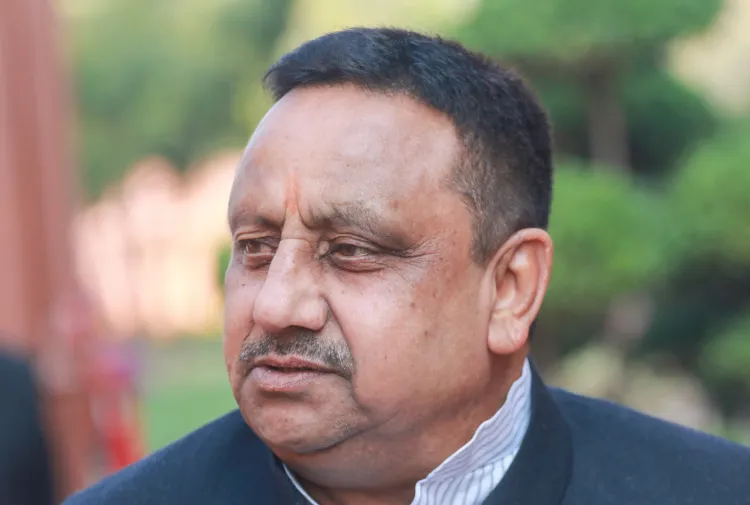
CAIT's Praveen Khandelwal has written to Railway Minister Ashwini Vaishnaw demanding digital freight booking, real-time tracking, and last-mile connectivity reforms — framing rail modernisation as the single biggest lever to cut India's bloated logistics costs and give MSMEs a viable alternative to road transport.
Key Takeaways
CAIT Secretary General Praveen Khandelwal wrote to Railway Minister Ashwini Vaishnaw on 11 May 2025 urging comprehensive rail freight reforms.
Key demands include dedicated freight facilitation centres , real-time consignment tracking , and a fully digital freight booking process .
Khandelwal called for rationalised freight rates, increased parcel van capacity, and modernised loading and unloading infrastructure.
The letter aligns with PM Modi's appeal to reduce road dependence and shift goods movement to railways as part of a seven-point national resolve .
A modal shift to rail could lower India's logistics costs, currently estimated at 13-14% of GDP against a global benchmark of 8% .
The Confederation of All India Traders (CAIT) Secretary General and Member of Parliament Praveen Khandelwal on Monday, 11 May wrote to Union Railway Minister Ashwini Vaishnaw, urging comprehensive reforms to make rail freight and parcel services more transparent, efficient, and trade-friendly. The letter aligns with Prime Minister Narendra Modi's recent appeal to reduce excessive dependence on road transport and shift goods movement to railways.
Key Demands in the Letter
Khandelwal called for the establishment of dedicated freight facilitation centres for traders and real-time consignment tracking facilities. He also pushed for a fully digital freight booking process, rationalised freight rates, increased parcel van capacity, and modernised loading and unloading infrastructure. These demands, according to a statement from CAIT, are aimed at making Indian Railways the preferred logistics backbone for millions of traders and Micro, Small and Medium Enterprises (MSMEs) across the country.
Last-Mile Connectivity and Grievance Redressal
The CAIT Secretary General further appealed for strengthening last-mile connectivity and establishing an effective grievance redressal mechanism. He also called for institutionalising regular dialogue between railway authorities and trade organisations — a structural step that traders argue is currently missing from the system. Khandelwal requested a personal meeting with the Railway Minister to discuss practical measures and policy reforms.
The Economic and Environmental Case
Khandelwal argued that railway transport is the most economical, environment-friendly, and efficient mode for freight movement. He said a large-scale shift of goods transportation from roads to railways would substantially reduce petrol and diesel consumption, lower logistics costs, reduce pollution, and ease pressure on highways. "If railway freight services are made more efficient, accountable, and trade-friendly, millions of traders and MSMEs across the country would naturally prefer railways for the transportation of goods," he said.
Modi's Seven-Point Resolve
Khandelwal also welcomed PM Modi's recent call to the nation to adopt a seven-point resolve, which, if implemented effectively, CAIT believes will further strengthen India's economic position. He acknowledged the massive transformation and modernisation undertaken in Indian Railways over the past several years, including improvements in railway infrastructure, electrification, dedicated freight corridors, technological integration, and station redevelopment. This push for freight reform comes at a time when India's logistics costs — estimated at around 13-14% of GDP — remain significantly higher than the global benchmark of 8%, making rail-based reform a critical lever for competitiveness.
Point of View
It is a structural drag on export competitiveness and MSME margins. CAIT's letter is less a policy breakthrough and more a pressure signal: traders are watching whether Modi's rail-shift rhetoric translates into operational changes. The real question is not whether the Railway Ministry will respond positively — it likely will, in tone — but whether the structural barriers to rail freight, including opaque pricing, poor last-mile links, and rigid booking systems, will actually be dismantled. Past freight corridor investments have improved capacity; they have not yet moved the needle on trader preference. That gap between infrastructure and usability is where reform either happens or stalls.
NationPress
11 May 2026
Frequently Asked Questions
What reforms has CAIT demanded from Indian Railways?
CAIT has demanded dedicated freight facilitation centres, real-time consignment tracking, a fully digital freight booking process, rationalised freight rates, increased parcel van capacity, and modernised loading and unloading infrastructure. The confederation also called for stronger last-mile connectivity and a formal grievance redressal mechanism for traders.
Why is CAIT pushing for rail freight reforms now?
The push comes in response to PM Modi's recent appeal to reduce excessive dependence on road transport and shift goods movement to railways. CAIT sees this as an opportunity to align trade policy with the government's logistics vision and reduce costs for millions of MSMEs.
Who wrote to Railway Minister Ashwini Vaishnaw and on what date?
CAIT Secretary General and Member of Parliament Praveen Khandelwal wrote to Union Railway Minister Ashwini Vaishnaw on 11 May 2025, urging comprehensive reforms to rail freight and parcel services.
How would a shift to rail freight benefit traders and the environment?
According to Khandelwal, shifting goods movement from roads to railways would substantially reduce petrol and diesel consumption, lower logistics costs, reduce pollution, and ease pressure on highways — contributing to a greener and more cost-competitive economy for MSMEs.
What is PM Modi's seven-point resolve mentioned in the letter?
PM Modi issued a seven-point resolve calling on the nation to adopt specific commitments aimed at strengthening India's economic position. CAIT's Praveen Khandelwal welcomed the resolve and linked the rail freight reform push to its effective implementation, though the specific seven points were not detailed in CAIT's statement.