Transformative Reforms in Indian Railways: Focus on Cargo, Construction, and Passenger Comfort
Synopsis
Discover the latest reforms in Indian Railways aimed at enhancing cargo efficiency, construction quality, and passenger convenience. Union Railways Minister Ashwini Vaishnaw announces innovative changes that promise significant improvements in the railway system.
Key Takeaways
Five new reforms introduced by Union Railways Minister Ashwini Vaishnaw.
Focus on cargo transport efficiency and passenger convenience .
Development of a stainless steel container system for salt transport.
Improved ticket cancellation policies for passengers.
Special wagon designs allowed for automobile transport .
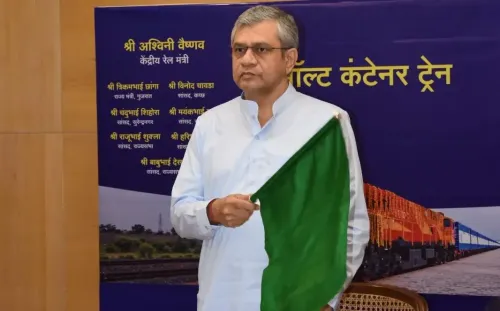
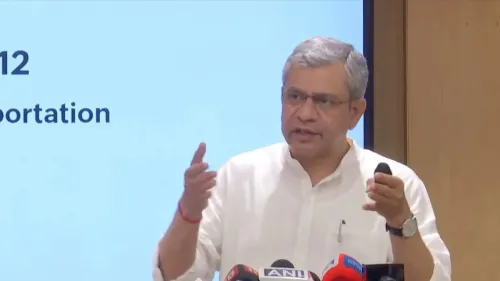
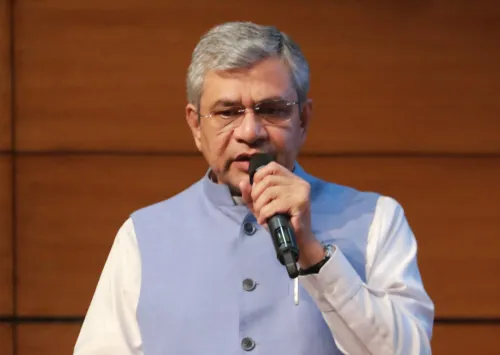
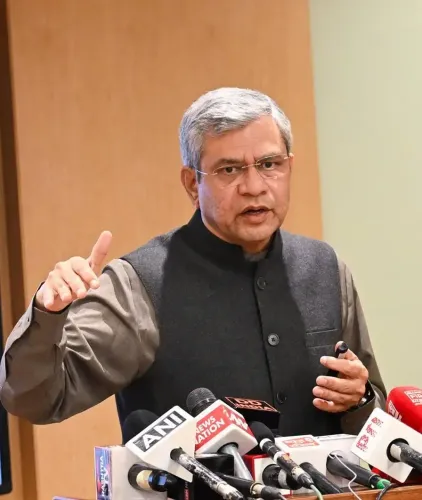
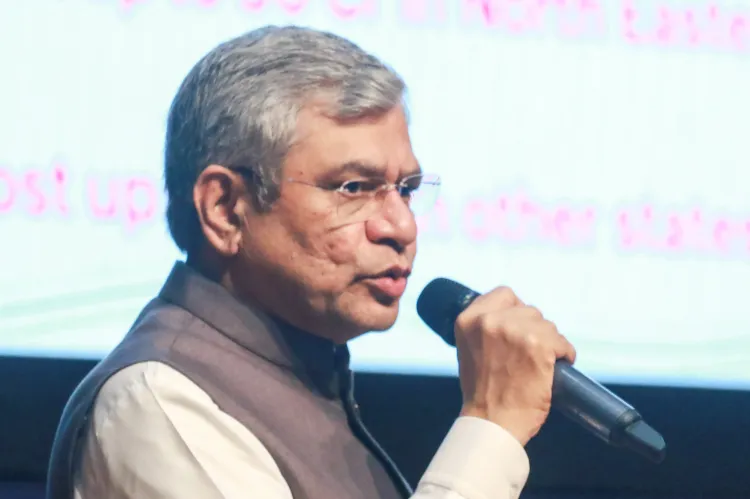
On March 24, in New Delhi, Union Railways Minister Ashwini Vaishnaw unveiled five transformative reforms under the initiative known as ‘Reform Express’. With the endorsement of these reforms, the cumulative total for the year 2026 has now reached nine.
Among the five newly introduced reforms, two focus on cargo, one pertains to construction, and the remaining two aim to enhance passenger convenience.
Minister Vaishnaw highlighted that India ranks among the leading producers and exporters of salt globally, with Tamil Nadu, Gujarat, and Rajasthan identified as the top three producing states. Each year, India generates approximately 35 million tonnes of salt, out of which around 9.2 million tonnes are transported via railways, indicating a substantial untapped potential.
The Minister pointed out that the railways' modal share in salt transport varies based on the type of salt: about 25% for industrial salt and roughly 65% for salt intended for human consumption. Notably, 62% of all railway-based salt movement spans distances between 1,000 to 2,500 kilometres, making it an ideal candidate for rail transport.
Following thorough consultations with salt producers and transporters to identify obstacles, the study pinpointed significant concerns such as inadequate wagon design, corrosion issues due to salt, water infiltration in open wagons despite tarpaulin covers, and multiple handling stages that lead to increased costs and losses.
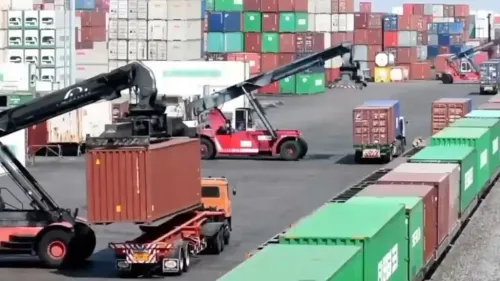
In response to these challenges, a new stainless steel container system featuring top-loading and side-discharge capabilities was developed. This innovative container is designed to resist corrosion, includes top-loading flaps, and utilizes a hydraulic side-discharge mechanism for seamless unloading into trucks at the destination.
The Union Minister explained that these containers can be stationed at salt production facilities for direct loading, subsequently lifted and placed onto container trains. Upon arrival, containers can be offloaded and positioned in warehouses or godowns, with unloading performed according to necessity. He emphasized that this system enhances flexibility, supports efficient multimodal transport, reduces handling losses, and has garnered positive feedback from the industry.
In the Indian automobile sector, around 31 million units are produced annually, with about 5 million being passenger vehicles. The rail coefficient for passenger vehicle transport is approximately 24%, indicating that a significant proportion of automobile transport still occurs via roadways.
Industry feedback revealed critical design and operational limitations. Major automobile manufacturing hubs served by railways include Mahesana in Gujarat; Chinchwad and Bidadi in Maharashtra and Karnataka; Penukonda in Andhra Pradesh; Melpakkam and Walajabad in Tamil Nadu; and Farakhanagar in Gurugram, Haryana. Previous initiatives encompassed converting existing passenger coaches into automobile carrier wagons and implementing new solutions.
However, further discussions clarified that the primary concern was the design of automobile carrier wagons.
As part of the reforms, the railways have now permitted special wagon designs, offering industry players the flexibility to create wagons tailored to specific origin-destination routes with higher capacities.
Vaishnaw stated that the next reform aims to enhance the quality of construction in railway projects by introducing seven significant changes.
These adjustments collectively fortify the framework for executing railway projects by increasing transparency and integrity through rigorous ethical and punitive measures, ensuring quality assurance through stricter eligibility criteria and reduced subcontracting, and promoting timely project completion through mechanisms like fixed bid security, capacity assessment, and additional performance guarantees.
Another reform centers on improving passenger convenience, with initiatives to prevent misuse of ticketing systems and enhance access for legitimate travelers.
In this regard, the previous cancellation time windows of 48, 12, and 4 hours prior to departure have been updated to 72, 24, and 8 hours, aligning with the advanced preparation of reservation charts, which now occurs 9-18 hours before departure instead of just 4 hours.
Additionally, the Union Minister announced that counter tickets can now be canceled from any railway station nationwide, eliminating the prior restriction that necessitated cancellations only at the originating station.
Moreover, a new provision allows passengers to digitally change their boarding station up to 30 minutes before the train's departure from its origin. Previously, passengers could only alter their boarding location before chart preparation. Under this updated policy, if a passenger cannot board at the original station, they can opt for the next convenient station and still retain their confirmed seat.
Point of View
The recent reforms in Indian Railways mark a significant step toward modernization and efficiency. By addressing cargo transport challenges and improving passenger experience, the government demonstrates its commitment to enhancing the country's infrastructure and transportation systems.
NationPress
22 Sept 2026
Frequently Asked Questions
What are the key reforms announced by the Union Railways Minister?
Five new reforms were announced, focusing on cargo, construction, and passenger convenience.
How many reforms have been implemented for 2026?
The total number of reforms for the year 2026 has reached nine.
What is the rail coefficient for passenger vehicle transport?
The rail coefficient for passenger vehicle transport is approximately 24%.
How can passengers now change their boarding station?
Passengers can change their boarding station digitally up to 30 minutes before departure.
What changes have been made to ticket cancellation policies?
Cancellation time windows have been revised to 72, 24, and 8 hours before departure.