FSSAI rules amended: Non-manufacturing food businesses get compliance relief
Synopsis
India's food regulator has quietly redrawn the compliance map: retailers and non-manufacturing food businesses no longer need to follow FIFO/FEFO stock rotation or maintain the same records as factories. The shift — backed by NITI Aayog's reform committee — signals a deliberate move toward risk-calibrated regulation, with the heaviest compliance load now reserved for those who actually make the food.
Key Takeaways
The Ministry of Health and Family Welfare notified amendments to FSSAI licensing regulations on 26 June .
Non-manufacturing food businesses , including retailers, are now exempt from FIFO/FEFO stock rotation and related record-keeping requirements.
These obligations continue to apply to food manufacturing businesses , where traceability and quality controls are considered essential.
The reforms are aligned with NITI Aayog's high-level committee recommendations on reducing non-financial regulatory burdens.
Earlier simplifications include perpetual licences , revised turnover thresholds, and a risk-based inspection system .
The Ministry of Health and Family Welfare on Friday, 26 June notified amendments to the Food Safety and Standards (Licensing and Registration of Food Businesses) Regulations, 2011, exempting non-manufacturing food businesses from certain record-keeping and stock rotation obligations. The move, administered through the Food Safety and Standards Authority of India (FSSAI), is aimed at easing the compliance burden on retailers and similar entities while preserving safety controls where they matter most.
What the Amendments Change
Under the earlier framework, all licensed food businesses — manufacturers and non-manufacturers alike — were required to maintain records and follow stock rotation practices based on the First In First Out (FIFO) or First Expiry First Out (FEFO) principles. The revised norms restrict these requirements exclusively to food manufacturing businesses, where product traceability and quality assurance are considered operationally critical.
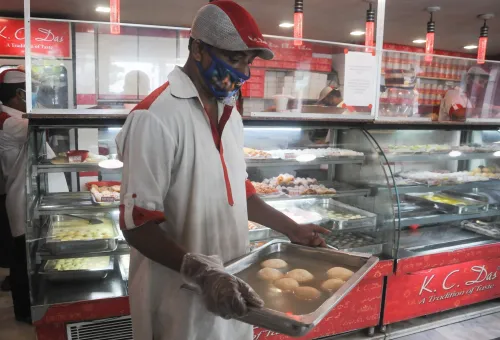
Non-manufacturing entities such as retailers are now exempt from these obligations. According to the ministry, this distinction reflects a risk-based approach: the compliance controls that make sense on a factory floor are not necessarily warranted at the point of sale.
Who Benefits and How
The relief is expected to be most consequential for small and medium enterprises (SMEs) in the food retail and distribution space, which have historically faced disproportionate compliance costs relative to their scale. The ministry stated that food safety oversight will remain robust in segments where such controls are essential, signalling that the rollback is targeted rather than sweeping.
Notably, this is not an isolated reform. Over recent years, the government has progressively simplified the regulatory environment for food businesses — introducing perpetual licences and registrations, revising turnover thresholds, removing dual compliance requirements for street food vendors, and deploying a risk-based inspection system.
Consultations and Policy Backing
According to the ministry, the latest amendments were finalised after extensive consultations with states, Union Territories, and stakeholders across the food business ecosystem. The reforms are also aligned with recommendations from the high-level committee on non-financial regulatory reforms constituted by NITI Aayog, which had called for reducing unnecessary regulatory burdens while maintaining effective oversight.
The ministry described the changes as part of a broader agenda to promote risk-based and outcome-oriented regulation in the food sector — a shift from prescriptive, one-size-fits-all compliance to a framework calibrated to actual risk levels.
What Remains in Place
The amendments do not dilute food safety standards for manufacturers. Record-keeping, FIFO/FEFO adherence, and traceability requirements remain fully operative for food manufacturing businesses. The ministry reiterated its commitment to science-based regulations and continued stakeholder engagement as the framework evolves.
With the NITI Aayog committee's broader recommendations still being implemented across sectors, further regulatory simplifications for food businesses are possible in the months ahead.
Point of View
However, is whether 'non-manufacturing' is defined tightly enough to prevent larger food distributors or cold-chain operators — who do carry meaningful safety risk — from slipping into the lighter-touch category. The NITI Aayog committee's backing lends the reform credibility, but the devil will be in the definitional details that enforcement officers apply on the ground.
NationPress
26 Jun 2026
Frequently Asked Questions
What changes did the FSSAI regulation amendment on 26 June introduce?
The amendment exempts non-manufacturing food businesses, such as retailers, from record-keeping and stock rotation requirements under the FIFO and FEFO principles. These obligations now apply only to food manufacturing businesses, where traceability and quality assurance are considered essential.
Who is affected by the new FSSAI compliance rules?
Non-manufacturing food businesses — including retailers and similar entities — benefit from the exemption and face a reduced compliance burden. Food manufacturers are unaffected and must continue to follow all existing record-keeping and stock rotation requirements.
Why did the government amend the FSSAI licensing regulations?
The government cited the need to reduce unnecessary regulatory burdens on food businesses, particularly small and medium enterprises, while maintaining safety oversight where it is most critical. The changes align with NITI Aayog's high-level committee recommendations on non-financial regulatory reform.
What other food business compliance reforms has the government introduced recently?
Recent reforms include the introduction of perpetual licences and registrations, revision of turnover thresholds, removal of dual compliance requirements for street food vendors, and the rollout of a risk-based inspection system across the food sector.
Does the amendment weaken food safety standards?
According to the Ministry of Health and Family Welfare, food safety standards for manufacturers remain fully intact. The amendment is targeted at non-manufacturing entities and is framed as a risk-based calibration rather than a dilution of safety oversight.