India-EFTA TEPA seafood exports: Centre maps tariff gains at Chennai Chintan Shivir
Synopsis
India's first trade deal with a European economic bloc is now delivering real tariff wins for the seafood sector — Iceland and Norway have zeroed out fish feed duties, and Switzerland has cut fish oil tariffs entirely. The Chennai Chintan Shivir signals the Centre is moving from signing agreements to actively converting them into export revenue, with coastal states like Tamil Nadu in the crosshairs.
Key Takeaways
The Department of Commerce held a Chintan Shivir on 6 July 2026 in Chennai to maximise seafood export gains under India-EFTA TEPA .
Iceland has eliminated its 55% import duty on fish feed; Norway has zeroed its 13.16% duty on fish and shrimp feed.
Switzerland has reduced the import duty on fish fats and oils from 18.05% to zero.
TEPA targets $100 billion in investments into India and one million direct jobs .
The four EFTA member states — Iceland , Liechtenstein , Norway , and Switzerland — have a combined GDP of approximately $1.79 trillion .
TEPA is India's first trade agreement with an EFTA bloc and its first operational arrangement with a European economic bloc .
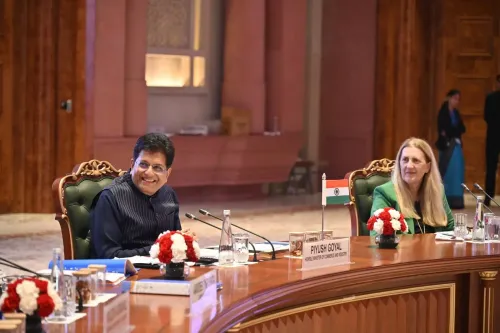
The Centre convened a high-level Chintan Shivir in Chennai on 6 July 2026 to chart a roadmap for Indian seafood exporters seeking to capitalise on tariff concessions under the India-EFTA Trade and Economic Partnership Agreement (TEPA). The brainstorming session, organised by the Department of Commerce on the sidelines of Seafood Expo Bharat 2026 at the Chennai Trade Centre, brought together exporters, trade bodies, and government officials to unlock the full potential of the landmark pact.
Key Tariff Concessions Under TEPA
Iceland has eliminated its 55% import duty on feed, including fish feed. Switzerland has reduced the import duty on fats and oils of fish — excluding liver oil — from 18.05% to zero. Norway has similarly eliminated its 13.16% import duty on fish and shrimp feed, bringing it to zero. Together, these concessions substantially lower the cost of doing business for Indian seafood exporters targeting EFTA markets, particularly those in coastal states such as Tamil Nadu.
What TEPA Means for Indian Seafood
TEPA is India's first trade agreement with the European Free Trade Association (EFTA), whose four member states — Iceland, Liechtenstein, Norway, and Switzerland — collectively account for a combined GDP of approximately $1.79 trillion. The agreement is also India's first operational trade arrangement with a European economic bloc, running alongside ongoing negotiations with the European Union and the United Kingdom.
Beyond tariff relief, TEPA opens pathways for technology transfer, joint ventures, and collaboration with niche technology firms from EFTA countries. The agreement carries an ambition to facilitate $100 billion in investments into India and support the creation of one million direct jobs — a scale that, if realised, would mark a structural shift for India's export economy.
What Was Discussed at the Chintan Shivir
Joint Secretary, Department of Commerce, Mohit Yadav addressed participants, providing a comprehensive overview of the India-EFTA TEPA and outlining trade and investment opportunities for Indian businesses. A representative from Invest India presented emerging opportunities across the Indian seafood value chain, while a representative from the Directorate General of Foreign Trade (DGFT) Regional Office, Chennai, outlined export promotion and facilitation schemes aimed at improving competitiveness.
Representatives from the Export Inspection Council (EIC) and the Federation of Indian Export Organisations (FIEO) shared insights on regulatory requirements, quality standards, and strategies for leveraging TEPA benefits. Leading exporters targeting EFTA markets also participated in the deliberations.
Broader Strategic Context
This Chintan Shivir is part of the Centre's wider outreach programme to help states translate national trade agreements into tangible export gains. Notably, coastal states such as Tamil Nadu stand to benefit disproportionately given their established seafood processing and export infrastructure. This comes amid India's broader push to diversify its export destinations beyond traditional markets and reduce dependence on a narrow set of trading partners.
With TEPA now operational, industry stakeholders and state governments will be watching closely to see whether the zero-duty access translates into measurable volume growth in the coming quarters.
Point of View
Which have historically been a harder barrier than tariffs. Tamil Nadu's seafood cluster has the scale, but the compliance infrastructure at the SME level remains patchy. Without a parallel push on quality certification and cold-chain investment, the zero-duty access risks being claimed only by the largest exporters, leaving the coastal fishing communities TEPA was meant to empower on the sidelines.
NationPress
6 Jul 2026
Frequently Asked Questions
What is the India-EFTA TEPA and why does it matter for seafood exports?
The India-EFTA Trade and Economic Partnership Agreement (TEPA) is India's first trade deal with the European Free Trade Association, comprising Iceland, Liechtenstein, Norway, and Switzerland. It matters for seafood exports because it eliminates or sharply reduces import duties on fish feed, fish oils, and related products in EFTA markets, directly lowering costs for Indian exporters.
Which specific tariff concessions has EFTA offered on seafood-related products?
Iceland has eliminated its 55% import duty on feed including fish feed, Norway has zeroed its 13.16% duty on fish and shrimp feed, and Switzerland has reduced the import duty on fats and oils of fish (other than liver oil) from 18.05% to zero. These concessions are now operational under TEPA.
What was the purpose of the Chintan Shivir held in Chennai?
The Chintan Shivir, organised by the Department of Commerce on the sidelines of Seafood Expo Bharat 2026, was convened to help Indian seafood exporters understand and leverage the tariff concessions available under TEPA. It brought together government officials, trade bodies, and leading exporters to discuss regulatory requirements, quality standards, and investment opportunities.
Which states stand to benefit most from TEPA's seafood provisions?
Coastal states, particularly Tamil Nadu, are highlighted as primary beneficiaries given their established seafood processing and export infrastructure. The agreement is expected to expand opportunities for fishermen and seafood stakeholders across India's coastline.
What are TEPA's broader investment and employment targets?
TEPA carries an ambition to facilitate $100 billion in investments into India and support the creation of one million direct jobs. The EFTA bloc collectively accounts for a GDP of approximately $1.79 trillion, making it a significant economic partner for India's export diversification strategy.