Smriti Irani pays tribute to BJP pillar Tejbhan Singh in Amethi
Synopsis
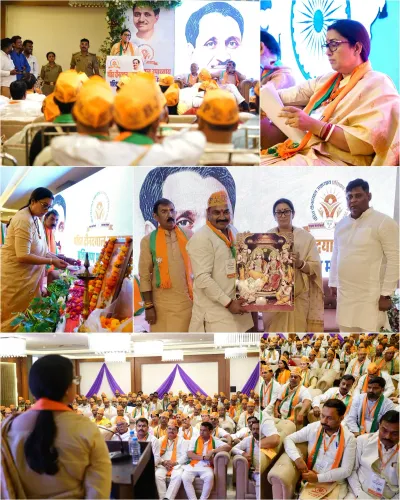
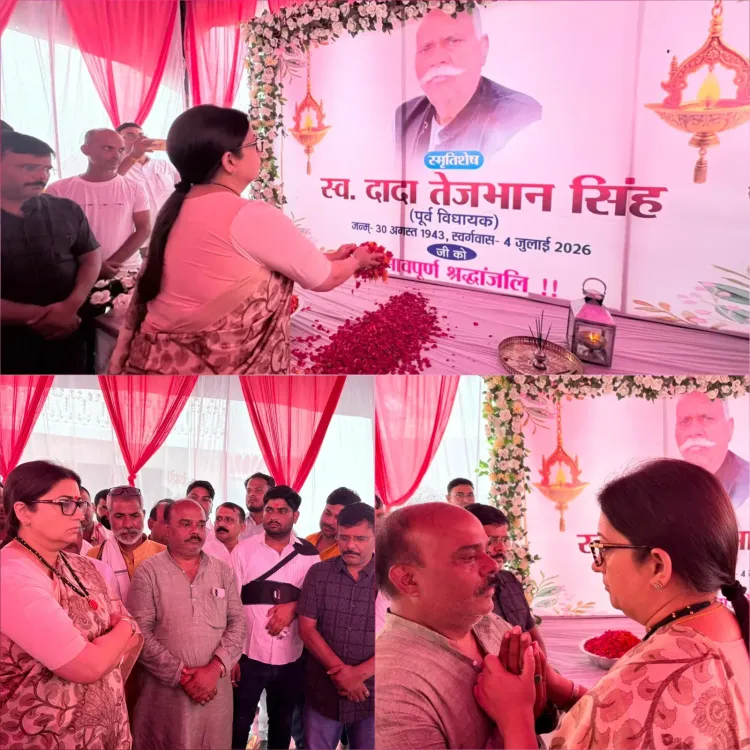
BJP leader Smriti Irani attended the condolence assembly of veteran Amethi functionary Tejbhan Singh at Achalpur village on 7 July 2026, honouring him as the foundational pillar of the party in the constituency and a lifelong example of dedication to ideology and grassroots organisation.
Key Takeaways
Smriti Irani visited Achalpur village, Jamo block, Amethi on 7 July 2026 for the condolence assembly of Tejbhan Singh .
Irani described Tejbhan Singh as the 'aadharstambh' (foundational pillar) of BJP in Amethi , crediting him with building the party organisation with limited resources.
She called him a father figure ( pitaatulya ) and said he would live forever in the hearts of every BJP worker.
Amethi was a Congress stronghold for decades before Irani's landmark victory in the 2019 general election .
The tribute reflects BJP's broader practice of publicly honouring deceased local functionaries to reinforce cadre loyalty in areas of recent electoral expansion.
The event signals continued active organisational engagement by Irani in Amethi beyond election cycles.
BJP leader Smriti Irani visited Achalpur village in the Jamo development block of Amethi on Monday, 7 July 2026, to attend the condolence assembly (shraddhanjali sabha) of Tejbhan Singh, a veteran grassroots BJP functionary she described as a father figure and guardian to all party workers in the constituency.
In her post, Irani wrote that Tejbhan Singh had been the 'aadharstambh' — the foundational pillar — of the BJP in Amethi, and that he had built and strengthened the party organisation in the region 'with limited resources but full capacity.' She added: 'His entire life was a living example of dedication to the organisation, the ideology, and the workers. Every worker who walks in Dada's footsteps will continue to draw inspiration from his ideals. Dada Tejbhan Ji will live forever in the mind, intellect, and heart of every karyakarta.'
Context
Amethi was for decades one of the most prominent Congress strongholds in Uttar Pradesh, closely associated with the Gandhi family. The constituency's political character shifted decisively when Smriti Irani defeated sitting MP Rahul Gandhi in the 2019 general election — a result that drew national attention. Irani has since maintained an active presence in the constituency, regularly visiting local leaders and communities.
Tejbhan Singh was among those grassroots functionaries who worked to establish BJP's presence in Amethi during the years when the party had little electoral foothold there. His work in Jamo development block represented exactly the kind of cadre-level organisation-building that BJP's leadership has credited for its expansion in eastern Uttar Pradesh.
Policy Backdrop
Since 2014, the Bharatiya Janata Party has systematically invested in building a second rung of committed local leaders in constituencies outside its traditional strongholds. In Amethi specifically, this strategy involved recruiting and training karyakartas at the block and village level — often with minimal resources — to counter the Congress party's entrenched local networks.
Irani's emphasis on Tejbhan Singh's ability to build organisational capacity 'with limited resources' (seemit sansadhano mein) echoes a recurring theme in BJP's internal messaging: that ideological commitment, not financial backing, is the foundation of durable party presence in rural constituencies.
Stakeholders and Impact
For BJP's karyakartas in Amethi, the public tribute by a senior national leader carries significant symbolic weight. It signals that the contributions of local functionaries — who work largely outside the public eye — are recognised and valued by the party's higher leadership. Such gestures are a deliberate part of BJP's cadre-management culture in Uttar Pradesh.
For Amethi voters and local political observers, Irani's continued personal engagement with the constituency — attending village-level events, not just electoral rallies — reinforces her positioning as a resident representative rather than a parachuted candidate. The condolence visit to Achalpur village underlines that local outreach extends beyond electoral cycles.
What's Next
With Uttar Pradesh assembly elections part of the medium-term political calendar, BJP's organisational activity in constituencies like Amethi will be closely watched. The passing of a foundational figure like Tejbhan Singh typically prompts parties to assess and consolidate local leadership structures. Subsequent condolence meetings across Amethi's blocks and any reshuffling of the local organisational hierarchy will indicate how the party manages this transition at the grassroots level.
Point of View
She elevates the status of grassroots workers and reinforces the party's internal culture of ideological loyalty over material reward. This pattern of honouring deceased local functionaries is a well-established BJP tool for sustaining momentum in newly captured seats, particularly in Uttar Pradesh where assembly-level organisation is critical. The event also keeps Irani visibly anchored to Amethi at a time when her national ministerial profile has receded, signalling sustained investment in the constituency.
NationPress
6 Jul 2026
Frequently Asked Questions
Who is Tejbhan Singh from Amethi?
Tejbhan Singh was a long-time BJP grassroots functionary based in the Jamo development block of Amethi, Uttar Pradesh. He is credited with building the party's organisational presence in the constituency during years when BJP had limited electoral strength there. Smriti Irani described him as the foundational pillar of BJP in Amethi.
Why did Smriti Irani visit Amethi on 7 July 2026?
Smriti Irani visited Achalpur village in Amethi's Jamo block on 7 July 2026 to attend the condolence assembly ( shraddhanjali sabha ) of veteran BJP worker Tejbhan Singh, paying her respects and honouring his lifelong contribution to the party's organisation in the constituency.
What is Smriti Irani's connection to Amethi?
Smriti Irani has been associated with Amethi since 2014, when she first contested the Lok Sabha seat against Rahul Gandhi. She won the seat in the 2019 general election, ending decades of Congress dominance there, and has since maintained regular engagement with the constituency.
What did Smriti Irani say about Tejbhan Singh?
Irani called Tejbhan Singh the 'aadharstambh' (foundational pillar) of BJP in Amethi and said he had built the party organisation with limited resources through sheer commitment. She described his life as a living example of dedication to the organisation, the ideology, and the workers, and said he would live forever in the hearts of every BJP karyakarta.
How significant is Amethi for BJP in Uttar Pradesh?
Amethi is symbolically significant because it was a Congress stronghold for decades, closely linked to the Gandhi family. BJP's victory there in 2019 was considered a major political shift. The party has since worked to consolidate its grassroots presence in the constituency ahead of future electoral cycles.