Coal India shifts to smart mining: AI, 5G and autonomous tech reshape operations
Synopsis
Coal India is no longer just digging coal — it is reinventing how India mines it. From AI fatigue monitors in underground shafts to satellite dashboards co-built with NRSC, CIL's transformation spans exploration, extraction, safety and logistics. The ₹23,465 crore railway push and a 100 MT underground production target signal this is a structural shift, not a press-release upgrade.
Key Takeaways
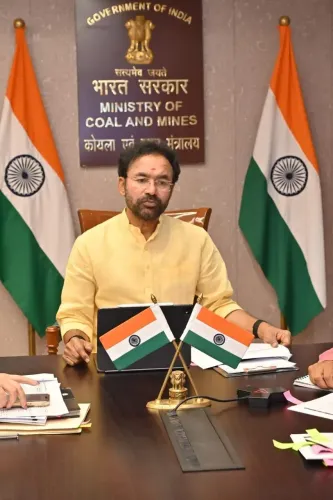
Coal India Limited (CIL) is deploying AI, IoT, 5G networks and autonomous machinery across its underground and open-cast mines, per a Coal Ministry factsheet dated 15 September 2026 .
Non-invasive 2D/3D seismic surveys are reducing boreholes by up to 50 per cent , cutting exploration costs and time.
Electric detonators were fully phased out in 2024-25 in favour of ultra-safe electronic detonators ; AI fatigue monitors and VR training are now in active use.
CIL targets underground production of 100 MT using Continuous Miner, Longwall and Highwall technology. ₹23,465 crore is committed to seven critical railway projects; four are commissioned , with the rest due by FY 2027-28 .
CIL has signed an MoU with NRSC for an AI-powered satellite geo-spatial dashboard and is working with IIT Madras on electrification of fossil-fuel mining equipment.
Coal India Limited (CIL), the state-owned mining behemoth, is executing a sweeping technological overhaul across its underground (UG) and open-cast (OC) operations, deploying artificial intelligence, IoT sensors, 5G networks and autonomous machinery to raise efficiency, improve worker safety and reduce environmental impact. The shift, detailed in a factsheet issued by the Coal Ministry on 15 September 2026, marks one of the most ambitious digital transformations in Indian public-sector mining history.
Advanced Resource Detection and Data-Driven Exploration
CIL has moved away from traditional, invasive drilling methods toward a combination of 2D/3D seismic surveys and non-invasive core drilling, which reportedly cuts borehole requirements by up to 50 per cent. Spectral Enhancement (SPE) assaying is being used alongside these surveys to sharply improve coal-quality determination efficiency.
Machine-learning algorithms — including Support Vector Machines (SVM), Decision Trees, Random Forest, MLP and XGBoost — are now interpreting banded coal seams from geophysical logs such as Gamma-ray, Density and Resistivity data. CIL's research arm, CMPDI, applies remote sensing, GIS, LiDAR, drones and bathymetric surveys across pre-mining, active and post-mining stages to maintain a continuous spatial record of each mine site.
Significantly, CIL has signed a Memorandum of Understanding (MoU) with the National Remote Sensing Centre (NRSC) to co-develop an AI-powered satellite-based geo-spatial dashboard for mine monitoring and environmental auditing — a first for Indian public-sector coal mining at this scale.
Blast-Free Technology and AI-Enabled Safety
CIL is progressively deploying blast-free mining technology to minimise dust, noise and ground vibration while improving coal product quality and reducing loss during extraction. As part of this safety-first push, conventional electric detonators were fully phased out in 2024-25, replaced by ultra-safe electronic detonators.
AI-based safety systems are now being embedded in mining machinery, covering operator fatigue monitoring, proximity warning systems, 360-degree cameras and automatic fire detection and suppression. Training has been upgraded through AI simulators and Virtual Reality (VR) environments. Digitalisation of logistics — through GPS-based truck dispatch, On-board Information and Tracking and Dispatch Systems (OITDS), Payload Monitoring Systems (PLMS) and Vehicle Health Monitoring Systems (VHMS) — is further improving fleet utilisation.
Underground Production Target and Infrastructure Push
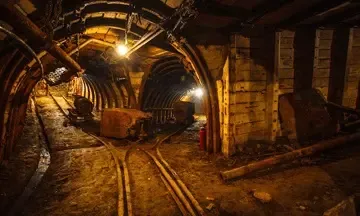
CIL has set a target of raising UG production to approximately 100 million tonnes (MT) using Continuous Miner, Longwall and Highwall technologies. Continuous mining has already been adopted across several mines, while large-scale Longwall technology is now being introduced. Major investments are also planned in Paste Fill technology to unlock high-grade coal locked in mine pillars, alongside enhanced ventilation and strata management systems.
On coal evacuation, CIL is strengthening its First Mile Connectivity (FMC) network and critical railway infrastructure including Rapid Loading Systems. Of seven critical railway projects with a combined investment of ₹23,465 crore, four have already been commissioned, with the remaining three targeted for completion by FY 2027-28.
Digital Infrastructure: OT and Enterprise IT
CIL's digital framework rests on two pillars. In Operational Technology (OT), it has deployed Integrated Command and Control Centres (ICCCs), vehicle tracking, RFID systems, weighbridge automation and GPS fleet monitoring, with the DigiCoal pilot currently covering seven mines. In Enterprise IT, CIL has implemented SAP S/4HANA, e-Office, cloud infrastructure and data analytics, integrating procurement, inventory, finance and HR functions into a paperless, data-driven system.
What Comes Next: Autonomous Mining and Low-Carbon Transition
In the next phase, CIL plans to transition toward intelligent, autonomous and low-carbon mining. Remote-operated Line-of-Sight dozers are being piloted in South Eastern Coalfields Limited (SECL) and Northern Coalfields Limited (NCL), alongside electric mobility and Trolley Assist technology. CIL is also collaborating with IIT Madras on the safe electrification of fossil-fuel mining equipment.
For underground mines specifically, the company is developing 5G networks, digital twins and autonomous monitoring rovers for communication, automation and real-time simulation. If executed at scale, these investments would position CIL among the more technologically advanced state-owned coal miners globally.
Point of View
But the critical question is pace and coverage: India has over 300 operational coal mines, and pilots in seven mines under DigiCoal or remote dozers in two subsidiaries barely scratch the surface. The company's own underground production has chronically underperformed open-cast output, and Longwall technology — long promised as a game-changer — has faced persistent implementation hurdles in Indian geological conditions. The IIT Madras collaboration on equipment electrification is forward-looking, but the timeline for scaling from pilot to fleet-wide deployment remains unspecified. Without hard output and safety-incident benchmarks tied to each technology layer, this risks becoming another well-intentioned modernisation roadmap that moves slower than the headlines suggest.
NationPress
15 Sept 2026
Frequently Asked Questions
What is Coal India's smart mining initiative?
Coal India Limited (CIL) is executing a large-scale technological overhaul of its underground and open-cast mines, deploying AI, IoT, 5G networks, digital twins and autonomous machinery to improve efficiency, safety and environmental outcomes. The initiative was detailed in a Coal Ministry factsheet released on 15 September 2026.
What is Coal India's underground production target?
CIL is targeting underground coal production of approximately 100 million tonnes (MT) using Continuous Miner, Longwall and Highwall technologies. Continuous mining is already in use, while large-scale Longwall technology is being introduced across relevant mines.
How much is Coal India investing in railway infrastructure?
Coal India is investing ₹23,465 crore across seven critical railway projects to strengthen coal evacuation. Four of these projects have already been commissioned, with the remaining three targeted for completion by FY 2027-28.
What AI and safety technologies is Coal India deploying?
CIL is embedding AI-based operator fatigue monitoring, proximity warning systems, 360-degree cameras and automatic fire detection and suppression in mining equipment. Electronic detonators replaced electric ones in 2024-25, and VR and AI simulators are being used for worker training.
What is the NRSC partnership announced by Coal India?
CIL has signed an MoU with the National Remote Sensing Centre (NRSC) to jointly develop an AI-powered, satellite-based geo-spatial dashboard for real-time mine monitoring and environmental auditing — marking a first for Indian public-sector coal mining at this scale.