Why Did Coupang's Interim CEO Face 14-Hour Interrogation Over Perjury Allegations?
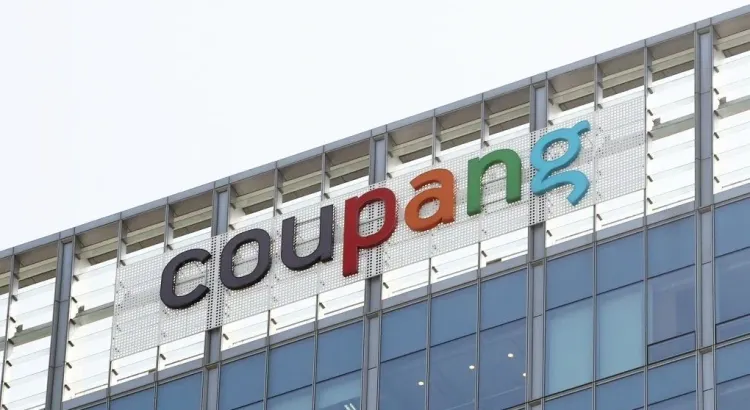
Synopsis
Coupang’s interim CEO Harold Rogers has been embroiled in controversy following a 14-hour police interrogation regarding perjury allegations linked to a massive data breach affecting millions. As investigations unfold, the implications for Coupang and its leadership could be significant.
Key Takeaways
Harold Rogers has faced serious allegations of perjury .
Coupang is under scrutiny for a massive data breach.
Over 33 million customers have been affected.
Police investigations are intensifying.
Rogers is set to testify before a U.S. committee .
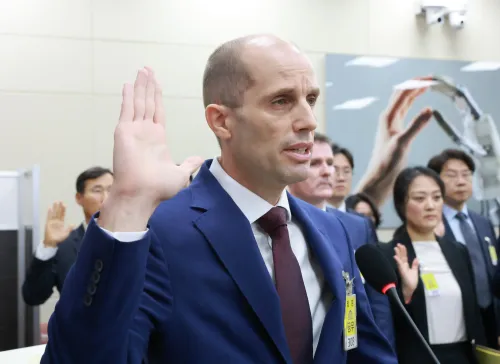
Seoul, Feb 7 (NationPress) Harold Rogers, the interim CEO of Coupang, made his way back early Saturday following a grueling 14-hour police interrogation regarding allegations of perjury during his testimony before the South Korean parliament last December.
Rogers faces accusations of providing false statements under oath during the parliamentary session held on December 30-31, which addressed Coupang's significant data breach impacting over 33 million customers in South Korea, as reported by Yonhap news agency.
He informed lawmakers that Coupang had undertaken its own investigation into a Chinese national suspected of involvement in the data breach and had seized his laptop following directives from the National Intelligence Service, South Korea's intelligence agency.
Authorities are expected to delve deeper into the allegations against Rogers.
Emerging from the police investigative headquarters in Mapo at 3:25 a.m., Rogers departed without responding to queries from the press.
This marks the second time Rogers has been questioned within a week as police intensify their focus on the data breach case that was revealed by the U.S.-listed e-commerce giant only in November.
Authorities are likely to summon him again for further questioning regarding potential cover-ups related to the death of a Coupang employee at a logistics center in 2020.
Rogers is anticipated to leave South Korea later this month to testify before the U.S. House Committee on the Judiciary, which is investigating what it describes as South Korea's discriminatory targeting of American companies.
In a separate development, Coupang announced on Thursday that it has detected a data leak involving personal information from over 165,000 customer accounts, linked to an incident initially recognized in November.
The leaked information comprises names, phone numbers, and addresses provided by customers for shipping purposes, and Coupang has informed the affected individuals about the breach in accordance with guidelines from the state’s personal information protection authority.
Point of View
It is crucial to provide an unbiased perspective on this developing story. The questioning of Coupang's interim CEO highlights serious concerns regarding data security and corporate governance. As investigations progress, the impact on the company and its customers remains to be seen. We will continue to monitor the situation closely.
NationPress
10 Oct 2026
Frequently Asked Questions
What are the allegations against Harold Rogers?
Harold Rogers is facing allegations of perjury related to his testimony concerning a data breach at Coupang.
How many customers were affected by the data breach?
The data breach has impacted more than 33 million customers in South Korea.
What personal information was leaked?
The leaked data includes names, phone numbers, and addresses of customers.
Is there a possibility of further interrogations?
Yes, police are likely to summon Rogers for additional questioning regarding potential cover-ups related to a worker's death.
When is Rogers scheduled to testify before the U.S. House Committee?
Rogers is expected to leave South Korea later this month to testify before the U.S. House Committee on the Judiciary.