Diwali Muhurat Trading 2026: Nifty, Sensex open Samvat 2083 after 7-session rally
Synopsis
Indian markets enter Samvat 2083 with rare momentum — Nifty above 25,000 for the first time since February and Sensex logging its strongest weekly gain in over five years. With Nifty positive in every Muhurat session since 2018, the auspicious session on 8 November carries both historical tailwinds and a caution: experts warn against letting festive optimism override fundamentals.
Key Takeaways
The Muhurat trading session for Diwali 2026 was held on 8 November from 2.20 pm to 3.30 pm IST , opening Samvat 2083 .
The Nifty 50 closed at approximately 25,030 (+ 2.01% ) on Friday — its first close above 25,000 since February.
The BSE Sensex surged 1,718 points (+ 2.17% ) to around 81,028 — the strongest weekly gain for both indices since February 2021 .
The Nifty has closed higher in every Muhurat session since 2018 , and in 8 of the last 10 sessions (2016–2025).
Experts favour banking, capital markets, manufacturing, exports, consumption and digital businesses for Samvat 2083.
Market experts caution against impulsive festive buying, recommending focus on fundamentals, valuations and long-term goals .
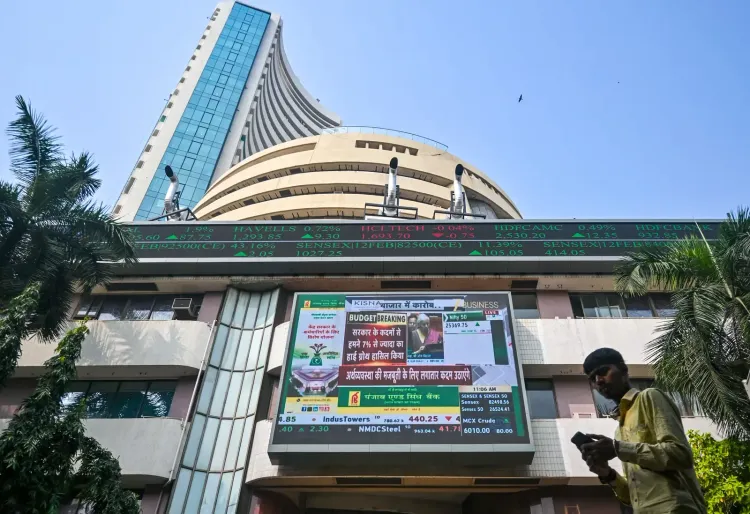
Indian stock markets held their special Muhurat trading session on Sunday, 8 November 2026, running from 2.20 pm to 3.30 pm IST, ceremonially marking the beginning of Samvat 2083. The session arrived on the back of an extraordinary seven-session rally, with the Nifty 50 having reclaimed the pivotal 25,000 level and the Sensex posting its strongest weekly gain since February 2021.
Market Momentum Heading Into Samvat 2083
Friday's close set a bullish tone ahead of the auspicious session. The Nifty 50 settled at approximately 25,030, up 2.01% — the first close above the psychological 25,000 mark since February. The BSE Sensex surged 1,718 points, or 2.17%, to close around 81,028, representing the best weekly performance for both benchmarks in over five years.
Analysts noted that the Nifty 50 had 'decisively broken out of its prior consolidation range, closing well above the psychological 25,000 mark,' signalling that the Indian market enters the new Samvat year from a position of genuine strength.
Historical Track Record of Muhurat Sessions
Data spanning the last 10 Muhurat trading sessions from 2016 to 2025 shows that both the Nifty and Sensex closed higher in eight of those sessions, with declines recorded only in 2016 and 2017. Notably, the Nifty has risen in every single Muhurat session since 2018 — an unbroken run of seven consecutive positive closes that underscores the session's historically bullish character.
This comes amid a broader divergence between global and domestic investor sentiment. While global investors remain cautious amid uncertainty surrounding the AI trade, domestic participants have consistently stepped in to buy on every market dip, providing a steady floor to valuations.
Sector Picks and Expert Guidance for Samvat 2083
Market experts favour banking and financial services, capital markets, manufacturing, global outsourcing and exports, consumption, and digital businesses as the top themes for Samvat 2083. These sectors are seen as beneficiaries of India's structural growth story, supported by domestic consumption and a maturing digital economy.
Experts also recommended that investors and traders adopt a cautious, stock-specific approach during the Muhurat session itself, warning against impulsive decisions driven purely by festive sentiment.
What Investors Should Keep in Mind
According to market experts, long-term investors can use the occasion to review asset allocation and selectively accumulate fundamentally strong stocks, while short-term traders should monitor technical levels and global cues before taking fresh positions. The Muhurat session is traditionally considered auspicious for initiating investments and reviewing financial portfolios, but experts stress that fundamentals, valuations, and long-term financial goals must remain the guiding principles.
With Samvat 2083 opening on a broadly positive note, all eyes will be on how domestic inflows and global macro cues — particularly around US monetary policy and AI-sector volatility — shape the market's trajectory in the weeks ahead.
Point of View
000 after months of consolidation, combined with a seven-session rally, hands domestic investors a genuinely constructive entry point into Samvat 2083. Yet the divergence between cautious global money (wary of AI-trade volatility and US macro signals) and confident domestic flows is a tension that cannot hold indefinitely. If global risk appetite turns sharply, the domestic buying support that has underpinned this rally will face its sternest test. Experts are right to flag fundamentals over festivity: Muhurat sessions have historically produced green closes, but the weeks that follow depend entirely on earnings, liquidity, and the Fed — none of which respect the Hindu calendar.
NationPress
8 Nov 2026
Frequently Asked Questions
What is the Muhurat trading session and when was it held in 2026?
The Muhurat trading session is a special, symbolically auspicious stock market session held on Diwali to mark the start of the new Hindu financial year. In 2026, it was held on Sunday, 8 November, from 2.20 pm to 3.30 pm IST, opening Samvat 2083.
How has the Nifty performed in past Muhurat trading sessions?
Across the 10 Muhurat sessions from 2016 to 2025, the Nifty and Sensex closed higher in eight of them, with declines only in 2016 and 2017. The Nifty has risen in every Muhurat session since 2018 — a streak of seven consecutive positive closes.
Why is the market entering Samvat 2083 with optimism?
The Nifty 50 reclaimed the 25,000 level for the first time since February, closing at approximately 25,030 (+2.01%), while the Sensex surged 1,718 points to around 81,028 — the strongest weekly performance for both indices since February 2021. This followed a seven-session rally driven by consistent domestic buying.
Which sectors do experts recommend for Samvat 2083?
Market experts favour banking and financial services, capital markets, manufacturing, global outsourcing and exports, consumption, and digital businesses as the leading themes for Samvat 2083, citing India's structural growth drivers.
What cautions have experts issued for Muhurat trading?
Experts advise against impulsive decisions driven by festive sentiment. Long-term investors are encouraged to review asset allocation and accumulate fundamentally strong stocks, while short-term traders are urged to monitor technical levels and global cues before taking positions.