Rupee at ₹100/dollar: Arvind Panagariya says don't panic, RBI should let market adjust

Synopsis
Former NITI Aayog Vice-Chairman Arvind Panagariya has made a contrarian case: let the rupee fall to ₹100 per dollar if it must. His argument — that RBI intervention to defend a psychological level risks draining forex reserves while market-driven adjustment is more durable — cuts against the instinct of most policymakers and puts the spotlight squarely on how India manages its next currency stress test.
Key Takeaways
Arvind Panagariya , former NITI Aayog Vice-Chairman, says there is no need to panic if the rupee touches ₹100 per dollar .
He urged the RBI to allow the exchange rate to adjust naturally rather than intervening to defend a psychological threshold.
Aggressive rupee defence, he warned, risks depleting India's foreign exchange reserves .
Panagariya opposed high-interest NRI deposit schemes , citing significant long-term economic costs.
He supports PM Modi's voluntary appeal to cut discretionary forex spending but opposes mandatory restrictions.
He argued that higher global crude prices should be passed through to domestic fuel prices rather than being artificially suppressed.
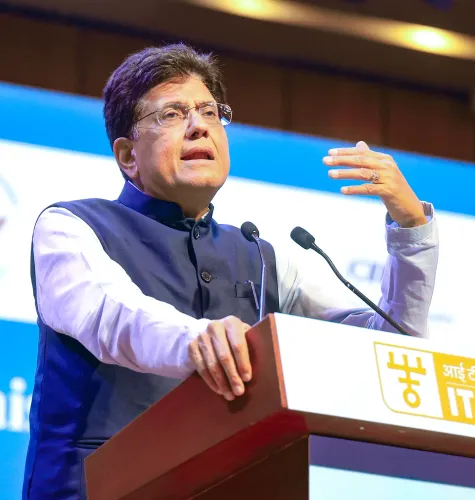
Economist and former NITI Aayog Vice-Chairman Arvind Panagariya has urged against alarm if the rupee slides to the ₹100-per-dollar mark, arguing that the Indian currency is capable of recovering once prevailing global uncertainty subsides. Speaking in an interview with a financial news channel, Panagariya said the Reserve Bank of India (RBI) should let the exchange rate perform its natural shock-absorbing function rather than intervening heavily to defend a psychological threshold.
Let the Exchange Rate Do Its Job
'Don't panic at ₹100 per dollar,' Panagariya said, adding that the exchange rate must be allowed to adjust naturally during periods of heightened geopolitical tensions and global volatility. He cautioned that aggressively defending the rupee risks depleting India's foreign exchange reserves over time — a cost that could outweigh the short-term comfort of a stronger currency optic.
According to Panagariya, whether the current global disruption turns out to be brief or protracted, a policy of permitting gradual currency depreciation would enable the broader economy to adapt more efficiently than an artificially held rate.
On Fuel Prices and the Government's Role
The economist extended the same market-logic argument to domestic fuel pricing. He argued that higher global crude oil prices should be allowed to pass through to domestic consumers rather than being suppressed through state subsidies or administrative controls. 'The government is not there to guarantee a fixed price of any product,' he said, signalling concern about the fiscal and distortionary costs of prolonged price suppression.
Reservations on NRI Deposit Schemes
Panagariya also expressed reservations about proposals to attract foreign currency inflows through high-interest NRI deposit schemes. While such schemes can provide a short-term buffer for the rupee, he warned they carry significant long-term costs for the economy — particularly if interest obligations are denominated in foreign currency or if they crowd out more sustainable capital flows.
On Modi's Appeal and Discretionary Forex Spending
The former policy adviser said he supports Prime Minister Narendra Modi's appeal encouraging citizens to voluntarily reduce discretionary foreign exchange spending. However, he drew a clear line at mandatory restrictions, arguing that compulsory curbs on foreign exchange use could prove counterproductive and damage India's standing as an open economy.
Notably, earlier this month Panagariya had reiterated on social media that policymakers should not allow the psychological ₹100-per-dollar level to drive monetary strategy, reinforcing his view that market-driven currency adjustments are more durable during volatile global conditions. As global uncertainty remains elevated, the debate over how far the RBI should go in defending the rupee is set to intensify.
Point of View
Compounding the eventual adjustment. The more uncomfortable argument is on fuel prices — suppressing pass-through has real fiscal costs that tend to surface at the worst possible moment. What mainstream coverage misses is that this is not just an exchange-rate debate; it is a stress test of India's commitment to market-determined pricing across multiple domains simultaneously.
NationPress
9 Oct 2026
Frequently Asked Questions
Why does Arvind Panagariya say India should not panic if the rupee hits ₹100 per dollar?
Panagariya argues that ₹100 per dollar is a psychological level, not an economic threshold. He says the rupee can recover once global uncertainty eases, and that allowing gradual depreciation helps the economy absorb external shocks more efficiently than defending an artificial floor.
What is the risk of the RBI aggressively defending the rupee?
According to Panagariya, aggressive intervention to prop up the rupee could drain India's foreign exchange reserves, leaving the country with fewer buffers for future crises. He believes market-driven currency adjustment is more sustainable during volatile global conditions.
Why did Panagariya oppose high-interest NRI deposit schemes?
He warned that such schemes, while capable of attracting short-term foreign currency inflows, impose significant long-term costs on the economy. The concern is that the interest burden and potential for sudden outflows outweigh the temporary relief they provide to the rupee.
What did Panagariya say about domestic fuel prices and crude oil?
He argued that higher global crude oil prices should gradually be reflected in domestic fuel prices rather than being suppressed by the government. He stated that 'the government is not there to guarantee a fixed price of any product,' signalling concern about the distortionary and fiscal costs of prolonged price controls.
Does Panagariya support PM Modi's call to reduce foreign exchange spending?
Yes, but only as a voluntary measure. Panagariya supports PM Modi's appeal encouraging citizens to cut discretionary forex spending, but he cautioned against making such restrictions mandatory, arguing that compulsory curbs could prove counterproductive and signal a retreat from India's open-economy commitments.