Rupee hits record low of ₹96.88: Piyush Goyal says measures under review

Synopsis
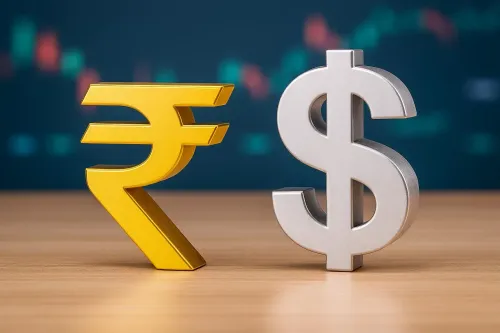
The Indian rupee has hit a record low of ₹96.88 against the dollar, and the government's response so far is coordinated monitoring — not concrete action. Commerce Minister Piyush Goyal's 'several steps under consideration' framing signals intent without commitment, leaving markets to watch the RBI for the next move.
Key Takeaways
The Indian rupee touched a record low of ₹96.88 against the US dollar , triggering government concern.
Commerce Minister Piyush Goyal confirmed on Thursday, 21 May that 'several steps are under consideration' to stabilise the currency.
Pressures include rising crude oil prices , elevated global bond yields , foreign fund outflows , and geopolitical uncertainty.
The government has ruled out import restrictions for now, but has appealed to citizens to reduce spending on import-dependent goods.
A US trade delegation is expected to visit India next month, with trade talks potentially influencing dollar inflows.
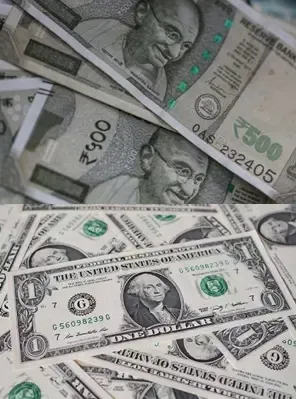
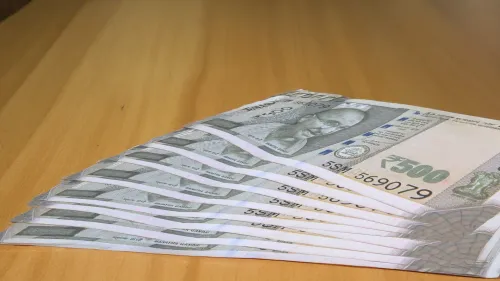
Union Commerce and Industry Minister Piyush Goyal on Thursday said the government is actively monitoring the sharp depreciation of the Indian rupee against the US dollar, with multiple stabilisation measures currently under consideration. His remarks came as the rupee recently touched a record low of ₹96.88 per dollar, raising concerns about import costs and the current account deficit.
What the Government Said
Speaking to reporters on the sidelines of an event in New Delhi, Goyal said all wings of the government are operating in coordination to address the evolving economic situation. 'We are monitoring the situation. All the arms of government are working as a team. Several steps are under consideration,' the minister said.
Despite the pressure on the currency, Goyal expressed confidence in India's underlying economic resilience. 'The situation is globally quite challenging, but we have the confidence and the courage of conviction that we will come out winners even in this challenging time,' he stated.
Key Pressures on the Rupee
The rupee has faced sustained headwinds in recent weeks from a confluence of factors: rising crude oil prices, elevated global bond yields, sustained foreign fund outflows, and broader geopolitical uncertainties roiling international financial markets. India, as a major crude importer, is particularly exposed when oil prices climb alongside a weakening domestic currency.
Notably, this is not the first time the rupee has come under record-low pressure — similar episodes in 2022 and 2023 prompted RBI intervention through dollar sales. The current slide, however, is being watched more closely given the simultaneous tightening of global financial conditions.
No Import Curbs Planned
Responding to questions on whether the government was weighing restrictions on non-essential imports to ease pressure on the current account deficit, Goyal ruled out any such move at present. 'There are no such plans of that sort right now. But we have of course made an appeal to all the citizens of India to be more conscious about their spending on products which are import dependent,' he said.
The clarification is significant: import restrictions, while a blunt tool, have historically been deployed during sharp currency stress episodes. The government's preference, for now, appears to be demand-side persuasion over supply-side controls.
US Trade Talks on the Horizon
On a separate note, Goyal indicated that a US trade delegation is expected to visit India next month, though the US chief negotiator is reportedly not part of the upcoming visit. 'I think he's not coming with them, but there is some plan for them to come next month,' he said. The trade talks are being watched closely given that any tariff or trade agreement with the US could influence dollar inflows and, by extension, rupee stability.
What Comes Next
Market participants and economists will be watching for concrete policy signals from the Reserve Bank of India (RBI) and the Finance Ministry in the days ahead. The government's coordinated stance suggests that intervention — whether through RBI dollar sales, export promotion measures, or capital flow adjustments — remains on the table. A sustained recovery in the rupee will likely depend on both domestic policy action and a broader easing of global risk conditions.
Point of View
Which is standard practice when authorities want to avoid triggering speculative positioning. But the rupee touching ₹96.88 is not a routine wobble; it reflects a structural current account vulnerability amplified by global tightening. The appeal to citizens to cut import-dependent spending is, at best, a symbolic gesture — it does not address the underlying dollar demand from oil imports or FII outflows. The real question is whether the RBI has the forex reserve firepower and the appetite to defend a floor, or whether the government is preparing the ground for a managed depreciation. That answer will come from the RBI's next move, not a minister's press conference.
NationPress
16 Sept 2026
Frequently Asked Questions
What is the current record low of the Indian rupee against the US dollar?
The Indian rupee recently touched a record low of ₹96.88 against the US dollar, according to the government. This level has prompted active monitoring and discussions on stabilisation measures across multiple arms of the government.
What steps is the government considering to stabilise the rupee?
Commerce Minister Piyush Goyal said 'several steps are under consideration' but did not specify them. All wings of the government are reportedly working in coordination, suggesting measures could include RBI intervention, export promotion, or capital flow adjustments.
Is the government planning to restrict non-essential imports to protect the rupee?
No. Goyal explicitly ruled out import restrictions at this stage, saying 'there are no such plans of that sort right now.' However, the government has appealed to citizens to be more conscious of spending on import-dependent products.
What factors are driving the rupee's depreciation?
The rupee is under pressure from a combination of rising crude oil prices, elevated global bond yields, sustained foreign fund outflows, and geopolitical uncertainties in global financial markets. India's status as a major crude importer makes it especially vulnerable when oil prices rise alongside a weaker currency.
How do the upcoming US trade talks relate to the rupee's stability?
A US trade delegation is expected to visit India next month. Any progress on a bilateral trade agreement with the US could improve dollar inflows into India, which would help ease pressure on the rupee. The outcome of these talks is being closely watched by currency markets.