What Factors Are Causing the Depreciation of the Rupee?
Synopsis
The depreciation of the Indian rupee has been significantly influenced by increasing trade deficits and ongoing trade agreement negotiations with the US. This article explores the various domestic and global factors affecting the rupee's value and the implications for the economy. Stay informed on how these developments might impact your financial landscape.
Key Takeaways
Rupee depreciation is influenced by trade deficits and international factors.
Export competitiveness may improve due to a weaker rupee.
Import costs could rise, affecting domestic prices.
RBI actively monitors and intervenes in the forex market.
Government policies aim to attract more FDI for economic growth.
New Delhi, Dec 16 (NationPress) The decline of the Indian rupee in the financial year 2025-26 has been affected by a rising trade deficit and potential outcomes from the ongoing negotiations regarding India’s trade agreement with the US, as reported in Parliament on Tuesday.
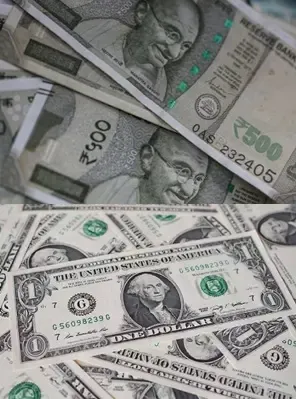
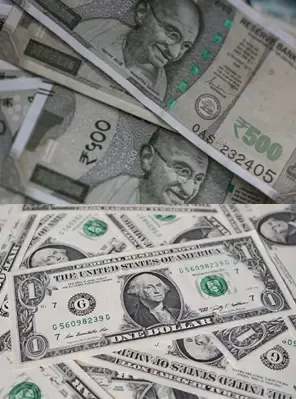
This month, the Indian rupee hit a significant milestone by exceeding 90 against the US dollar.
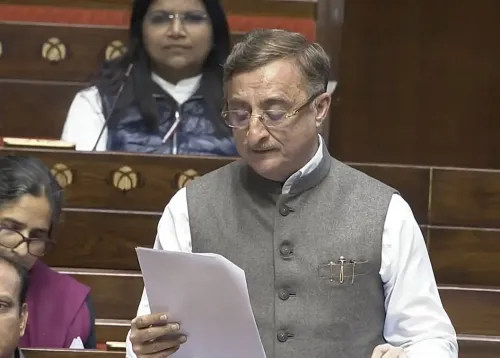
Minister of State for Finance Pankaj Chaudhary informed the Rajya Sabha in a written response that various domestic and international elements impact the exchange rate of the Indian rupee, including the fluctuations of the Dollar Index, trends in capital flows, interest rates, crude oil prices, and current account deficits, among others.
He also pointed out that while currency depreciation may boost export competitiveness, thus positively affecting the economy, it could also lead to increased prices for imported goods. The overall effect of exchange rate depreciation on domestic prices hinges on how much international commodity prices are passed onto the local market.
Moreover, the volume of imports is influenced by multiple factors such as demand and supply dynamics in the global market, the nature of traded goods (either essential or luxury), freight charges, and the availability of substitute products. Consequently, the impact of exchange rate fluctuations on import costs and, by extension, domestic inflation and the economy, cannot be easily disentangled.
Chaudhary emphasized that the rupee's value is determined by market forces, without any specific target or band set.
The Reserve Bank of India (RBI) consistently monitors the foreign exchange market and intervenes during periods of excessive volatility. Additionally, the RBI keeps an eye on significant global developments affecting the USD-Rupee exchange rate, including monetary policy changes from major central banks, major economic data releases, decisions from OPEC+, and geopolitical events.
To boost foreign direct investments (FDI), the government has rolled out an investor-friendly FDI policy, allowing 100% FDI under the automatic route in most sectors, barring a few strategically important ones.
Over 90% of FDI inflow comes through this automatic route.
“The government is dedicated to attracting FDI into the nation by eliminating regulatory hurdles, streamlining processes, improving infrastructure, enhancing logistics, and fostering a better business environment to facilitate ease of doing business,” stated the minister.
Point of View
It is crucial to recognize the multitude of factors at play, including trade agreements and market dynamics. This situation presents both challenges and opportunities for the Indian economy. While a weaker rupee may boost exports, it is essential to monitor its impact on import costs and inflation. Our commitment remains to provide accurate and unbiased coverage on financial matters.
NationPress
21 Sept 2026
Frequently Asked Questions
What is causing the Indian rupee to depreciate?
The depreciation of the rupee is primarily due to rising trade deficits and developments in trade agreements with the US, alongside other global economic factors.
How does currency depreciation affect exports?
Currency depreciation can enhance export competitiveness, making Indian goods cheaper for foreign buyers, thus potentially boosting export volumes.
What impact does the depreciation have on imported goods?
While depreciation can raise the cost of imported goods, the overall effect on domestic prices depends on the extent to which international prices are passed onto consumers.
How does the Reserve Bank of India respond to currency fluctuations?
The RBI monitors the foreign exchange market regularly and intervenes during excessive volatility to maintain stability.
What role does FDI play in the Indian economy?
Foreign Direct Investment (FDI) is crucial for economic growth, bringing in capital, technology, and expertise, which can enhance overall economic performance.