US FDA adds vision loss warning to Ozempic, Wegovy and other GLP-1 drugs
Synopsis
The US FDA has ordered a vision loss warning on all GLP-1 weight-loss and diabetes drugs — including Ozempic, Wegovy, Mounjaro, and Zepbound — after a review of 125-plus clinical trials found the rare eye condition NAION occurs slightly more often in GLP-1 users than in those on placebo. It is a rare risk, but it is permanent when it occurs, and it now sits on the label of some of the world's best-selling medicines.
Key Takeaways
The US FDA has mandated a new safety warning on all GLP-1 receptor agonist drugs, effective 10 November 2026 .
The warning covers non-arteritic anterior ischemic optic neuropathy (NAION) , a rare condition that can cause permanent vision loss.
Affected medicines include Novo Nordisk's Ozempic and Wegovy, and Eli Lilly's Mounjaro and Zepbound.
A review of more than 125 clinical trials found NAION in roughly 6 per 100,000 GLP-1 users versus fewer than 4 per 100,000 on placebo or other treatments.
The FDA described the risk as rare and has not recommended withdrawal of any drug.
Patients experiencing sudden vision changes — blurred vision, blind spots, colour distortions — are advised to seek medical attention immediately.
The US Food and Drug Administration (FDA) has ordered a new safety warning to be added to the labels of all glucagon-like peptide-1 (GLP-1) receptor agonist drugs — including blockbuster weight-loss and diabetes medicines such as Ozempic, Wegovy, Mounjaro, and Zepbound — after identifying a rare but serious eye condition that can cause severe and potentially permanent vision loss. The directive, issued on 10 November 2026, marks a significant new regulatory development for one of the fastest-growing drug classes in the world.
The Eye Condition at the Centre of the Warning
The warning concerns non-arteritic anterior ischemic optic neuropathy (NAION), a disorder triggered by reduced blood flow to the optic nerve. The condition can cause sudden vision impairment and, in some cases, irreversible loss of sight. The FDA said patients and healthcare providers should watch for symptoms including blurred vision, blind spots, colour distortions, and other visual disturbances, and that anyone experiencing sudden changes in vision should seek immediate medical attention.
What the Data Shows
The FDA's action follows a 2024 medical study that first raised a possible link between semaglutide — the active ingredient in Ozempic and Wegovy — and NAION. The regulator subsequently reviewed more than 125 clinical trials and found that NAION occurred in roughly six out of every 100,000 patients who used a GLP-1 medicine for at least a year. By comparison, the incidence rate among patients receiving a placebo or other glucose-lowering treatments was fewer than four cases per 100,000 people. The FDA also identified reports of the condition through its adverse event reporting system, which tracks drug-related side effects and injuries.
Which Drugs Are Affected
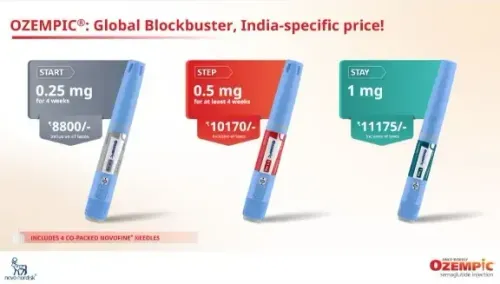
The new label warning applies to the entire GLP-1 receptor agonist class. Among the most prominent medicines covered are Novo Nordisk's Ozempic and Wegovy, and Eli Lilly's Mounjaro and Zepbound — some of the best-selling pharmaceutical products globally. These drugs are used to treat obesity, type 2 diabetes, and related metabolic conditions, and have seen surging demand in recent years on the back of strong clinical evidence for weight management.
Regulatory Context and What It Means for Patients
The FDA stressed that NAION remains a rare condition and that the new warning is intended to inform rather than discourage use. Notably, this is not the first time GLP-1 drugs have faced expanding regulatory scrutiny — earlier concerns have included pancreatitis risk, thyroid tumour signals in animal studies, and, more recently, questions around muscle mass loss. This latest action adds an ophthalmological dimension to the growing body of safety considerations around the class.
Healthcare providers are expected to update patient counselling to include discussion of vision-related symptoms, particularly for patients who are already at elevated risk for optic nerve disorders. The FDA has not recommended withdrawal of any drug from the market.
Industry and Market Implications
The warning arrives as GLP-1 medicines continue to reshape global pharmaceutical markets. Novo Nordisk and Eli Lilly have invested heavily in production capacity to meet demand; any shift in prescribing patterns, even at the margin, could have significant commercial consequences. Analysts will be watching whether this triggers further post-market surveillance requirements or liability litigation in the United States and other markets. India, where GLP-1 prescriptions are rising among urban diabetic and obese populations, may also see regulatory follow-through from the Central Drugs Standard Control Organisation (CDSCO).
Point of View
000 is statistically small, yet NAION's potential permanence means even a marginal elevation in incidence is clinically meaningful, especially for a drug class taken by tens of millions globally. What is striking is the speed of regulatory action — the triggering study was published only in 2024, and label changes typically take years. That pace suggests the FDA is under pressure to demonstrate vigilance as GLP-1 drugs become near-ubiquitous. For India, where CDSCO often mirrors FDA label updates and where urban GLP-1 prescriptions are climbing, the downstream question is whether prescribers will voluntarily update counselling or wait for a domestic regulatory push.
NationPress
10 Nov 2026
Frequently Asked Questions
What is the new FDA warning on Ozempic and Wegovy about?
The US FDA has ordered a warning about a rare eye condition called non-arteritic anterior ischemic optic neuropathy (NAION) to be added to the labels of all GLP-1 receptor agonist drugs, including Ozempic and Wegovy. NAION involves reduced blood flow to the optic nerve and can cause sudden, potentially permanent vision loss.
How rare is the vision loss risk from GLP-1 drugs?
According to the FDA's review of more than 125 clinical trials, NAION occurred in roughly six out of every 100,000 patients who used a GLP-1 medicine for at least a year, compared with fewer than four per 100,000 among those on placebo or other glucose-lowering treatments. The FDA has described the condition as rare.
Which weight-loss and diabetes drugs are covered by the new warning?
The warning applies to the entire GLP-1 receptor agonist class. The most prominent medicines affected include Novo Nordisk's Ozempic and Wegovy, and Eli Lilly's Mounjaro and Zepbound — all widely used to treat obesity and type 2 diabetes.
Should patients stop taking Ozempic or Wegovy because of this warning?
The FDA has not recommended that patients stop taking any GLP-1 drug. The regulator says the warning is intended to inform patients and healthcare providers. Anyone experiencing sudden vision changes such as blurred vision, blind spots, or colour distortions should seek medical attention immediately.
What symptoms should GLP-1 drug users watch for?
The FDA advises users to watch for blurred vision, blind spots, colour distortions, and other sudden visual disturbances. These can be signs of NAION and warrant immediate medical attention, as the condition can in some cases result in permanent vision impairment.