Kishan Reddy: Bastar to Lal Chowk, a new Diwali shines
Synopsis
Union Minister G. Kishan Reddy used Diwali to invoke Bastar's insurgency past and Srinagar's Lal Chowk as symbols of restored peace, connecting the festival's light to the BJP government's security and integration record across former conflict zones.
Key Takeaways
Kishan Reddy , Union Minister of Coal and Mines and BJP Telangana president, posted a Diwali message on 10 November 2026 in Telugu.
He referenced Bastar, Chhattisgarh — long affected by Naxal insurgency — and Lal Chowk, Srinagar — historically associated with separatist protests — as symbols of transformation.
The central government's National Policy and Action Plan (2015) targeted LWE-affected districts for combined security and development operations.
The abrogation of Article 370 in August 2019 ended Jammu and Kashmir's special status; the BJP has since cited Lal Chowk as a marker of restored normalcy.
Reddy's post is part of a broader BJP messaging pattern framing reduced conflict-zone violence as proof of governance success.
Progress on LWE district reclassification and new J&K security packages will be the real-world test of the claims embedded in the post.
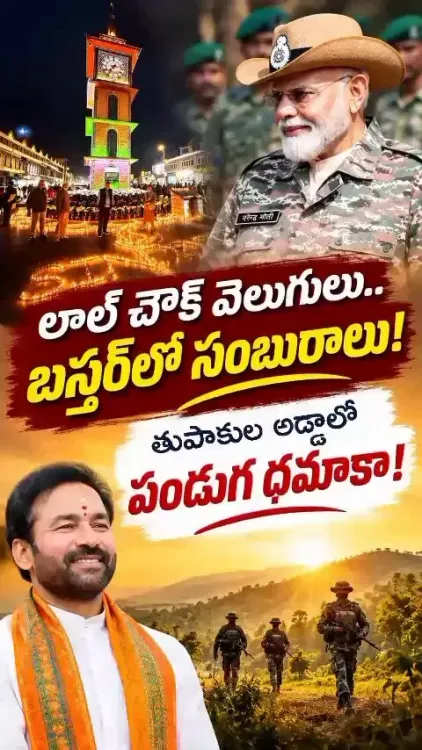
From forests that once echoed with gunfire to a square where hoisting the national flag was once an act of defiance — Union Coal and Mines Minister G. Kishan Reddy invoked two of India's most charged conflict symbols on Tuesday, 10 November 2026, to mark what he called a transformed nation lighting up for Diwali.
Writing in Telugu, Reddy posted: 'ఒకప్పుడు తుపాకుల మోతలతో దద్దరిల్లిన బస్తర్ అడవుల నుంచి, జెండా ఎగరవేయడానికి భయపడ్డ కాశ్మీర్ లాల్ చౌక్ దాకా' — 'From the forests of Bastar that once shook with the sound of guns, to Kashmir's Lal Chowk where people once feared to hoist the flag… today the entire nation glows with the fresh light of Diwali.'
Bastar's long shadow — and the government's claim of a new dawn
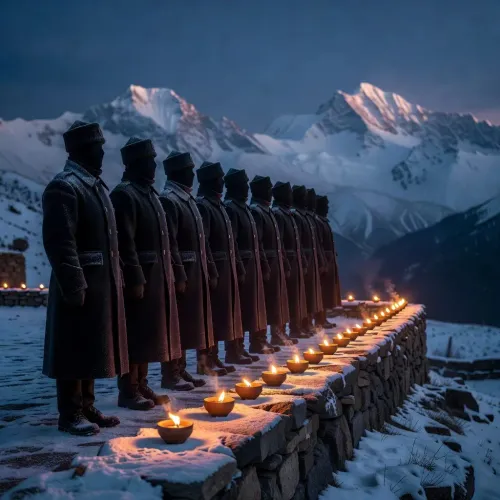
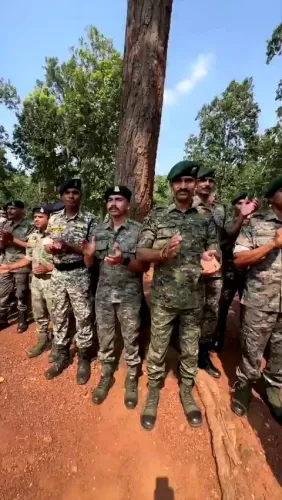
Bastar, the sprawling forested region in Chhattisgarh, spent decades at the epicentre of Left Wing Extremism. Naxal insurgency rendered large parts of the region inaccessible, and security forces faced near-constant ambushes. The central government's National Policy and Action Plan (2015) targeted LWE-affected districts for simultaneous security operations and accelerated development — roads, schools, banking connectivity — in a pincer approach designed to shrink the Maoist footprint. Reddy's reference to guns falling silent in those forests is a pointed invocation of that campaign's claimed progress.
Lal Chowk: the flag, the square, and what Article 370 changed
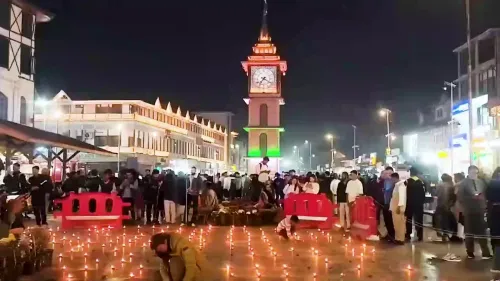
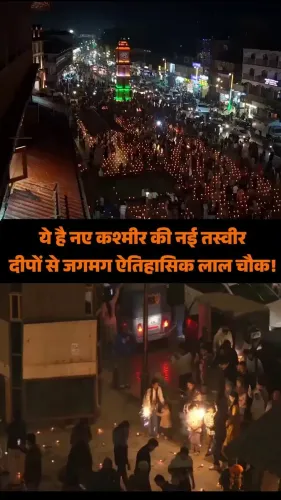
Lal Chowk in Srinagar carries outsized symbolism in India's political memory. The clock-tower square was for years a flashpoint — flag-hoisting ceremonies there were flashpoints for separatist protests, and security deployments around Republic Day and Independence Day were massive. The abrogation of Article 370 in August 2019, which ended Jammu and Kashmir's special constitutional status, fundamentally altered the administrative and political landscape of the region. The BJP has since repeatedly used Lal Chowk as a symbolic marker of normalcy restored, and Reddy's post consciously slots into that established narrative.
Diwali as political metaphor
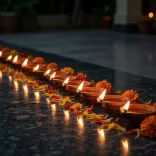
The timing is deliberate. Diwali — the festival of lights — provides an irresistible canvas for a minister reaching his Telugu-speaking base across Telangana. By pairing it with Bastar and Lal Chowk, Reddy frames the festival not just as cultural celebration but as the culmination of a governance arc: conflict zones converted, sovereignty asserted, celebrations possible where they once were not. It is a compressed argument for the ruling party's security and integration record, delivered in the language of festival warmth rather than campaign rhetoric. The post includes a video — the visual layer likely amplifying that message further.
Whether one reads the arc as achievement or aspiration, the symbolism Reddy chose is precise. Bastar and Lal Chowk are not random metaphors — they are the two addresses where the idea of a unified, celebratory India was most visibly contested. Placing Diwali's light at both addresses is as much a governance claim as it is a Diwali greeting.
The next chapter to watch: how LWE-affected districts in Chhattisgarh are reclassified by the central government, and what new security or development packages follow for Jammu and Kashmir — the real-world scorecard behind the festival metaphor.
Point of View
He converts a cultural moment into a governance report card for a Telugu-speaking audience that spans both national security concern and regional pride. The choice of Lal Chowk specifically is not accidental: it remains the BJP's most recognisable shorthand for asserting that the state has been fully reclaimed. How durable that narrative proves will depend on the next round of LWE district audits and ground-level reporting from the Kashmir valley.
NationPress
10 Nov 2026
Frequently Asked Questions
Why did Kishan Reddy mention Bastar in his Diwali message?
Reddy cited Bastar as a region once shaken by Naxal gunfire that now participates in Diwali celebrations, using it to illustrate the BJP government's claim of reduced Left Wing Extremism under its counter-insurgency and development programmes.
What is the significance of Lal Chowk in Kashmir?
Lal Chowk in Srinagar is a historic square long associated with separatist protests, where flag-hoisting was once a flashpoint requiring heavy security. The BJP regularly invokes it as a symbol of normalcy restored after the abrogation of Article 370 in 2019 .
What was India's National Policy and Action Plan for LWE districts?
Launched in 2015 , the National Policy and Action Plan targeted Left Wing Extremism-affected districts — including those in Bastar — with simultaneous security operations and fast-tracked development such as roads, banking, and schools.
What changed in Kashmir after Article 370 was abrogated?
The abrogation of Article 370 in August 2019 ended Jammu and Kashmir's special constitutional status, restructured it into two Union Territories, and enabled direct central administration — a move the BJP frames as the foundation of subsequent normalcy in the region.
Who is G. Kishan Reddy?
G. Kishan Reddy is the Union Minister of Coal and Mines in the Indian central government and serves as the president of the BJP's Telangana state unit.