Joshi Targets INDI Alliance Over Hindu Identity, Kharge Remark
Synopsis
Union Minister Pralhad Joshi publicly attacked the INDI Alliance on 10 November 2026, accusing Congress, SP and DMK of systematically targeting Hindu identity through remarks on Sanatan Dharma, the Ram Mandir boycott, and a Diwali comment attributed to Congress chief Kharge.
Key Takeaways
Pralhad Joshi posted a direct attack on the INDI Alliance on 10 November 2026 , accusing it of repeated hostility toward Hindu identity.
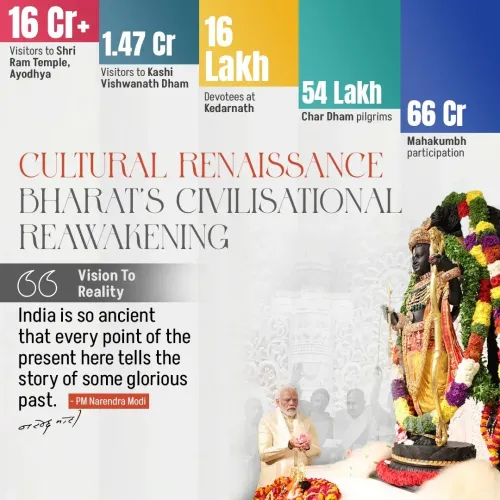
Congress leaders' non-attendance at the Ram Mandir Pran Pratishtha on 22 January 2024 in Ayodhya is cited as a key exhibit.
The 'Hindu terror' or 'saffron terror' framing by some Congress figures dates to 2008–2010 and remains a live BJP talking point.
Congress president Mallikarjun Kharge is accused of calling Diwali 'Khushiyon ki Eid' — a remark whose exact context is unconfirmed from independent sources.
DMK and SP leaders are also named as having made remarks targeting Sanatan Dharma .
The attack follows a recurring BJP electoral strategy of framing opposition secularism as anti-Hindu vote-bank politics ahead of state elections.
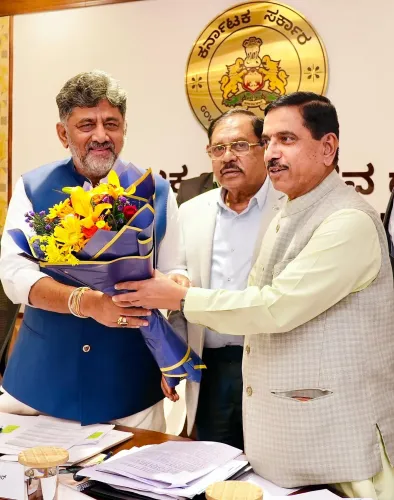
A string of opposition actions — from skipping the Ram Mandir Pran Pratishtha to remarks attributed to Congress president Mallikarjun Kharge — have drawn sharp fire from Union Consumer Affairs Minister Pralhad Joshi, who on Tuesday, 10 November 2026, accused the INDI Alliance of treating Hindu sentiments as politically expendable.
Joshi's post on X pulled together a roster of grievances, charging that Congress had questioned Lord Ram, coined the phrase 'Hindu terror', and collectively boycotted the Ayodhya temple consecration on 22 January 2024. He added that leaders from Samajwadi Party and DMK had separately targeted Sanatan Dharma. The sharpest new charge: Kharge allegedly referring to Diwali as 'Khushiyon ki Eid' (Eid of happiness) — a phrasing Joshi called emblematic of an alliance that cannot hide its discomfort with Hindu identity.
The Specific Charges Joshi Levelled
The 'Hindu terror' or 'saffron terror' framing dates to roughly 2008–2010, when some Congress ministers and officials used the terminology in the context of investigations into the Malegaon blasts and related cases. The BJP has treated the phrase as a cardinal political offence ever since, returning to it repeatedly in national campaigns. Joshi's post revived it alongside the more recent 2024 boycott of the Ayodhya event — a ceremony the ruling party had positioned as a civilisational milestone.
The Diwali-Eid remark attributed to Kharge is the freshest provocation in Joshi's list. Because the specific phrasing and its exact context remain unconfirmed from an independent public record, it is worth noting that Joshi is presenting it as a direct quote from the Congress chief. The party has not, as of publication, issued a formal clarification.
BJP's Cultural-Nationalism Playbook, Applied Again
The broader pattern Joshi is drawing on is well-worn in Indian electoral politics. Since the Ayodhya movement of the late 1980s, the BJP has consistently framed the opposition's secular positioning as a cover for minority vote-banking at the expense of the Hindu majority. What has changed since 2024 is that the Ram Temple's consecration handed the party a concrete, datable event to weaponise: who attended and who stayed away is now a standing exhibit in every such argument.
DMK, the rationalist Dravidian party that has governed Tamil Nadu for years, and SP in Uttar Pradesh have both made remarks that the BJP has categorised as anti-Hindu, feeding a narrative that the INDI Alliance — formed ahead of the 2024 Lok Sabha elections — is internally united mainly by its opposition to the ruling party rather than by a coherent cultural stance.
What the Alliance Must Now Answer
Joshi closed his post with a direct challenge: 'Why is Sanatan Dharma always the target of their appeasement politics?' It is a question designed less for a debate-room answer and more to drive a wedge between the alliance's constituents and Hindu voters ahead of upcoming state contests. The rhetorical ask — formal, triple-question-marked — signals that the BJP intends to keep this thread live through the campaign cycle.
Whether Kharge, Congress, or the broader alliance responds — and in what register — will shape whether this exchange stays a one-day social-media skirmish or escalates into a formal political flashpoint in Parliament or on the stump.
Point of View
Emotionally charged indictment timed for maximum electoral effect. The Kharge 'Diwali' remark, if it gains traction, could become a potent symbol precisely because it involves a festival, not a policy. For the INDI Alliance, the structural challenge is that its constituent parties hold genuinely different positions on religion and identity, making a unified rebuttal difficult to craft without alienating a flank. The exchange underscores how Hindu identity politics, far from receding after the Ram Temple consecration, has entered a new, more granular phase where everyday cultural references become battlegrounds.
NationPress
10 Nov 2026
Frequently Asked Questions
What did Pralhad Joshi say about the INDI Alliance and Hindus?
Joshi accused the INDI Alliance — including Congress, SP and DMK — of repeatedly targeting Hindu identity, citing the 'Hindu terror' phrase coined by Congress figures, the boycott of the Ram Mandir consecration in Ayodhya, and a Diwali remark attributed to Congress chief Mallikarjun Kharge.
What is the 'Khushiyon ki Eid' Diwali controversy about?
Joshi alleged that Congress president Mallikarjun Kharge referred to Diwali as 'Khushiyon ki Eid' (Eid of happiness), presenting it as evidence of the alliance's discomfort with Hindu cultural identity. The exact context and timing of the remark have not been independently confirmed.
Did Congress boycott the Ram Mandir Pran Pratishtha?
Several senior Congress leaders, along with figures from other opposition parties, did not attend the Ram Mandir consecration ceremony held in Ayodhya on 22 January 2024, citing various reasons including the event's perceived partisan nature.
What is the 'Hindu terror' or 'saffron terror' controversy?
During roughly 2008–2010, some Congress ministers and officials used the terms 'Hindu terror' or 'saffron terror' in the context of investigations into bomb blasts including the Malegaon case. The BJP has since used the phrase as a recurring charge against the Congress in election campaigns.
What is the INDI Alliance?
The INDI Alliance is an opposition coalition formed ahead of the 2024 Lok Sabha elections, comprising Congress, the Samajwadi Party, DMK, and other regional parties, united primarily in opposition to the BJP-led National Democratic Alliance.