Pralhad Joshi fires at Congress over Emergency legacy

Synopsis
Union Minister Pralhad Joshi called out Congress for 'glaring hypocrisy' on democracy, invoking the party's 1975 Emergency imposition and declaring it has 'no moral ground' to lecture others — the latest volley in BJP's long-running rhetorical battle over India's democratic record.
Key Takeaways
Union Minister Pralhad Joshi posted on X on 7 November 2026 attacking Congress on democratic credibility.
He cited the 1975 Emergency — imposed by Indira Gandhi under Article 352 on 25 June 1975 and lasting until 21 March 1977 — as proof of Congress hypocrisy.
Joshi used the phrase 'the devil quotes scripture' to characterise Congress criticism of the ruling party on democracy.
The BJP has consistently deployed Emergency references as a counter-narrative since 2014 whenever Congress raises institutional or democratic concerns.
The specific Congress statement or trigger that prompted Joshi's post on 7 November 2026 has not been independently confirmed.
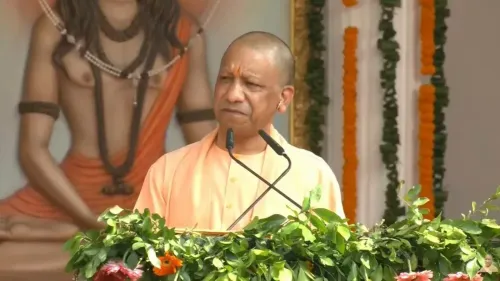
Fifty years after the Emergency silenced a democracy, its ghost still walks India's political corridors — and Union Minister Pralhad Joshi made sure it haunted the Congress on Saturday, 7 November 2026. In a sharp post on X, the senior BJP leader from Karnataka accused the opposition party of breathtaking hypocrisy for raising democratic concerns when it was Congress itself that throttled Indian democracy in 1975.
Joshi's post minced no words: 'The Congress, which imposed the Emergency and continues to suppress dissent, has no moral ground to lecture others on democracy. The hypocrisy is glaring. Truly, the devil quotes scripture!'
The Emergency shadow that never lifts
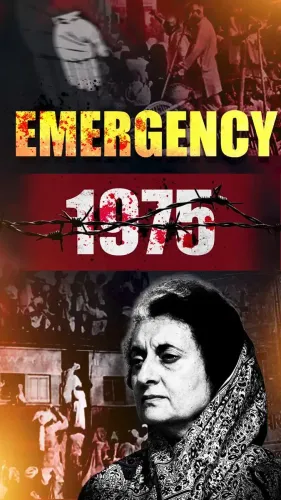
The reference is to one of modern India's most contested chapters. On 25 June 1975, Prime Minister Indira Gandhi invoked Article 352 of the Constitution, suspending fundamental rights and imprisoning thousands of opposition leaders in what became a 21-month authoritarian interlude. The Emergency ended on 21 March 1977 after a snap election that swept Congress out of power — a verdict widely read as a popular repudiation of the crackdown.
That history has never fully left the room in Indian politics. Since 2014, BJP leaders have made the Emergency a standard rebuttal whenever Congress levels criticism at the ruling dispensation over institutional autonomy, press freedom, or democratic norms. The pattern has shown up in parliamentary debates, election campaigns, and now, with increasing regularity, on social media.
BJP's go-to rhetorical weapon
Joshi's choice of the phrase 'the devil quotes scripture' frames the Congress position as not merely wrong but wilfully dishonest — an entity invoking the very values it once destroyed. It is a vivid escalation of the standard BJP counter-argument. The ruling party has long contended that Congress has forfeited the moral authority to position itself as a guardian of democratic norms given its Emergency record.
The Congress has consistently disputed this framing, arguing that comparisons to a 50-year-old episode distract from present-day institutional concerns. What prompted Joshi's specific post on 7 November 2026 — whether a Congress statement, a parliamentary exchange, or a wider political moment — has not been confirmed independently.
What is clear is that the Emergency remains the BJP's sharpest edge in the ongoing battle over who owns India's democratic narrative. As long as that contest continues, June 1975 will keep returning to the present tense.
Point of View
Pivot to the Emergency. The move is effective because the Emergency is historically documented and incontestable — it happened — which makes it a durable shield against opposition attacks. What the exchange also reveals, however, is that both sides are essentially competing to claim ownership of India's democratic identity, a contest that will likely intensify as the next election cycle approaches. The absence of a confirmed trigger for the post suggests BJP leaders now invoke Emergency history not just reactively but as proactive political positioning.
NationPress
7 Nov 2026
Frequently Asked Questions
What did Pralhad Joshi say about Congress and democracy?
Pralhad Joshi said Congress has 'no moral ground to lecture others on democracy' because it imposed the Emergency in 1975 and 'continues to suppress dissent,' calling the party's democratic posturing 'glaring hypocrisy.'
What was the 1975 Emergency in India?
The 1975 Emergency was an authoritarian period from 25 June 1975 to 21 March 1977 when Prime Minister Indira Gandhi's Congress government invoked Article 352 of the Constitution, suspending fundamental rights and jailing opposition leaders.
Why do BJP leaders keep referring to the 1975 Emergency?
Since 2014, BJP leaders routinely cite the Emergency as a rebuttal when Congress raises concerns about institutional autonomy or democratic norms, arguing that Congress forfeited the moral authority to defend democracy by suspending it in 1975.
Who is Pralhad Joshi?
Pralhad Joshi is a senior BJP leader from Karnataka serving as Union Minister of Consumer Affairs, Food and Public Distribution, and Minister of New and Renewable Energy in the central government.
What does 'the devil quotes scripture' mean in Joshi's post?
The phrase is an idiomatic expression meaning someone is hypocritically citing values or principles they themselves violate; Joshi used it to suggest Congress invoking democratic norms is dishonest given its own Emergency record.