Joshi fires back at Rahul Gandhi over election credibility claims
Synopsis
Union Minister Pralhad Joshi fires a state-by-state broadside at Rahul Gandhi on the 50th anniversary of the Emergency, listing six states where Congress lost power decades before BJP's rise and accusing the Opposition of targeting the Election Commission to hide its own decline.
Key Takeaways
Union Minister Pralhad Joshi posted a detailed rebuttal to Rahul Gandhi's press conference remarks on September 25, 2026 , the 50th anniversary year of the Emergency.
Joshi cites Tamil Nadu (out since 1967) , West Bengal (1977) , Bihar (1990) , Uttar Pradesh (1989) , Odisha (1999) , and Tripura as states where Congress lost power long before BJP became a national force.
He accuses Congress of 'maliciously targeting' the Election Commission of India to distract from its own 'structural decay.' The post invokes the Emergency of June 1975 — imposed by Indira Gandhi's Congress government — to frame Congress's alleged authoritarian instincts as unchanged over 50 years.
The BJP-Congress contest over electoral credibility and institutional trust is expected to intensify ahead of upcoming state assembly elections.
Fifty years after the Emergency, the battle over India's democratic memory is being fought on social media — and on Friday, September 25, 2026, Union Minister Pralhad Joshi delivered a pointed, state-by-state rebuttal to Congress leader and Leader of Opposition Rahul Gandhi, accusing him of 'total political ignorance' over remarks Gandhi made at a press conference the previous day.
The press conference that lit the fuse
Joshi's post directly targets what he describes as Gandhi's claim that 'anti-incumbency is an absolute truth altered by the BJP.' The minister's response is blunt: the most devastating anti-incumbency waves in post-independence India have swept away Congress itself, not its rivals. That argument is not new inside BJP circles, but the timing — exactly 50 years since the Emergency of June 1975 was imposed by the Indira Gandhi-led Congress government — gives it an edge the party clearly wants to press.
Six states, six decades of Congress defeats
Joshi lines up six specific state-level cases as his evidence. Tamil Nadu, he notes, has kept Congress out of power since 1967 — predating the BJP's existence by more than a decade. West Bengal threw Congress out in 1977, after which the Left Front governed for 34 unbroken years. Bihar has been beyond Congress's reach since 1990, a period that saw Lalu Prasad Yadav win three consecutive terms. Uttar Pradesh discarded Congress in 1989; Odisha in 1999; and Tripura during prolonged Communist rule.
The cascade of dates is deliberate — each one chosen to predate either the BJP's national rise or any period in which the BJP itself could plausibly be blamed for Congress's decline in that region. It is a numerical argument dressed as history, and it lands with the clarity of a courtroom exhibit.
The Election Commission as flashpoint
The sharper charge in Joshi's post concerns the Election Commission of India (ECI). He argues that Congress, which 'ruled for decades during the era when booth-capturing was rampant, ballot boxes were looted, and poll violence claimed lives,' is now 'maliciously targeting' the ECI to 'shield their own structural decay.' The phrase 'vote chori' (vote theft) — a slogan Congress has deployed to question recent electoral processes — is dismissed by Joshi as a cover for leadership failures rather than a legitimate institutional grievance.
The ECI, as a constitutional body, has not publicly responded to the political crossfire. Whether the Opposition's criticisms of electoral administration are grounded in verifiable irregularities remains contested; NationPress is not in a position to adjudicate those specific claims.
Emergency's long shadow over the BJP-Congress contest
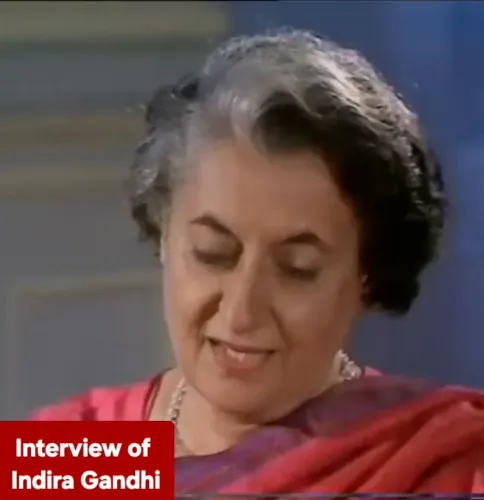
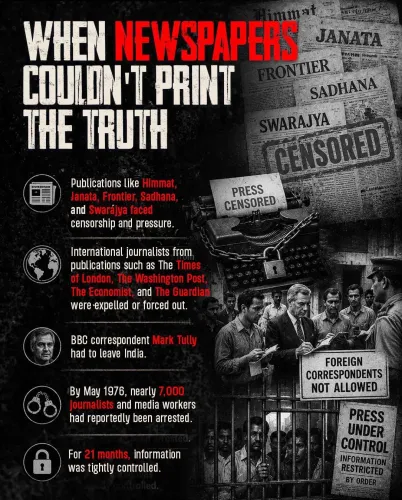
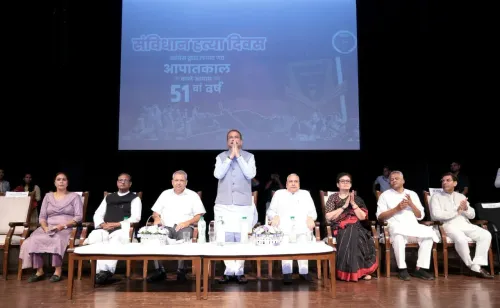
The timing of Joshi's post is unmistakably calibrated. The Emergency — declared on 25 June 1975 and lifted in March 1977 — remains the single sharpest weapon in the BJP's historical armoury against Congress. Civil liberties were suspended, opposition leaders jailed, and the press censored. Every anniversary becomes an occasion to relitigate that chapter, and 2026 marks the half-century mark. By opening with that reference, Joshi frames the entire contemporary debate about elections and institutions inside a tradition of alleged Congress authoritarianism — a framing Congress routinely rejects.
The broader rhetorical contest is structural: the BJP uses state-level electoral history to argue Congress's decline is a verdict delivered by voters over generations, not a consequence of institutional manipulation. Congress counters that current electoral processes warrant scrutiny. Neither side is likely to concede ground — but the terms of the debate, set loudly and publicly on both sides, will echo into every upcoming assembly election.
Crying foul at the scoreboard, Joshi is essentially telling Gandhi, does not change the score.
Point of View
The party simultaneously revives its most potent historical grievance while reframing Gandhi's institutional critique as self-serving deflection. The Election Commission reference is the most consequential element: if the credibility debate around the ECI gains traction ahead of key state polls, it could shift the terrain from performance to process, which is precisely why the BJP is working to discredit that framing now. Whether Gandhi's press conference remarks generate a sustained narrative or fade as a news cycle skirmish will depend on what specific electoral controversies, if any, emerge in the coming weeks.
NationPress
25 Sept 2026
Frequently Asked Questions
What did Pralhad Joshi say about Rahul Gandhi on September 25 2026?
Union Minister Pralhad Joshi accused Rahul Gandhi of 'total political ignorance' after Gandhi allegedly claimed at a press conference that anti-incumbency is a truth the BJP has altered. Joshi listed six states — Tamil Nadu, West Bengal, Bihar, Uttar Pradesh, Odisha, and Tripura — where Congress lost power decades before BJP became a national force.
Why is the Emergency relevant to BJP's criticism of Congress in 2026?
The Emergency declared by the Indira Gandhi-led Congress government on 25 June 1975, and lifted in March 1977, is the BJP's sharpest historical argument against Congress's democratic credentials. 2026 marks 50 years since that event, giving the BJP a symbolic occasion to revive allegations of Congress authoritarianism.
Has Congress been out of power in Tamil Nadu since 1967?
Joshi's post states that Congress has been out of power in Tamil Nadu since 1967, a claim frequently cited in BJP rhetoric. Tamil Nadu politics has been dominated by Dravidian parties since the late 1960s, well before the BJP emerged as a national force.
Why is the Election Commission of India being discussed in BJP-Congress politics?
Congress has periodically questioned aspects of recent electoral administration, a critique the BJP characterises as an attempt to delegitimise elections after losing them. Joshi argues the ECI is being 'maliciously targeted' to cover up Congress's long-term electoral decline, not to address genuine institutional concerns.
What is Rahul Gandhi's current role in Indian politics?
Rahul Gandhi serves as the Leader of Opposition in the Lok Sabha, making him the most senior opposition voice in the lower house of Parliament. He is also a prominent leader of the Indian National Congress party.