Pralhad Joshi Marks 51 Years of Emergency, Slams Congress

Synopsis
Union Consumer Affairs Minister Pralhad Joshi marked 51 years of the 1975 Emergency on June 25, condemning the Congress-era suspension of civil liberties as 'the most unforgivable assault on India's democracy' and honouring those who resisted authoritarian rule.
Key Takeaways
June 25, 2026 marks 51 years since the imposition of the national Emergency declared on June 25, 1975 .
Union Minister Pralhad Joshi called the Emergency 'the most unforgivable assault on India's democracy.' The Emergency lasted 21 months , during which civil liberties were suspended, the press was censored, and political opponents were detained.
The Emergency was declared under Article 352 of the Constitution by the Congress government led by Indira Gandhi .
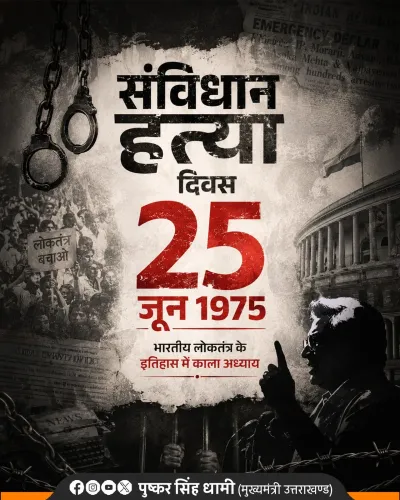
Joshi's bilingual post used the hashtag #SamvidhanHatyaDiwas , framing the period as a betrayal of the Constitution.
BJP leaders have observed June 25 annually to mark the Emergency and contrast it with present constitutional governance.
Union Consumer Affairs Minister Pralhad Joshi on Thursday, June 25, marked 51 years since the imposition of the Emergency of 1975, calling it 'the most unforgivable assault on India's democracy' and paying tribute to those who resisted authoritarian rule during that period.
Context
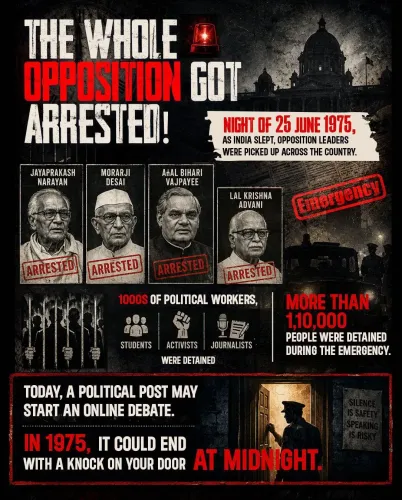
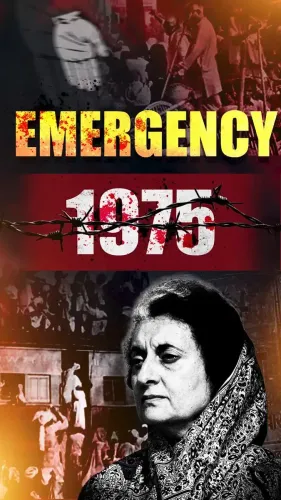
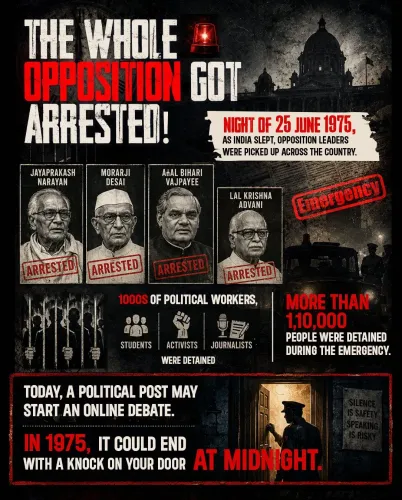
The national Emergency was declared on June 25, 1975, by the Congress government led by then Prime Minister Indira Gandhi, invoking Article 352 of the Constitution on grounds of internal disturbance. It lasted 21 months, ending in March 1977. During this period, civil liberties were suspended, the press was censored, and political opponents were detained without trial.
Joshi's post, written in both English and Kannada, stated: 'For 21 months, the Congress government led by Indira Gandhi silenced dissent, censored the press and trampled upon the fundamental rights of millions of Indians.' The Kannada portion of the post reads: ಸಂವಿಧಾನದ ಆಶಯವನ್ನೇ ಹೊಸಕಿ ಹಾಕಿ, ಪ್ರಜಾಪ್ರಭುತ್ವವನ್ನು ನರಕಸದೃಶಗೊಳಿಸಿದ್ದ ಅಂದಿನ ಕಾಂಗ್ರೆಸ್ ಪ್ರಧಾನಿ ['The then Congress Prime Minister who crushed the very spirit of the Constitution and turned democracy into a hellish state'].
Policy Backdrop
The Emergency remains one of the most contested episodes in independent India's political history. The period saw the suspension of fundamental rights, mass arrests of opposition leaders, and sweeping censorship of the press — measures critics have described as a systematic dismantling of constitutional governance.
BJP leaders have observed June 25 annually as a marker of that suspension of democratic rights, using the occasion to draw a contrast between the Congress-era record on civil liberties and the current government's stated commitment to constitutional norms. The hashtag #SamvidhanHatyaDiwas — broadly translated as 'Constitution Murder Day' — has been used by BJP leaders on this date in recent years to frame the Emergency as an act of constitutional betrayal.
Stakeholders and Impact
The Emergency's impact fell most heavily on political dissidents, journalists, and civil society organisations whose activities were curtailed or shut down entirely during the 21-month period. Press organisations faced direct censorship, with publications required to submit content for government approval before printing.
Joshi's post honours 'the countless patriots who resisted authoritarianism and fought to restore democracy,' a reference to the broad coalition of political actors — spanning ideological lines — who opposed the Emergency and whose resistance ultimately led to the 1977 general elections, which ended Congress rule at the Centre for the first time since independence.
What's Next
The annual observance of June 25 has become a fixture in the BJP's political calendar, and references to the Emergency period are expected to recur during parliamentary sessions when debates on constitutional matters arise. As India's democratic institutions continue to be a subject of political debate, the Emergency's legacy is likely to remain a recurring reference point across party lines. Joshi concluded his post with a call to 'Never Forget. Never Forgive. Never Again.'
Point of View
Directing accountability squarely at the Congress party and the Gandhi family legacy. By deploying the hashtag #SamvidhanHatyaDiwas alongside a bilingual post in English and Kannada, Joshi signals that this messaging is calibrated for both a national audience and his home state of Karnataka, where the BJP is in active political competition with Congress. The framing — 'Never Forget. Never Forgive. Never Again.' — elevates the annual tribute into a moral injunction, reinforcing a broader BJP narrative that positions the party as a guardian of constitutional democracy. The post's timing and tone suggest the Emergency anniversary will continue to function as a durable political instrument well beyond ceremonial remembrance.
NationPress
23 Sept 2026
Frequently Asked Questions
When was the Emergency imposed in India?
The national Emergency was declared on June 25, 1975 , by the Congress government led by Prime Minister Indira Gandhi , and lasted 21 months until March 1977 .
What is #SamvidhanHatyaDiwas?
#SamvidhanHatyaDiwas , meaning 'Constitution Murder Day,' is a hashtag used by BJP leaders on June 25 each year to mark the anniversary of the 1975 Emergency and frame it as a betrayal of India's constitutional values.
What did Pralhad Joshi say about the Emergency?
Pralhad Joshi called the Emergency 'the most unforgivable assault on India's democracy,' stating that the Congress government 'silenced dissent, censored the press and trampled upon the fundamental rights of millions of Indians.'
What happened during the Emergency of 1975?
During the 21-month Emergency , civil liberties were suspended under Article 352 , the press was censored, political opponents were detained without trial, and fundamental rights were curtailed across India.
Why do BJP leaders mark June 25 every year?
BJP leaders observe June 25 annually to commemorate the imposition of the 1975 Emergency , using the occasion to highlight the Congress party's record on civil liberties and to contrast it with their stated commitment to constitutional governance.