Emergency at 51: Modi calls imposition a 'grave sin', urges Indians to never forget
Synopsis
Fifty-one years after Indira Gandhi's government imposed the Emergency, Modi used its anniversary to deliver his sharpest condemnation yet — calling it a 'grave sin' that 'sits permanently on the forehead' of those responsible. The language was pointed, the target unmistakable: Congress. With state elections on the horizon, the BJP is turning a historical grievance into a live political charge.
Key Takeaways
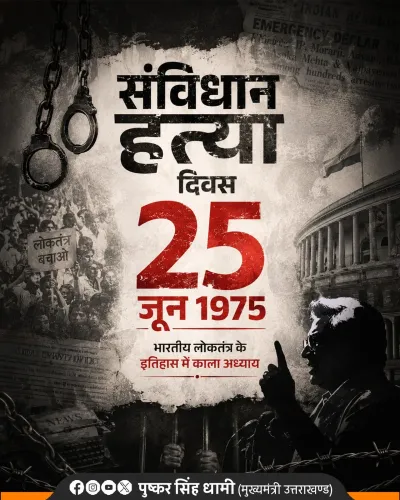
PM Narendra Modi on 25 June 2025 marked the 51st anniversary of the Emergency , calling it a 'grave sin' and the 'darkest chapter in Indian democracy' .
Modi urged citizens to 'never forgive, never forget' those who imposed the Emergency — a direct charge against the Congress .
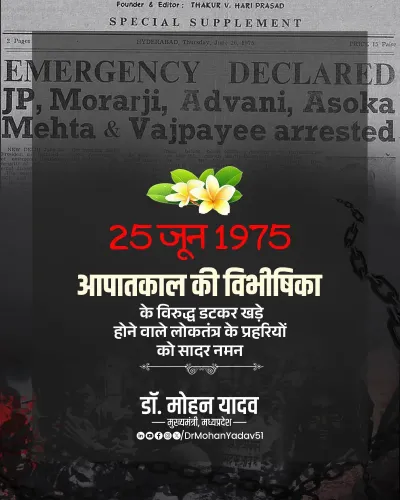
He said opposition leaders were arrested, fundamental rights suspended, the media censored, and Parliament reduced to a 'rubber stamp' during the period.
Modi acknowledged his own role in the anti-Emergency movement , referencing his early years as a political worker.
The Emergency, declared by Indira Gandhi's government on 25 June 1975 , lasted 21 months and ended with the Congress's defeat in the 1977 general elections .
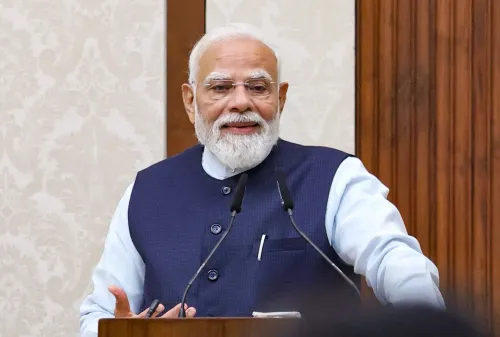
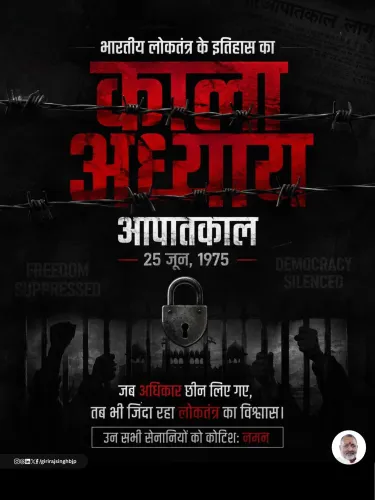
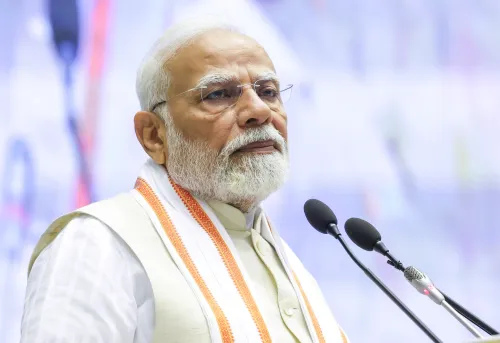
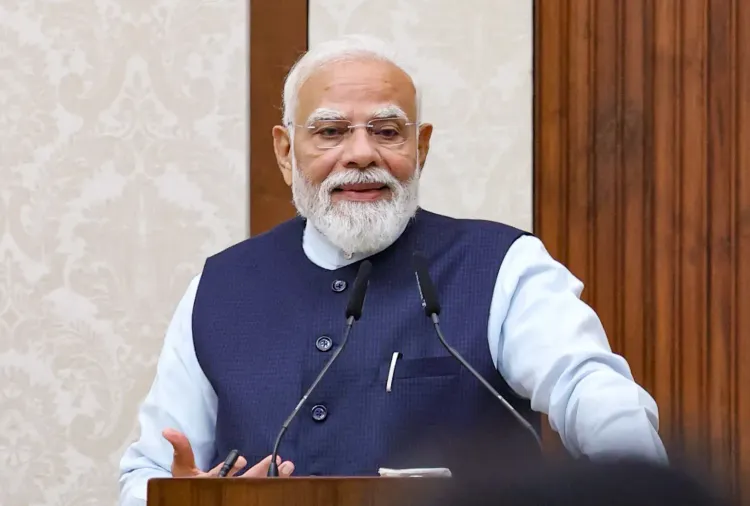
Prime Minister Narendra Modi on 25 June 2025 marked the 51st anniversary of the Emergency by denouncing its imposition as a 'grave sin' and the 'darkest chapter in the history of Indian democracy', directly targeting the Indian National Congress and calling on citizens to 'never forgive, never forget' those responsible. The Emergency was declared by the then Indira Gandhi-led government on 25 June 1975 and remained in force for 21 months.
What Modi Said
In a post on Instagram titled '51st Anniversary of the Emergency — know why it remains the darkest chapter in the history of Indian democracy', Modi catalogued what he described as systematic assaults on civil liberties during the period. He said: 'All opposition leaders were arrested. Any form of political dissent was severely crushed. Thinkers, writers, journalists, social workers, students and ordinary citizens were jailed and tortured. The Constitution was trampled upon; nefarious attempts to bring the judiciary under political control were made.'
He further stated: 'Media was curtailed. Those who refused to follow the diktat were shut down or intimidated into silence. Fundamental rights were suspended.' The Prime Minister also remarked that Parliament was reduced to a 'rubber stamp' and that 'every institution that was meant to protect the citizens was turned against them.'
Modi's Personal Connection to the Anti-Emergency Movement
Modi drew attention to those who resisted Emergency-era laws at considerable personal risk, saying people 'from every background and across every ideology came together to protect democracy and the constitutional values.' He also acknowledged his own participation: 'I too had the honour of being a part of the anti-Emergency movement,' he noted — a reference to his early years as a Rashtriya Swayamsevak Sangh (RSS) worker during the period.
The Political Charge Against Congress
The anniversary has become an annual occasion for the ruling Bharatiya Janata Party (BJP) to draw a sharp contrast with the Congress on the question of democratic values. Modi stated that 'the grave sin of the Emergency sits permanently on the forehead of those who imposed it' — language that leaves little ambiguity about who he holds accountable. He credited the mass resistance movement with forcing the then government to 'bow before the spirit of Jan Shakti', after which elections were called and, as he put it, 'those who had imposed it lost badly' — a reference to the Congress's defeat in the 1977 general elections.
Historical Context
The Emergency, proclaimed under Article 352 of the Constitution, suspended fundamental rights, censored the press, and enabled mass detentions under the Maintenance of Internal Security Act (MISA). It lasted from 25 June 1975 to 21 March 1977. The period remains one of the most contested episodes in post-independence Indian political history, with assessments sharply divided along partisan lines even five decades later. Notably, this is the first time the anniversary falls in Modi's third consecutive term, lending the commemoration added political weight.
What Comes Next
The BJP is expected to use the anniversary as a campaign touchstone ahead of upcoming state elections, reinforcing its positioning as the guardian of constitutional democracy. The Congress has historically pushed back against such framing, arguing that the Emergency was an aberration that the party itself corrected by calling free elections. No formal response from Congress leadership had been issued at the time of publication.
Point of View
But the 51st edition carries unusual political utility — it arrives in his third term, with state elections approaching and a Congress that has struggled to articulate a credible counter-narrative on 1975. The BJP has successfully made the Emergency a recurring moral indictment rather than a settled historical episode, and Congress's silence on each anniversary compounds the damage. What mainstream coverage misses is that this framing also serves a domestic purpose: it positions any future challenge to executive power as echoing Emergency-era overreach, a rhetorical shield that cuts both ways.
NationPress
23 Sept 2026
Frequently Asked Questions
What did PM Modi say on the 51st anniversary of the Emergency?
PM Modi called the Emergency a 'grave sin' and the 'darkest chapter in the history of Indian democracy' in an Instagram post on 25 June 2025. He urged citizens to 'never forgive, never forget' those who imposed it, directly targeting the Congress party.
What was the Emergency of 1975?
The Emergency was a 21-month period from 25 June 1975 to 21 March 1977, during which Prime Minister Indira Gandhi's government suspended fundamental rights, censored the press, and detained political opponents under laws such as MISA. It was proclaimed under Article 352 of the Constitution.
Why does the BJP mark the Emergency anniversary every year?
The BJP uses the anniversary to draw a political contrast with the Congress, framing the Emergency as evidence of the opposition party's authoritarian tendencies. The occasion has become a consistent part of the ruling party's political calendar, particularly ahead of elections.
What happened after the Emergency was lifted?
After the Emergency was lifted in March 1977, general elections were held in which the Congress was defeated decisively. A Janata Party coalition came to power — the first non-Congress government at the Centre since independence.
Did PM Modi personally participate in the anti-Emergency movement?
Yes, Modi stated in his post that he 'had the honour of being a part of the anti-Emergency movement.' He was associated with the RSS during the Emergency period, when the organisation was among those that participated in resistance activities.