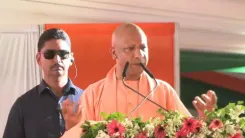
Akhilesh Yadav pledges jal-jungle-zameen rights on World Tribal Day

Synopsis
On World Indigenous Peoples Day, SP president Akhilesh Yadav renewed his party's commitment to protecting Adivasi jal-jungle-zameen rights, framed tribal communities as environmental guardians, and explicitly included them in the party's PDA social coalition.
Key Takeaways
Akhilesh Yadav posted on 9 August 2026 , the UN-observed World Indigenous Peoples Day, renewing SP's pledge on Adivasi rights.
He invoked jal, jungle, zameen (water, forest, land) — the rights framework anchored in India's Forest Rights Act, 2006 .
Adivasi society was explicitly named as part of the PDA (Pichhda-Dalit-Alpsankhyak) coalition, expanding its stated composition.
Yadav argued that indigenous knowledge is the 'foundational source' of modern education and research subjects.
The post continues SP's pattern of pairing international observance days with domestic social-justice messaging aimed at tribal constituencies in Uttar Pradesh .
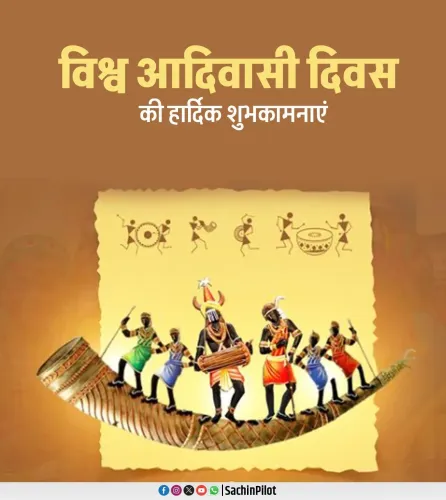
On World Indigenous Peoples Day, 9 August 2026, Samajwadi Party president Akhilesh Yadav renewed his party's pledge to protect the land, forest, and water rights of Adivasi communities — and placed tribal society at the moral centre of India's environmental conversation.
The pledge and what it says
Posting in Hindi on the occasion of Vishwa Adivasi Diwas (World Indigenous Peoples Day), Yadav wrote: 'Along with greetings on World Tribal Day, we renew our resolve to protect their rights over water, forest, and land.' He went further, arguing that Adivasi communities — included within the party's PDA (Pichhda-Dalit-Alpsankhyak) social coalition — are 'the environmental guardians closest to nature.' His closing line was pointed: 'Mool nivaasi hi hamare mool gyaan ke aadhar hain' — 'Indigenous people are the foundation of our foundational knowledge.'
Jal-jungle-zameen: a demand with a long legal history
The phrase jal, jungle, zameen — water, forest, land — is not rhetorical decoration. It maps directly onto the rights framework of India's Forest Rights Act, 2006, which legally recognises individual and community claims of Scheduled Tribes and traditional forest dwellers over forest land and resources. The Act remains unevenly implemented across states, and tribal rights groups have long pressed for stronger enforcement. Yadav's invocation of the phrase signals that the Samajwadi Party intends to keep this unfinished legal business on the political agenda.
PDA expands its frame — and its reach
The Samajwadi Party built its PDA coalition as an electoral and ideological answer to the BJP's consolidation of upper-caste and OBC votes. Originally centred on backward classes, Dalits, and minorities, the framework has been progressively widened. Yadav's post explicitly names Adivasi society as part of PDA — a signal to tribal-heavy constituencies in Uttar Pradesh and beyond. The party has consistently paired environmental protection language with social-justice messaging, and this post follows that template precisely.
The United Nations has observed 9 August as the International Day of the World's Indigenous Peoples since 1995, following a General Assembly resolution in 1994. Yadav's use of the occasion to make a domestic political commitment is deliberate: international observance days give regional parties a ready platform to frame local demands in a globally resonant vocabulary.
Whether the pledge translates into concrete legislative action — in upcoming Uttar Pradesh assembly sessions or in Parliament — is the question tribal welfare groups will now be watching closely.
Point of View
The Samajwadi Party stakes a claim on tribal votes in Uttar Pradesh without making a specific legislative promise that can be held against it. The invocation of the Forest Rights Act's vocabulary — jal, jungle, zameen — connects the party to a two-decade-old legal demand that successive governments have only partially fulfilled, giving SP a ready contrast with incumbents. Framing indigenous communities as environmental guardians and sources of ancient knowledge also lets the party speak to a younger, ecology-conscious electorate beyond its traditional base. The real test, as always, will be whether the rhetoric finds expression in the party's position during the next assembly session.
NationPress
9 Aug 2026
Frequently Asked Questions
What is World Indigenous Peoples Day and when is it observed?
World Indigenous Peoples Day, formally the International Day of the World's Indigenous Peoples, is observed every year on 9 August . The United Nations established it through a General Assembly resolution in 1994 , and it has been marked globally since 1995 to recognise the rights and contributions of indigenous communities.
What does jal jungle zameen mean in the context of Adivasi rights?
'Jal, jungle, zameen' translates to 'water, forest, land' and refers to the core resource rights of tribal communities. In Indian law, these rights are recognised under the Forest Rights Act, 2006 , which grants Scheduled Tribes and other traditional forest dwellers individual and community rights over forest land and its resources.
What is the Samajwadi Party's PDA coalition?
PDA stands for Pichhda-Dalit-Alpsankhyak — a social coalition built by the Samajwadi Party to unite backward classes, Dalits, and minorities as a political bloc. The party has progressively expanded the framework to include Adivasi communities, as reflected in Akhilesh Yadav's 9 August 2026 post.
What did Akhilesh Yadav say on World Tribal Day 2026?
Akhilesh Yadav renewed the Samajwadi Party's resolve to protect Adivasi rights over water, forest, and land. He described tribal communities as 'environmental guardians closest to nature' and argued that indigenous knowledge is the foundational source of many modern fields of education and research.
How does the Forest Rights Act 2006 protect Adivasi communities?
The Forest Rights Act, 2006 legally recognises the rights of Scheduled Tribes and other traditional forest dwellers to live on and cultivate forest land they have occupied, access minor forest produce, and manage community forest resources. Critics and tribal welfare groups argue that implementation remains uneven across Indian states.