Akhilesh Yadav accuses BJP of silencing PTI
Synopsis
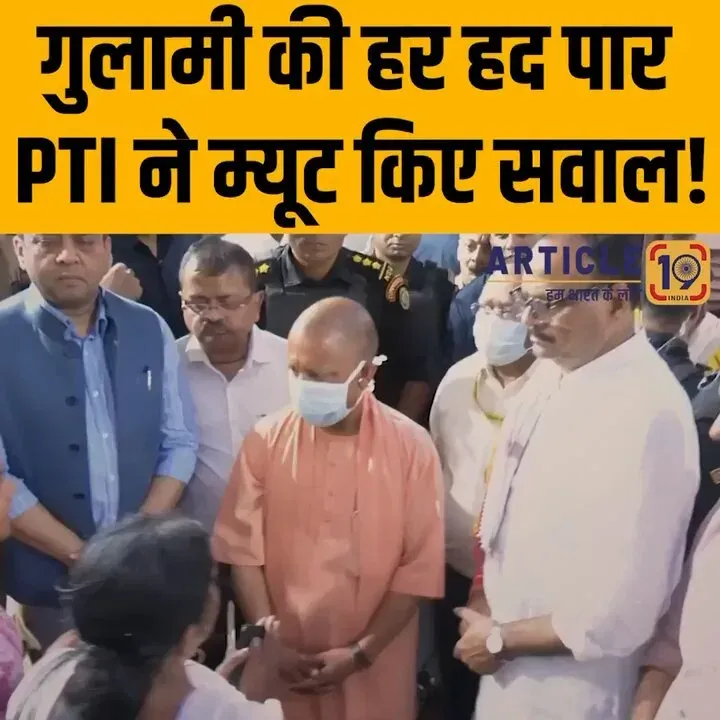
Samajwadi Party president Akhilesh Yadav on 23 June 2026 alleged that the BJP government has silenced PTI, India's largest news agency, calling it a 'democratic dark age' and an 'era of media sycophancy' in a pointed social-media attack on press freedom under the ruling party.
Key Takeaways
Samajwadi Party president Akhilesh Yadav alleged on 23 June 2026 that PTI has been muzzled under the BJP -led central government.
Yadav used the phrases loktantrik kalyug ('democratic dark age') and media ka charankal ('era of media sycophancy') to frame his critique.
The post was tagged #Media_Muzzling , signalling a coordinated opposition messaging effort on press freedom.
PTI is India's largest news agency, supplying content to virtually all domestic media outlets, making any interference in its operations a systemic concern.
The BJP government has faced recurring opposition accusations of indirect media pressure since 2014 , intensifying after the IT Rules 2021 extended oversight to digital news publishers.
No rebuttal has been issued by PTI management or the central government as of publication.
Samajwadi Party president Akhilesh Yadav on Tuesday, 23 June 2026, sharply attacked the Bharatiya Janata Party-led central government, alleging that Press Trust of India (PTI) — India's largest news agency — has been muzzled under its watch.
In a post on X, Yadav wrote: 'PTI ke munh par mask kisne laga diya' ['Who put a mask on PTI's mouth?'], adding that while journalism once silenced people's voices, under BJP rule the press itself is being silenced. He described the current moment as a 'loktantrik kalyug' ['democratic dark age'] and a 'media ka charankal' ['era of media sycophancy'], using the hashtag #Media_Muzzling.
Context
PTI is the backbone of India's news ecosystem, supplying wire copy to virtually every domestic outlet. Any disruption to its operations or editorial independence carries outsized consequences for the flow of information across the country. Yadav's post implies a specific episode involving PTI, though the precise incident referenced has not been independently confirmed.
The Samajwadi Party chief has been a consistent voice in the opposition chorus on press freedom, framing institutional pressure on media as a symptom of democratic backsliding. His use of cultural shorthand — kalyug (the Hindu mythological age of moral decline) and charankal (an era of courtly flattery) — is deliberate, targeting a Hindi-speaking audience familiar with both references.
Policy Backdrop
Opposition concerns about media regulation intensified after the central government notified the Information Technology (Intermediary Guidelines and Digital Media Ethics Code) Rules in 2021, which extended regulatory oversight to digital news publishers. Critics argued the rules gave the government leverage over editorial decisions; the government maintained they were necessary to combat misinformation.
Since 2014, opposition parties have repeatedly alleged that the BJP government exerts indirect pressure on media houses through regulatory actions, government advertising allocation, and legal proceedings. These charges have resurfaced around elections and specific enforcement episodes involving wire services and digital platforms.
Stakeholders and Impact
The immediate stakeholders are PTI's journalists and the hundreds of outlets that depend on its wire service. If the agency's editorial operations face any constraint — regulatory, financial, or otherwise — the downstream impact on public-interest reporting across India would be significant.
For the broader journalistic community, Yadav's post adds political weight to concerns that have been raised by press-freedom advocates over several years. Opposition messaging of this kind also shapes the narrative heading into the monsoon session of Parliament, where media regulation is likely to feature in question hour and adjournment motions.
What's Next
PTI management and the central government have not issued any public statement in response to Yadav's post as of the time of publication. A formal rebuttal or clarification from either party would clarify the specific trigger for the allegation.
Opposition lawmakers are expected to press the government on media regulation during the upcoming monsoon session. If parliamentary questions are tabled, they could force the government to put its position on record — and give the controversy a longer legislative life than a single social-media post.
Point of View
Digitally-engaged voters. By singling out PTI specifically, rather than a partisan outlet, he attempts to elevate the charge beyond party politics into a structural critique of press freedom. The timing, ahead of the monsoon session, suggests a deliberate effort to seed parliamentary questions and keep media regulation in the news cycle. Whether the allegation gains legislative traction will depend on whether opposition benches can produce specific, documented evidence of interference with PTI's operations.
NationPress
22 Sept 2026
Frequently Asked Questions
What did Akhilesh Yadav say about PTI?
On 23 June 2026, Akhilesh Yadav alleged on X that PTI, India's largest news agency, had been silenced under the BJP government, calling the situation a 'democratic dark age' and an 'era of media sycophancy.'
What is PTI and why does it matter?
Press Trust of India (PTI) is India's largest independent news agency, supplying wire content to virtually all domestic media outlets. Any constraint on its operations would affect the flow of news across the entire country.
Has the BJP government responded to the PTI muzzling allegation?
As of 23 June 2026, neither PTI management nor the central government had issued a public response to Akhilesh Yadav's post.
What are the IT Rules 2021 and how do they relate to media freedom?
The Information Technology (Intermediary Guidelines and Digital Media Ethics Code) Rules, notified in 2021, extended government regulatory oversight to digital news publishers. Critics, including opposition parties, argued the rules gave the government leverage over editorial decisions.
What is the broader pattern of BJP and media freedom allegations?
Since 2014, opposition parties have repeatedly alleged that the BJP government exerts indirect pressure on media through regulatory actions, advertising allocation, and legal cases — charges that have intensified around elections and specific enforcement episodes.