CM Mohan Yadav Marks 51st Emergency Anniversary, Honours Democracy Defenders
Synopsis
On the 51st anniversary of the 1975 Emergency proclamation, Madhya Pradesh Chief Minister Dr. Mohan Yadav called it the darkest day in Indian democratic history, paid tribute to those who resisted it, and urged citizens to pledge their commitment to protecting democracy.
Key Takeaways
Mohan Yadav , Chief Minister of Madhya Pradesh, posted a tribute on 25 June 2026 marking the 51st anniversary of the Emergency proclamation.
He described 25 June 1975 as 'the darkest day in the history of democracy' in India.
The post paid tribute to those who resisted the Emergency and called on citizens to pledge dedication to democratic values.
The 1975–77 Emergency involved a 21-month suspension of fundamental rights, press censorship, and mass arrests of political opponents.
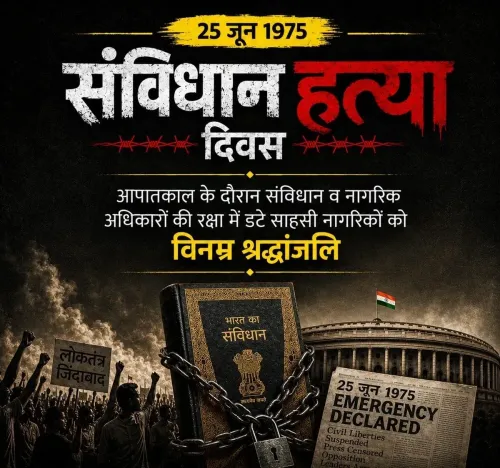
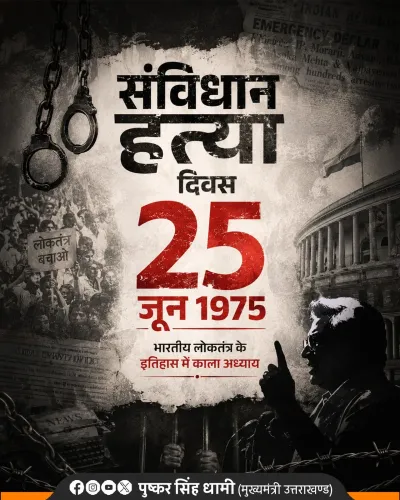
The BJP has observed 25 June as a day of political remembrance — in some instances as Samvidhan Hatya Diwas — since at least 2014 .
The statement is part of a broader BJP narrative positioning the party as a defender of constitutional democracy against Congress-era authoritarianism.
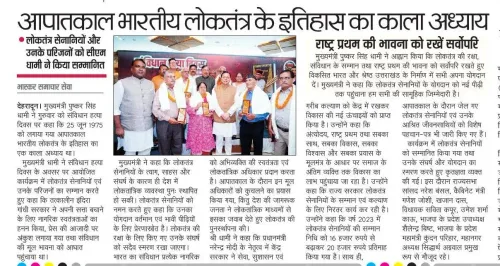
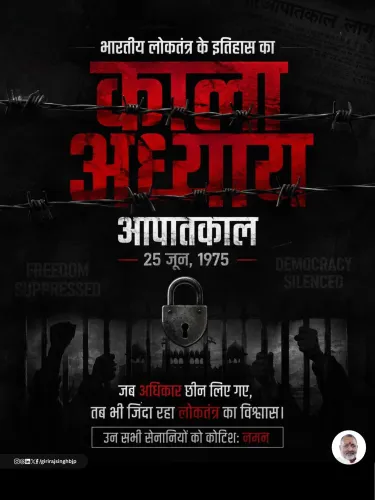
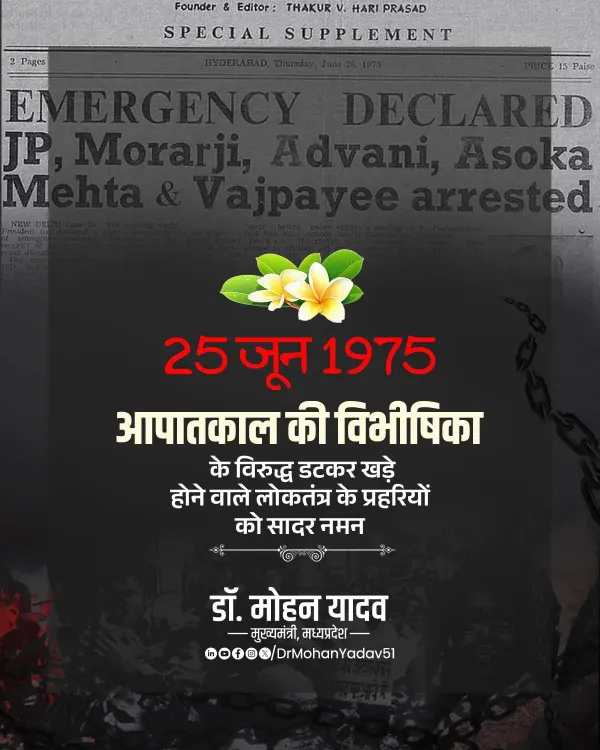
Madhya Pradesh Chief Minister Dr. Mohan Yadav on Wednesday, 25 June 2026 marked the 51st anniversary of the proclamation of the Emergency, calling it the darkest day in the history of Indian democracy and paying tribute to those who resisted the suspension of fundamental rights.
In a post on X, the Chief Minister wrote: '25 जून, 1975... देश में लोकतंत्र के इतिहास का सबसे काला दिन' — translating as, '25 June, 1975 — the darkest day in the history of democracy in this country, when the arrogance of the Indira government imposed the Emergency.' He paid 'respectful tribute to the sentinels of democracy who stood firm against this catastrophe' and called on citizens to pledge their dedication to protecting democratic values.
Context
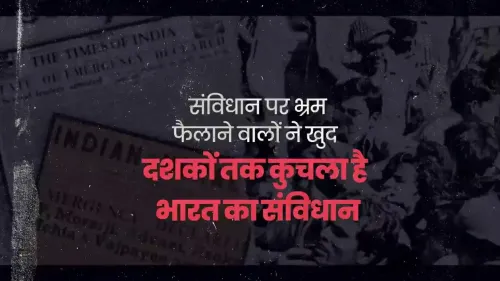
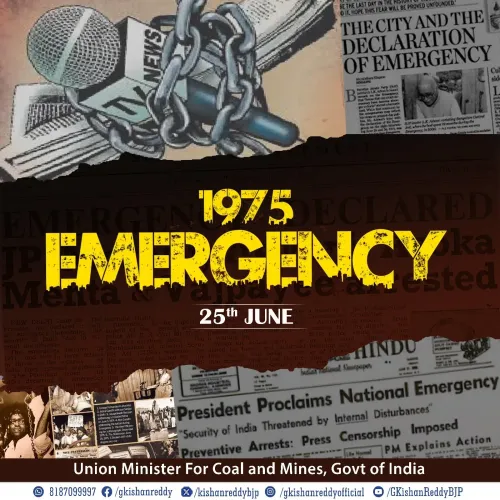
On 25 June 1975, then Prime Minister Indira Gandhi advised the President of India to proclaim a national Emergency, citing internal disturbance. What followed was a 21-month suspension of fundamental rights, sweeping press censorship, and mass arrests of political opponents under the Maintenance of Internal Security Act. The Emergency lasted until March 1977, when elections were called and the ruling Congress party was voted out of power.
Among the most prominent figures detained during the period was Jayaprakash Narayan, the socialist leader who had spearheaded a nationwide opposition movement against the government. His arrest and that of thousands of activists across the country became defining symbols of resistance to authoritarian rule.
Policy Backdrop
The Bharatiya Janata Party (BJP) and its predecessor organisations have consistently observed 25 June as a day of political remembrance, framing the Emergency as the Congress party's gravest assault on constitutional democracy. Since at least 2014, BJP-led governments and party units have marked the date — in some instances formally designating it 'Samvidhan Hatya Diwas' (Constitution Murder Day). The Janata Party government that came to power in 1977 subsequently repealed several constitutional amendments introduced during the Emergency period.
Dr. Yadav's post carries the hashtag #DarkDaysOfEmergency, consistent with messaging used by BJP functionaries across the country on this anniversary. The statement positions the party as the constitutional counterpoint to what it characterises as Congress-era authoritarianism.
Stakeholders and Impact
Annual Emergency commemorations by senior BJP leaders serve a dual function: honouring civil liberties activists and political prisoners of the 1975–77 period, and reinforcing a long-running political narrative ahead of elections. Opposition parties, particularly the Indian National Congress, typically contest this framing, arguing that the Emergency's historical context is more complex than the BJP's commemorations suggest.
Civil liberties groups and historians continue to view the Emergency as a cautionary episode for democratic institutions, regardless of political affiliation. Responses from Congress leaders and other opposition parties on the same anniversary are expected to offer a contrasting assessment of the period.
What's Next
With Madhya Pradesh governed by the BJP and national politics remaining sharply polarised around questions of democratic accountability, the Emergency anniversary is likely to reverberate through upcoming state assembly sessions and party conventions. Dr. Yadav's call for citizens to pledge their dedication to democracy signals that the BJP intends to keep this historical episode central to its political messaging through the electoral cycle ahead.
Point of View
Senior party leaders reinforce a decades-long narrative that casts the Congress as constitutionally unreliable and the BJP as democracy's natural guardian. The consistency of this messaging — replicated by party functionaries from the Prime Minister down to state chief ministers — suggests a coordinated commemorative strategy rather than spontaneous reflection. As electoral cycles shorten and opposition parties seek to reframe their own democratic credentials, the Emergency anniversary will likely remain one of the BJP's most durable rhetorical anchors.
NationPress
23 Sept 2026
Frequently Asked Questions
What was the Emergency of 1975 in India?
The Emergency was a 21-month period from June 1975 to March 1977 during which Prime Minister Indira Gandhi suspended fundamental rights, imposed press censorship, and ordered the mass arrest of political opponents under the Maintenance of Internal Security Act.
Why did Mohan Yadav post about the Emergency on 25 June 2026?
25 June 2026 marked the 51st anniversary of the Emergency proclamation. As a senior BJP leader and Chief Minister of Madhya Pradesh, Dr. Yadav issued the tribute in line with the party's long-standing practice of observing the date as a reminder of the dangers to democratic institutions.
What is Samvidhan Hatya Diwas?
Samvidhan Hatya Diwas , meaning 'Constitution Murder Day', is a designation used by BJP-led governments and party units for 25 June to mark the anniversary of the 1975 Emergency proclamation and honour those who resisted it.
Who was Jayaprakash Narayan and what was his role during the Emergency?
Jayaprakash Narayan was a prominent socialist leader who led the nationwide opposition movement against the Indira Gandhi government before the Emergency. He was among the most high-profile political figures arrested when the Emergency was proclaimed in June 1975 .
How does the Congress party respond to BJP's Emergency anniversary commemorations?
The Indian National Congress typically contests the BJP's framing of the Emergency, arguing that the historical context is more nuanced than the party's commemorations suggest. Responses from Congress leaders on 25 June each year offer a contrasting political reading of the period.