Rajnath Singh on Emergency anniversary: Modi govt committed to Constitution
Synopsis
On the 51st anniversary of Indira Gandhi's Emergency, Defence Minister Rajnath Singh used a pointed X post to reaffirm the Modi government's constitutional credentials — while the BJP rolled out 'Samvidhan Hatya Diwas' rallies across Bihar, Haryana and beyond. The anniversary has become an annual political flashpoint, and this year's edition arrives as debates over democratic institutions are louder than ever.
Key Takeaways
Defence Minister Rajnath Singh marked the 51st anniversary of the Emergency on 25 June , calling it one of the darkest chapters in Indian democratic history.
Singh posted on X that during the Emergency, free speech was curtailed, the judiciary was undermined, and the rights of millions were violated.
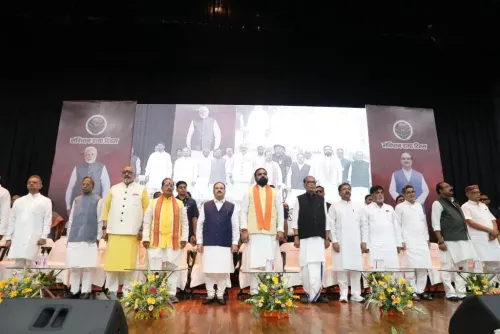
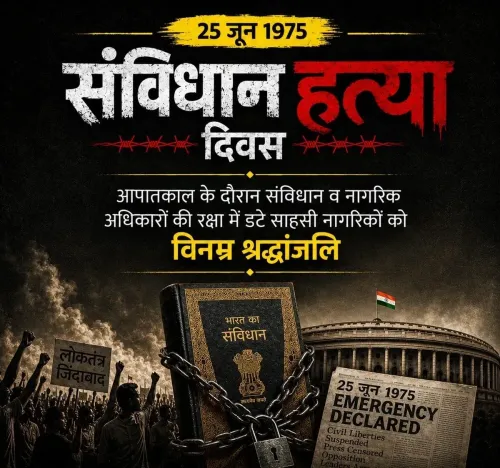
He reaffirmed that the Modi government remains committed to upholding the Constitution 'in both letter and spirit.' The BJP observed 'Samvidhan Hatya Diwas' (Constitution Murder Day) across Bihar , Haryana , and other states on Thursday.
Singh paid tribute to those who resisted Emergency-era excesses and 'courageously defended democracy and the Constitution.'
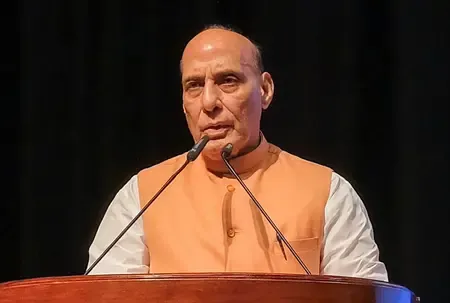
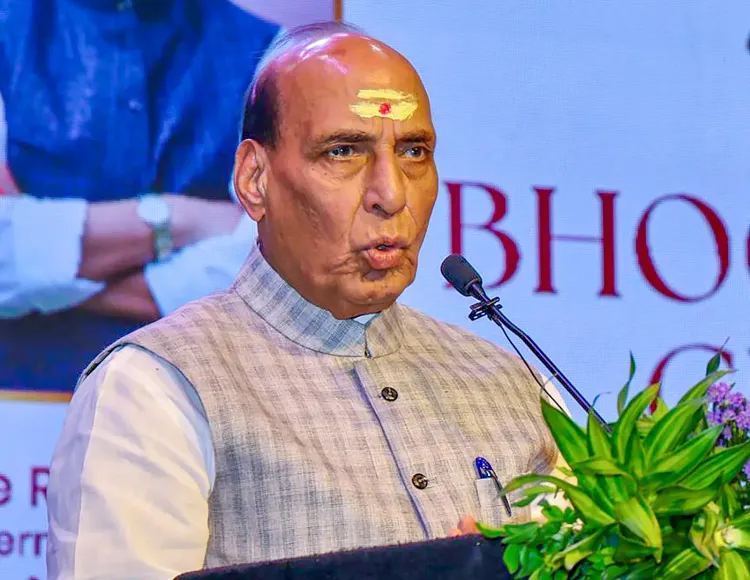
Defence Minister Rajnath Singh on Thursday, 25 June said the anniversary of the Emergency imposed by then Prime Minister Indira Gandhi on 25 June 1975 must serve as both a historical reminder and a renewed pledge to uphold democracy, constitutional principles, and the fundamental rights of citizens. His remarks came as India marked the 51st anniversary of the Emergency declaration.
What Rajnath Singh Said
Taking to X, Singh reflected on the events of that period and their lasting impact on India's democratic framework. 'On this day in 1975, the Emergency was imposed in India. The Emergency remains one of the darkest chapters in the history of Indian democracy. During that period, freedom of speech and expression was curtailed, attempts were made to control and undermine the judiciary, and the rights of millions of citizens were violated,' he wrote.
Singh argued that the Emergency demonstrated 'that when those in power become authoritarian, the lives of citizens, democratic institutions, and constitutional values come under serious threat.' He called on the nation to treat the anniversary not merely as an act of historical remembrance but as an occasion to reaffirm collective commitment to democratic ideals.
Government's Constitutional Commitment
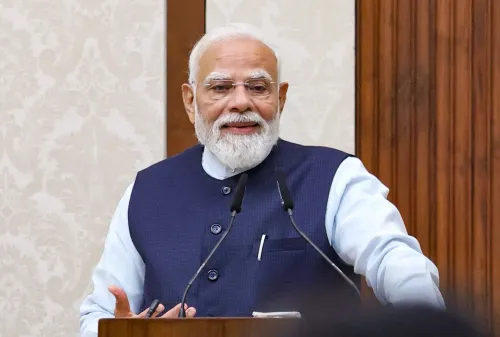
'Our government, under the leadership of Prime Minister Narendra Modi, remains firmly committed to upholding the Constitution in both letter and spirit and to strengthening India's democratic institutions,' Singh stated. He also paid tribute to those who resisted the Emergency and worked to defend constitutional values during that period, saying 'the nation remains indebted to all those who stood against the injustices and excesses of the Emergency and courageously defended democracy and the Constitution.'
BJP's 'Samvidhan Hatya Diwas' Observances
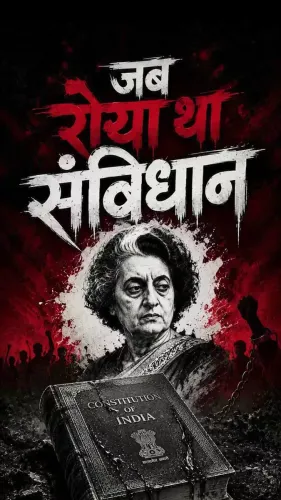
The Bharatiya Janata Party (BJP) marked the anniversary by observing 'Samvidhan Hatya Diwas' (Constitution Murder Day) across Bihar, Haryana, and several other parts of the country on Thursday. The BJP has long characterised the Emergency as one of the darkest phases in independent India's democratic history, and the annual observance has become a fixture of the party's political calendar.
Historical Context
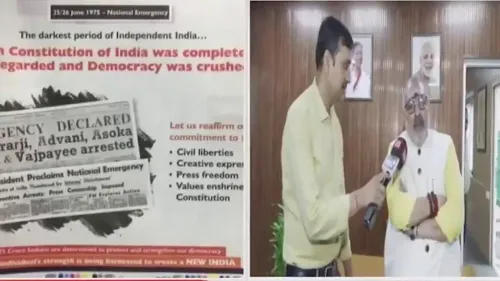
The Emergency, declared on 25 June 1975 and lasting until March 1977, suspended civil liberties, curtailed press freedom, and enabled mass detentions of political opponents. It remains a deeply contested episode in India's post-Independence history, with the ruling BJP using its anniversary each year to draw a contrast with its own governance record. This year's 51st anniversary arrives amid an ongoing national conversation about the health of democratic institutions — a debate that gives the day added political resonance.
What Comes Next
The BJP's nationwide observances are expected to generate fresh political exchanges with the opposition Indian National Congress (Congress), which has historically pushed back against what it describes as selective use of the Emergency narrative. How the Congress responds to this year's commemorations — particularly Singh's pointed remarks — will be closely watched in the coming days.
Point of View
The party is reinforcing a contrast it has cultivated for over a decade — constitutional guardians versus authoritarian Congress. What mainstream coverage often underplays is that this ritual now serves a dual purpose: it keeps the 1975 wound open for electoral mobilisation while pre-empting any opposition critique of the current government's own record on institutional autonomy. The louder the Emergency rhetoric, the more it doubles as a shield against accountability questions closer to home.
NationPress
23 Sept 2026
Frequently Asked Questions
What did Rajnath Singh say on the Emergency anniversary?
Defence Minister Rajnath Singh said the Emergency imposed on 25 June 1975 remains one of the darkest chapters in Indian democratic history, citing curtailment of free speech, attempts to undermine the judiciary, and violation of citizens' rights. He reaffirmed that the Modi government is committed to upholding the Constitution in letter and spirit.
What is 'Samvidhan Hatya Diwas'?
'Samvidhan Hatya Diwas,' meaning Constitution Murder Day, is the BJP's annual observance on 25 June to mark the anniversary of the Emergency declared in 1975. This year, the party held events across Bihar, Haryana, and several other states.
What was the Emergency of 1975?
The Emergency was declared by then Prime Minister Indira Gandhi on 25 June 1975 and lasted until March 1977. It suspended civil liberties, curtailed press freedom, and enabled the detention of political opponents, and is widely regarded as a low point in India's post-Independence democratic history.
Why does the BJP observe the Emergency anniversary each year?
The BJP frames the Emergency as emblematic of Congress-era authoritarianism and uses the anniversary to draw a contrast with its own governance record. The observance has become a regular fixture of the party's political calendar, combining historical commemoration with contemporary political messaging.
Who did Rajnath Singh pay tribute to on this occasion?
Singh paid tribute to all those who resisted the Emergency and worked to defend democratic values during that period, saying the nation 'remains indebted' to those who 'courageously defended democracy and the Constitution' against the excesses of that era.