Giriraj Singh Demands Congress Apology on Emergency Anniversary
Synopsis
On the 51st anniversary of the 1975 Emergency, Union Textiles Minister Giriraj Singh demanded a public apology from Congress, calling 25 June 1975 a dark chapter that throttled democracy and the Constitution, and urged that the younger generation be educated about this history.
Key Takeaways
Giriraj Singh posted on 25 June 2026 , the 51st anniversary of the Emergency proclamation, demanding a Congress apology.
He accused Congress of 'throttling democracy and the Constitution' by imposing the 21-month Emergency from 1975 to 1977 .
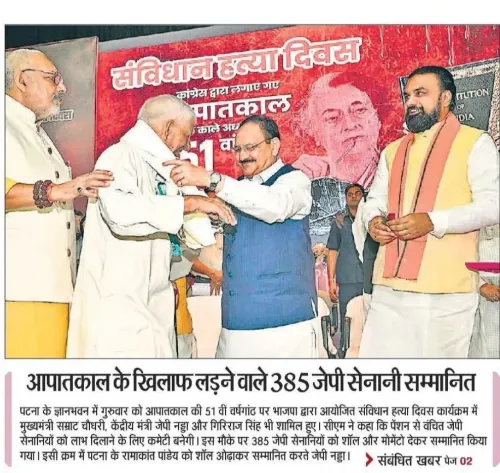
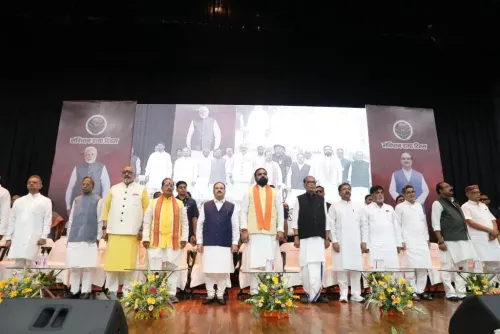
The BJP has labelled 25 June as Samvidhan Hatya Diwas ('Constitution Murder Day') as part of a sustained historical-memory campaign.
The 1975 Emergency was proclaimed under Article 352 on the advice of Prime Minister Indira Gandhi , suspending fundamental rights.
Singh called educating the younger generation about the Emergency 'essential to protecting democracy.' Opposition responses are anticipated when the 2026 monsoon session of Parliament convenes.
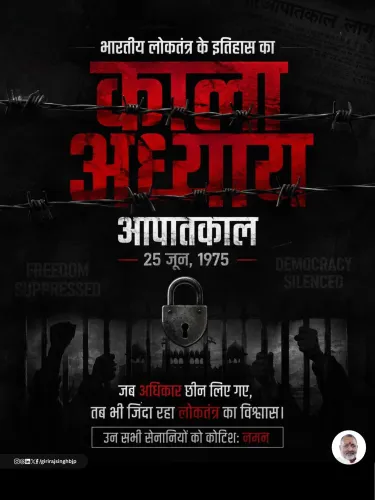
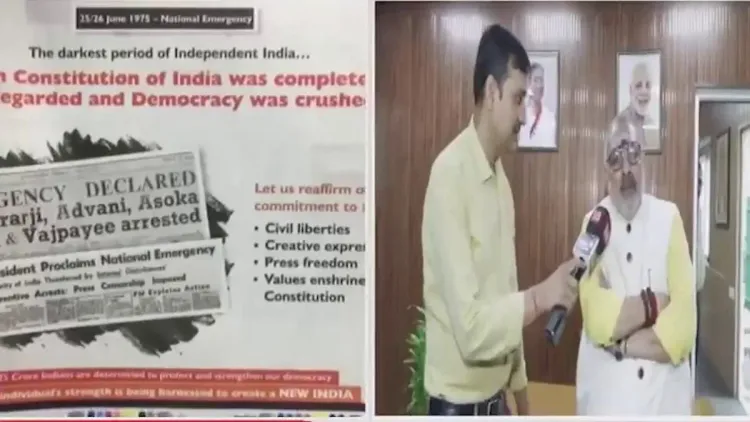
Union Textiles Minister Giriraj Singh on Thursday, 25 June 2026 invoked the 51st anniversary of the 1975 Emergency to demand a public apology from the Indian National Congress, accusing the party of strangling democracy and the Constitution by imposing the 21-month Emergency and now invoking constitutional values for political benefit.
Context
Posting on X under the hashtags #Emergency, #SamvidhanHatyaDiwas, and #Democracy, the minister wrote: 'Jis Congress ne aapatkaal thopkar loktantra aur samvidhan ka gala ghonta, woh aaj samvidhan ki duhai de rahi hai' — 'The Congress that throttled democracy and the Constitution by imposing the Emergency is today invoking the Constitution.' He added that 25 June 1975 is a 'dark chapter' the nation must never forget, and that educating the younger generation about this history is essential to protecting democracy.
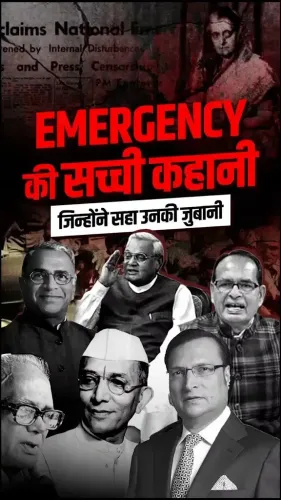
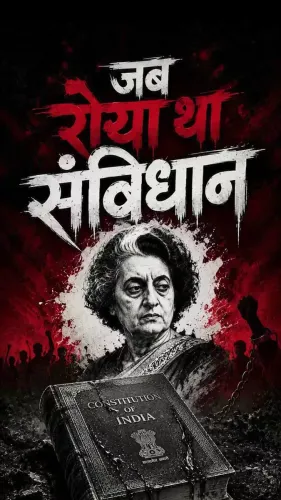
The post is one of several BJP voices marking the anniversary, which the party has labelled Samvidhan Hatya Diwas — 'Constitution Murder Day' — to underscore its charge that the Congress-led government of the era committed a fundamental assault on constitutional order.
Policy Backdrop
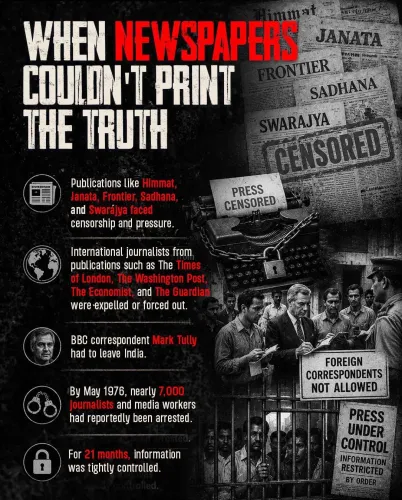
On 25 June 1975, then-President Fakhruddin Ali Ahmed, acting on the advice of Prime Minister Indira Gandhi, proclaimed a national Emergency under Article 352 of the Constitution, citing 'internal disturbance'. The proclamation suspended fundamental rights and curtailed civil liberties for 21 months, until March 1977.
Since 2014, the BJP has systematically used annual commemorations of the Emergency to frame itself as the defender of constitutional democracy and to characterise the Congress as an authoritarian force. The Samvidhan Hatya Diwas framing intensifies that narrative by directly linking the Emergency to what the party describes as an attack on the Constitution itself.
Stakeholders and Impact
The demand for an apology is directed squarely at the Indian National Congress, the party that held power when the Emergency was declared. Congress has historically defended the Emergency as a necessary response to political instability, while opposition parties and civil-society groups have long condemned it as an abuse of executive power.
For younger voters who did not live through 1975–77, the BJP's annual messaging campaign serves as a political education exercise, seeking to cement a historical association between the Congress and democratic backsliding. The Samvidhan Hatya Diwas hashtag mobilises party cadres and allied voices across social media on the anniversary each year.
What's Next
Opposition responses are expected when the 2026 monsoon session of Parliament convenes, where the Emergency anniversary and its framing as Samvidhan Hatya Diwas may surface in floor debates. Any formal government notification designating 25 June as an official day of remembrance would escalate the political stakes considerably, turning a social-media campaign into a state-sanctioned historical verdict.
As the BJP's institutional memory of the Emergency deepens through annual campaigns, the Congress faces continued pressure to either mount a counter-narrative or address the demand for accountability head-on — a choice that will shape how the 1975 episode is remembered by a generation that has no direct experience of it.
Point of View
The minister frames historical memory itself as a democratic duty, effectively turning June 25 into a recurring liability for Congress. The timing, on the anniversary itself and under the Samvidhan Hatya Diwas banner, signals coordinated party messaging rather than a solitary intervention. The Congress faces a structural dilemma: engaging with the demand risks re-litigating an uncomfortable chapter, while ignoring it cedes the historical framing to its rival.
NationPress
24 Sept 2026
Frequently Asked Questions
What is Samvidhan Hatya Diwas and why does the BJP observe it?
Samvidhan Hatya Diwas, meaning 'Constitution Murder Day', is the BJP's designation for 25 June, the anniversary of the 1975 Emergency proclamation. The party observes it to highlight what it describes as the Congress-led government's assault on constitutional democracy during the 21-month Emergency from 1975 to 1977.
What did Giriraj Singh say about the 1975 Emergency on 25 June 2026?
Giriraj Singh posted on X that Congress, which 'throttled democracy and the Constitution' by imposing the Emergency, is today invoking the Constitution for political benefit. He called 25 June 1975 a dark chapter the nation must never forget and demanded that Congress apologise to the country.
Why did India's Emergency of 1975 happen?
The Emergency was proclaimed on 25 June 1975 under Article 352 of the Constitution, on the advice of Prime Minister Indira Gandhi, citing 'internal disturbance'. It suspended fundamental rights and curtailed civil liberties for 21 months until March 1977.
Has Congress apologised for the 1975 Emergency?
Congress has not issued a formal apology for the 1975 Emergency. The party has historically defended the proclamation as a response to political instability, while the BJP and other opposition voices have consistently demanded accountability.
What political impact does BJP's Emergency anniversary campaign have?
The BJP's annual campaign uses the Emergency anniversary to frame the Congress as an authoritarian force and itself as the defender of constitutional democracy. It also serves as a political education exercise targeting younger voters who did not experience the 1975-77 period directly.