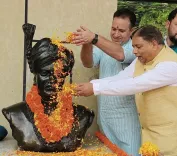
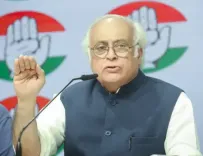
Rajnath Singh marks 'Sanvidhan Hatya Divas' on 1975 Emergency anniversary
Synopsis
Union Defence Minister Rajnath Singh on 25 June 2026 marked 'Sanvidhan Hatya Divas', condemning the 1975 Emergency as the darkest day in Indian democracy and honouring those who resisted it, echoing PM Modi's designation of the date as a day of constitutional remembrance.
Key Takeaways
25 June 2026 marks the anniversary of the 1975 Emergency , proclaimed under Article 352 and lasting 21 months .
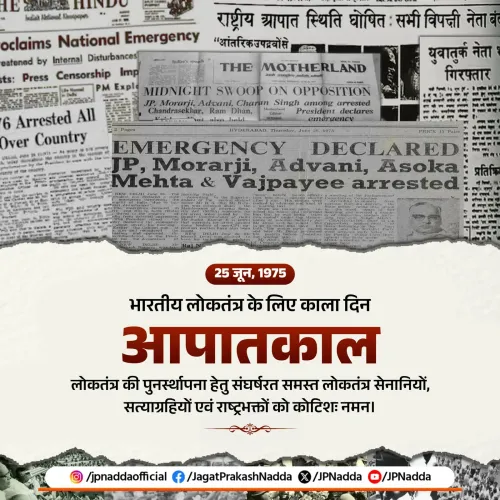
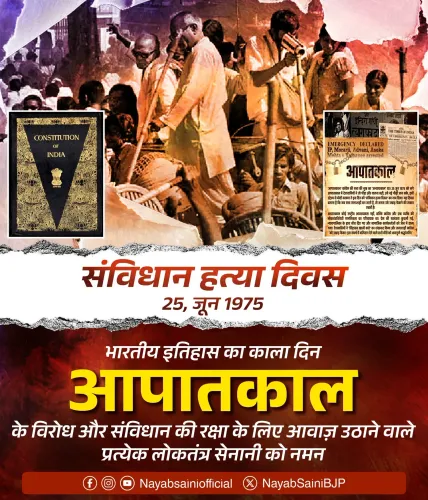
Union Defence Minister Rajnath Singh called the day the 'darkest day in the history of Indian democracy.' PM Narendra Modi designated 25 June as 'Sanvidhan Hatya Divas' (Constitution Murder Day) to institutionalise annual remembrance.
During the Emergency, fundamental rights were suspended, press freedom was crushed, and thousands of activists, journalists, and citizens were jailed.
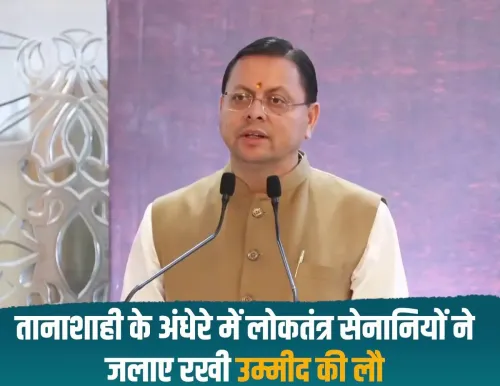
Singh paid tribute to democracy fighters who resisted Emergency-era repression, calling their sacrifice a lasting inspiration.
The observance is part of a broader effort to embed Emergency lessons in civic memory, including potential school curricula and parliamentary debates.
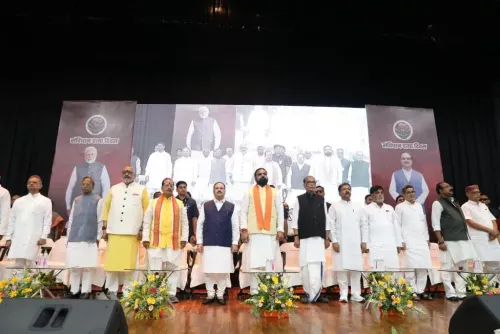
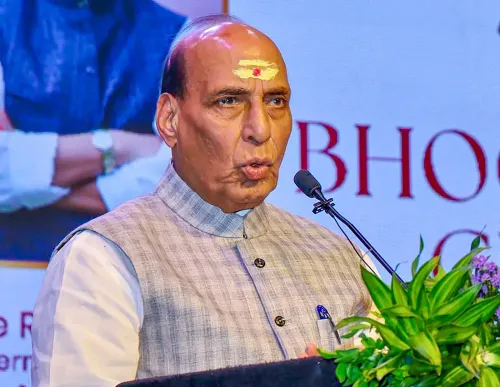
Union Defence Minister Rajnath Singh on Thursday, 25 June 2026, paid solemn tribute to democracy fighters who resisted the 1975 Emergency, marking the occasion as 'Sanvidhan Hatya Divas' (Constitution Murder Day) — a designation introduced by Prime Minister Narendra Modi to institutionalise annual remembrance of what Singh called 'the darkest day in the history of Indian democracy.'
Context
In his post, Singh described 25 June 1975 as the day when Emergency was imposed on India, leading to the suppression of fundamental rights, the crushing of press freedom, and the imprisonment of thousands of political and social workers, journalists, and ordinary citizens. Translating his words: 'Satta ke ahankaar mein naagirkon ke maulik adhikaaron ka hanan kiya gaya' — 'In the arrogance of power, the fundamental rights of citizens were violated.' He further noted that all efforts were made during that period to weaken constitutional values and democratic traditions.
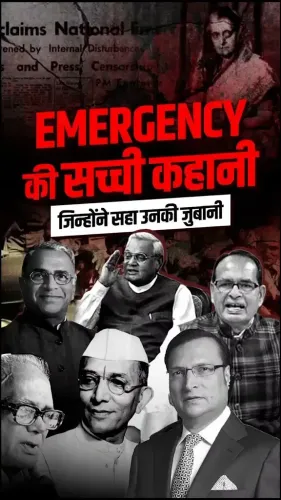
The national Emergency was proclaimed on 25 June 1975 under Article 352 of the Constitution by the then government of Prime Minister Indira Gandhi. It lasted 21 months, suspending civil liberties and concentrating executive authority. The Emergency ended after general elections in March 1977, which brought the first non-Congress government to power.
Policy Backdrop
Prime Minister Narendra Modi designated 25 June as 'Sanvidhan Hatya Divas' to ensure, in Singh's words, that 'future generations never forget the assault on democracy.' The move is part of a broader effort by the ruling dispensation to institutionalise remembrance of the Emergency as a cautionary chapter in India's constitutional history.
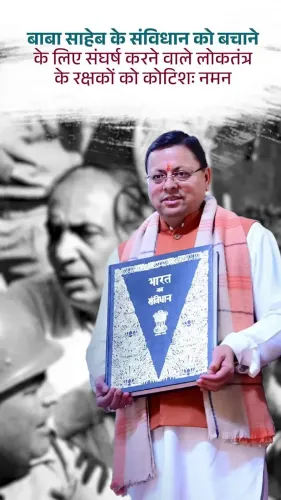
Singh emphasised that the Constitution is 'hamare desh ka sabse pavitra granth' — 'the most sacred text of our country' — and the firm foundation of the democratic republic, whose protection is the collective responsibility of all citizens. He called the day an opportunity to reaffirm commitment to democracy, civil liberties, and constitutional values.
Stakeholders and Impact
Singh's tribute was directed at those who fought, suffered, and sacrificed during the Emergency — political activists, journalists, and ordinary citizens who resisted what he termed 'the dictatorship of the Emergency era.' He described their courage, sacrifice, and dedication as a lasting source of inspiration.
The annual observance has significance for a wide range of stakeholders: opposition politicians who were imprisoned during the Emergency, press freedom advocates, civil society organisations, and constitutional scholars who view the period as a benchmark against which democratic health is measured.
What's Next
The designation of 25 June as 'Sanvidhan Hatya Divas' is expected to be marked through government programmes and potentially reflected in school curricula, embedding the Emergency's lessons in civic education for younger generations. Parliamentary references to the Emergency are also likely during Constitution-related debates in the coming sessions.
As India's democratic institutions continue to evolve, the annual remembrance serves as a recurring moment for political parties across the spectrum to articulate their respective visions of constitutional fidelity — making 25 June a date of enduring political and civic resonance.
Point of View
The ruling establishment is converting a historical grievance into an annual civic ritual — one that consistently positions the BJP as the guardian of constitutional democracy against a Congress-era legacy of authoritarianism. The institutionalisation of this date, from a ministerial social-media post to potential school curricula, signals a deliberate long-game strategy to shape how younger Indians understand the relationship between political power and constitutional rights. For the opposition, the day presents a recurring challenge: to engage with the Emergency's genuine democratic failures without ceding the entire narrative to the ruling party. The broader pattern suggests that constitutional memory, far from being a neutral historical exercise, has become an active arena of political contestation in contemporary India.
NationPress
23 Sept 2026
Frequently Asked Questions
What is Sanvidhan Hatya Divas?
'Sanvidhan Hatya Divas', meaning Constitution Murder Day, is a designation introduced by Prime Minister Narendra Modi to mark 25 June as a day of remembrance for the 1975 Emergency , when fundamental rights were suspended and democratic norms were violated.
Why was Emergency imposed in India in 1975?
The national Emergency was proclaimed on 25 June 1975 under Article 352 of the Constitution by the then government of Prime Minister Indira Gandhi . It suspended civil liberties and lasted 21 months , ending after the March 1977 general elections.
What did Rajnath Singh say about the 1975 Emergency?
Union Defence Minister Rajnath Singh described 25 June 1975 as the 'darkest day in the history of Indian democracy,' stating that fundamental rights were violated, press freedom was crushed, and thousands of citizens were jailed without cause during the Emergency.
How long did the 1975 Emergency last?
The 1975 Emergency lasted 21 months , from 25 June 1975 until it was lifted following the general elections of March 1977 , which brought the first non-Congress government to power.
What is the significance of 25 June in Indian politics?
25 June marks the anniversary of the 1975 Emergency proclamation and is now observed as 'Sanvidhan Hatya Divas' as designated by PM Narendra Modi , making it an annual occasion to reaffirm commitment to democracy and constitutional values.