Joshi fires back at Congress: 'No moral right to preach democracy'
Synopsis
Union Minister Pralhad Joshi fired back at Congress on 7 November 2026, invoking the 1975 Emergency to argue the party has no moral right to preach democracy, closing with a sharp Kannada idiom meaning 'reciting scripture in a demon's mouth.'
Key Takeaways
Union Minister Pralhad Joshi posted a Kannada-language rebuttal on 7 November 2026 , targeting Congress on democratic credibility.
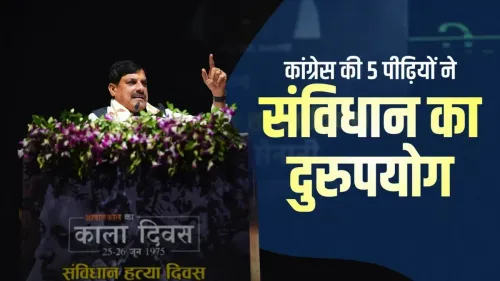
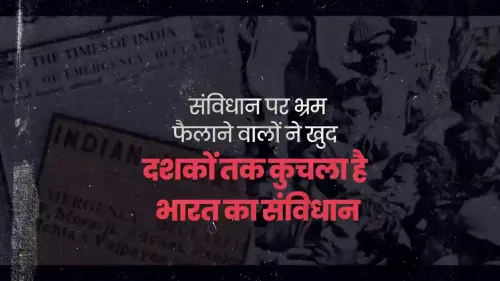
He cited the 1975 Emergency — declared by the Congress government on 25 June 1975 and lasting 21 months — as evidence of the party's anti-democratic record.
Joshi used the Kannada idiom 'ಭೂತದ ಬಾಯಲ್ಲಿ ಭಗವದ್ಗೀತೆ' ('Bhagavad Gita in a demon's mouth') to characterise Congress's stance as rank hypocrisy.
The post follows a long-established BJP pattern of invoking the Emergency as a counter whenever Congress raises concerns about democratic norms.
The specific Congress remark that triggered the reply has not been independently verified.
Joshi serves as a senior BJP minister from Karnataka , giving the Kannada-language post added political resonance in the state where Congress currently holds power.
A sharp political salvo landed on the evening of Saturday, 7 November 2026, when Union Consumer Affairs Minister Pralhad Joshi turned Congress's own democratic record against it — invoking the ghost of the 1975 Emergency to dismiss what he called rank hypocrisy.
Posting in Kannada, Joshi wrote: 'ತುರ್ತು ಪರಿಸ್ಥಿತಿಯನ್ನು ಹೇರಿದ ಮತ್ತು ಭಿನ್ನಾಭಿಪ್ರಾಯವನ್ನು ಹತ್ತಿಕ್ಕುತ್ತಿರುವ ಕಾಂಗ್ರೆಸ್ಗೆ...' — 'The Congress, which imposed the Emergency and continues to suppress dissent, has no moral right to lecture others on democracy. Their hypocrisy is plain for all to see.' He capped it with a biting Kannada idiom: 'ಭೂತದ ಬಾಯಲ್ಲಿ ಭಗವದ್ಗೀತೆ' — roughly, 'reciting the Bhagavad Gita in a demon's mouth' — a folk expression for profound, shameless contradiction.
The Emergency shadow that never leaves Indian politics
The reference is not incidental. On 25 June 1975, the Congress government led by Prime Minister Indira Gandhi declared a national Emergency, citing 'internal disturbance.' What followed was 21 months of suspended civil liberties, blanket press censorship, and mass detention of opposition leaders — a period that remains the sharpest wound in India's democratic memory. The Emergency ended in March 1977 after Congress lost the subsequent general election. For BJP leaders, the Emergency is not merely history — it is a standing argument. Whenever Congress raises concerns about institutional autonomy, dissent or democratic norms, BJP's standard counter is to point at those 21 months and ask: who are you to talk?Joshi's rebuttal and the pattern behind it
Joshi, a senior BJP leader from Karnataka and a central government minister holding two portfolios — Consumer Affairs, Food and Public Distribution, and New and Renewable Energy — posted his response as a reply to his own handle @JoshiPralhad, signalling a deliberate, on-record rebuttal rather than a casual aside. The specific Congress statement that triggered the post could not be independently verified, but the shape of the exchange is familiar. The two parties have traded versions of this argument for decades — each holding up the other's record as proof that democratic credentials are, at best, selective. What Joshi's post does, with economy and colour, is plant a cultural anchor. The 'ಭೂತದ ಬಾಯಲ್ಲಿ ಭಗವದ್ಗೀತೆ' idiom translates the political charge into vernacular gut-feeling — a move aimed squarely at Karnataka's Kannada-speaking electorate, where Congress currently holds government and BJP is in opposition. Expect Congress spokespersons to respond, and watch for any escalation in Parliament or at the state level in Karnataka in the days ahead.Point of View
Not just the national gallery, at a time when the two parties are in direct state-level competition there. That BJP ministers continue to reach for a 1975 reference in 2026 speaks to how effectively the party has kept that historical wound alive as a live political asset. The absence of a named, specific Congress provocation in the post also follows a familiar playbook: a pre-emptive or general strike that Congress must now either ignore or elevate by responding.
NationPress
7 Nov 2026
Frequently Asked Questions
What did Pralhad Joshi say about Congress and democracy?
Joshi said Congress, as the party that imposed the 1975 Emergency and suppressed dissent, has no moral right to lecture others on democracy, calling their position hypocritical with the Kannada idiom meaning 'Bhagavad Gita in a demon's mouth.'
What was the 1975 Emergency in India?
The national Emergency was declared on 25 June 1975 by the Congress government under Prime Minister Indira Gandhi, lasting 21 months until March 1977; it involved suspension of civil liberties, press censorship and detention of opposition leaders.
Why do BJP leaders keep bringing up the 1975 Emergency?
BJP leaders routinely invoke the Emergency as a counter whenever Congress raises democratic concerns, using the 21-month suspension of civil liberties under a Congress government as evidence that the party lacks credibility on democratic norms.
What does the Kannada idiom 'ಭೂತದ ಬಾಯಲ್ಲಿ ಭಗವದ್ಗೀತೆ' mean?
The phrase translates literally as 'reciting the Bhagavad Gita in a demon's mouth' and is used in Kannada to describe someone acting with blatant, shameless contradiction — invoking virtue while embodying the opposite.
Who is Pralhad Joshi?
Pralhad Joshi is a senior BJP leader from Karnataka serving as Union Minister of Consumer Affairs, Food and Public Distribution, and Minister of New and Renewable Energy in the central government.