PLI scheme for medical devices: Govt reopens applications, ₹2,700 crore earmarked

Synopsis
India's PLI scheme for medical devices is getting a major reboot — fresh applications are open, the scheme has been extended to 2035-36, and ₹2,700 crore is on the table. With 60-plus high-end devices already in domestic production and new targets like 3T MRI and PET-CT scanners, PLI-MD 2.0 is the government's most ambitious push yet to end India's dependence on imported medical equipment.
Key Takeaways
The Union government has invited fresh applications under the PLI-MD scheme with a ₹2,700 crore earmarked outlay.
The online application portal will be operational within the next 10 days .
The scheme, originally launched in 2021-22 , has been extended to 2035-36 .
The first phase led to production of 60+ high-end medical devices worth over ₹16,000 crore .
Incentive rates average 5% for TS1, 9% for TS2 and TS3, and 6% for TS4; minimum sales thresholds have been removed.
New targets include 3T MRI , PET-CT scanners , ultrasound probes , and high-throughput IVD analysers not yet made in India.
The Union government has invited fresh applications under the Production Linked Incentive scheme for Medical Devices (PLI-MD), with a ₹2,700 crore outlay earmarked to accelerate domestic manufacturing of critical healthcare equipment. An online portal for submissions will go live within the next 10 days, according to an official statement issued on 10 November.
Scheme Extended and Expanded
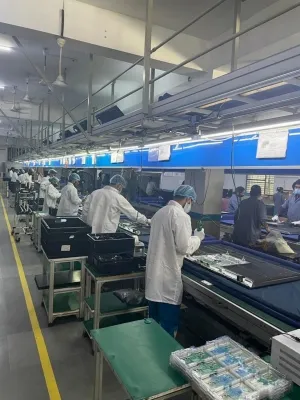
Originally launched in 2021-22, the PLI-MD scheme has now been extended through 2035-36, giving manufacturers a longer runway to scale up. The first phase of the scheme already catalysed domestic production of more than 60 high-end medical devices and components — including X-ray tubes and detectors, 1.5T MRI machines, LINAC, CT scanners, mammography machines, Cathlab systems, orthopaedic and cardiac implants, and dialysers — with cumulative production valued at over ₹16,000 crore.
Four Target Segments and Incentive Structure
Under the revised framework, applicants will be allowed three years to establish manufacturing facilities across any of four target segments (TS). These cover medical consumables, disposables and implants (TS1); critical components (TS2); high-end devices currently at a nascent stage of domestic manufacturing (TS3); and high-end devices presently only assembled in India (TS4).
The tapering incentive rate averages around 5% for TS1, 9% for TS2 and TS3, and 6% for TS4. Priority in TS3 and TS4 will be given to value chain integration to improve the competitiveness and quality of Made in India devices. The critical components segment is also expected to provide a fillip to the MSME sector.
Key Simplifications to Ease Entry
Drawing on lessons from the first phase, the government has introduced several eligibility and procedural changes to lower entry barriers. The minimum sales threshold requirement for claiming incentives has been discontinued, and the minimum investment requirement has been trimmed. Scheme guidelines have been made more investor-friendly to enhance Ease of Doing Business.
Notably, applicants may now submit any number of applications across one or more target segments, and the application window will remain continuously open over an extended period — a departure from the fixed, time-bound windows of earlier rounds.
What PLI-MD 2.0 Targets
PLI-MD 2.0 is designed to fulfil the vision of Atmanirbhar Bharat and 'Make in India' by developing indigenous supply chains, attracting investment, generating employment, improving the quality of domestically made devices, and reducing prices for end-users. The scheme specifically targets deep manufacturing of devices such as 3T MRI, PET-CT scanners, ultrasound probes and consoles, and high-throughput IVD analysers — categories that are currently not manufactured in India.
With the portal set to open within days and the application window structured to remain ongoing, the government appears determined to maintain momentum in a sector that has historically been dominated by imports.
Point of View
And PLI-MD's first phase — while creditable — barely scratched the surface of a sector dominated by multinational original equipment manufacturers. The extension to 2035-36 and the removal of sales thresholds signal that the government recognises the first round was too restrictive for deep manufacturing to take hold. The real test is whether TS3 and TS4 incentives are attractive enough to draw genuine value-chain investment, or whether manufacturers settle for the easier wins in consumables. The ambition to indigenously produce 3T MRI and PET-CT systems is significant — but without a credible localisation roadmap and technology transfer framework, the gap between assembly and manufacturing will persist.
NationPress
11 Nov 2026
Frequently Asked Questions
What is the PLI scheme for medical devices (PLI-MD)?
The PLI-MD scheme is a central government initiative that provides production-linked financial incentives to encourage domestic manufacturing of medical devices in India. Launched in 2021-22, it has now been extended to 2035-36, with a fresh outlay of ₹2,700 crore announced under the revised PLI-MD 2.0 framework.
How can applicants apply under PLI-MD 2.0?
Applications must be submitted through an official online portal, which will become operational within 10 days of the 10 November announcement. The window will remain continuously open over an extended period, and applicants may submit any number of applications across one or more of the four target segments.
What are the four target segments under PLI-MD 2.0?
The four target segments are: TS1 (medical consumables, disposables, and implants), TS2 (critical components), TS3 (high-end devices at a nascent stage of domestic manufacturing), and TS4 (high-end devices currently only assembled in India). Incentive rates average 5% for TS1, 9% for TS2 and TS3, and 6% for TS4.
What has the PLI-MD scheme achieved so far?
The first phase of PLI-MD resulted in domestic manufacturing of more than 60 high-end medical devices and components, including X-ray tubes, 1.5T MRI machines, CT scanners, mammography machines, Cathlab systems, cardiac implants, and dialysers. The cumulative value of production under the scheme has crossed ₹16,000 crore.
Which new medical devices does the government want to manufacture in India under PLI-MD 2.0?
PLI-MD 2.0 specifically targets deep manufacturing of devices not currently made in India, including 3T MRI systems, PET-CT scanners, ultrasound probes and consoles, and high-throughput IVD analysers. Priority in advanced segments will be given to full value-chain integration rather than mere assembly.