JP Nadda Declares Green Ammonia Agreements a Milestone for Sustainable Fertilizer Production
Synopsis
In a landmark initiative, the Department of Fertilisers has signed Green Ammonia agreements for 11 projects under the National Green Hydrogen Mission. This strategic move aims to minimize carbon emissions and enhance energy self-reliance in India, as highlighted by Union Minister JP Nadda.
Key Takeaways
Green Ammonia agreements signed for 11 projects.
Initiative under the National Green Hydrogen Mission .
Expected to reduce carbon emissions .
Long-term contracts for stable ammonia supply .
Aim to produce 5 MMT of green hydrogen by 2030.
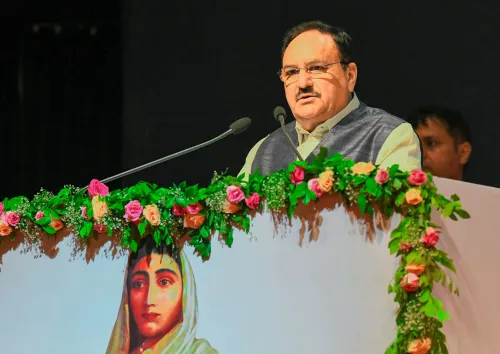
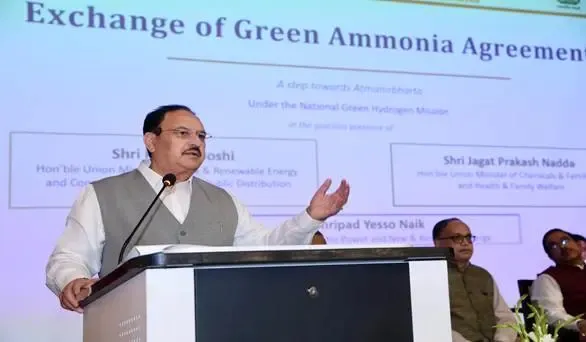
New Delhi, March 31 (NationPress) The Ministry of Fertilisers has initiated the exchange of Green Ammonia agreements for 11 projects under the National Green Hydrogen Mission, a move expected to significantly lower carbon emissions while ensuring long-term energy security and self-sufficiency, stated Union Minister of Chemicals and Fertilisers, JP Nadda, on Tuesday.
Nadda described the signing of these agreements as a monumental milestone in India's pursuit of sustainable fertilizer production, emphasizing that this initiative showcases the government's steadfast dedication to fostering a cleaner, greener environment for both farmers and the nation.
The Department of Fertilizers (DoF) has formalized Green Ammonia Purchase Agreements (GAPA) and Green Ammonia Supply Agreements (GASA) between fertilizer manufacturers and green ammonia producers to kickstart 11 projects under the National Green Hydrogen Mission (NGHM).
Indian fertilizer companies have committed to long-term contracts for green ammonia at fixed prices over a decade. This strategic approach is anticipated to provide a consistent and dependable supply of ammonia, aiding in the reliable domestic production of Phosphatic and Potassic (P&K) fertilizers, while helping to stabilize prices in the Indian market.
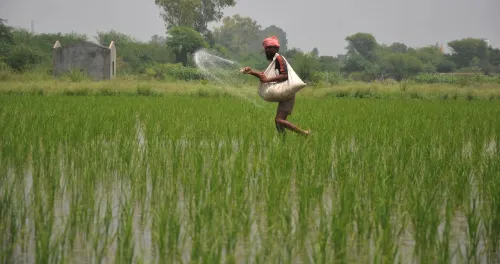
Currently, India produces around 165–170 LMT of P&K fertilizers, including DAP and NPK variants. However, a considerable share of domestic production is reliant on imported ammonia.
Recent geopolitical tensions have led to disruptions in the global ammonia market, resulting in fluctuations in both availability and pricing, thereby threatening stability in India's fertilizer production.
The signing of Purchase Agreements and Green Ammonia Supply Agreements under the National Green Hydrogen Mission marks a significant advancement in integrating green hydrogen and green ammonia into the fertilizer value chain.
Embracing green ammonia is also expected to preserve foreign currency by lessening import reliance, enhancing self-sufficiency in the fertilizer sector, and generating new job opportunities.
This initiative is likely to spur investments in the establishment of green ammonia production capacity within India, as stated. A stable supply framework will attract new participants to the fertilizer industry, paving the way for the establishment of additional manufacturing units in the future.
The National Green Hydrogen Mission (NGHM) is being executed with a budget of Rs 19,744 crore, aiming to produce at least 5 million metric tonnes (MMT) of green hydrogen annually by 2030.
aar/pk
Point of View
The recent Green Ammonia agreements mark a crucial step towards sustainable agriculture in India. They reflect a commitment to reducing carbon emissions and enhancing energy security, which is essential in today's volatile geopolitical landscape.
NationPress
24 Sept 2026
Frequently Asked Questions
What are Green Ammonia agreements?
Green Ammonia agreements are contracts that facilitate the production and supply of ammonia derived from renewable energy sources, aimed at reducing carbon footprints in fertilizer production.
How does the National Green Hydrogen Mission impact fertilizer production?
The National Green Hydrogen Mission aims to integrate green hydrogen into the fertilizer value chain, enhancing sustainability and reducing dependence on imported ammonia.
What is the significance of JP Nadda's announcement?
JP Nadda's announcement highlights India's commitment towards sustainable agriculture and energy self-reliance, marking a significant milestone in the fertilizer sector.
How much green hydrogen is India aiming to produce by 2030?
India aims to produce at least 5 million metric tonnes of green hydrogen annually by 2030 under the National Green Hydrogen Mission.
What are the benefits of using green ammonia in fertilizers?
Using green ammonia helps reduce carbon emissions, conserves foreign exchange by minimizing imports, and supports self-reliance in the fertilizer sector.