Will Market Volatility Persist Over the Greenland Framework?

Synopsis
Investors remain apprehensive about the proposed US framework on Greenland, with ongoing market volatility expected. Issues surrounding military presence, mineral resources, and sovereignty are crucial. As geopolitical tensions rise, the situation continues to evolve, impacting investor sentiment. Stay tuned as developments unfold.
Key Takeaways
Investor anxiety regarding the US framework on Greenland is prevalent.
Potential market volatility due to critical sticking points exists.
Future negotiations will address US military presence and mineral resources.
Geopolitical tensions have intensified with Europe's military response.
President Trump's tariff announcements add another layer of complexity.
New Delhi, Jan 24 (NationPress) Investors are expected to stay uneasy regarding the proposed US framework concerning Greenland, with the potential for continued near-term market volatility, according to a recent report.
The analysis from Bank of Baroda highlights that market players are on the lookout for more specifics that could influence the outcome of the negotiations.
"Looking forward, investors will likely wait for further details of the agreement, as there are several sticking points that could impede the negotiations. Hence, some volatility can be anticipated," the report indicated.
Analysts foresee that the arrangement may closely resemble an updated version of the existing security agreement between the US and Denmark, established in 1951, as mentioned in the report.
Future discussions will address aspects such as US military presence in Greenland, the utilization of its mineral resources, and questions of sovereignty, as stated by Aditi Gupta, an economist at Bank of Baroda.
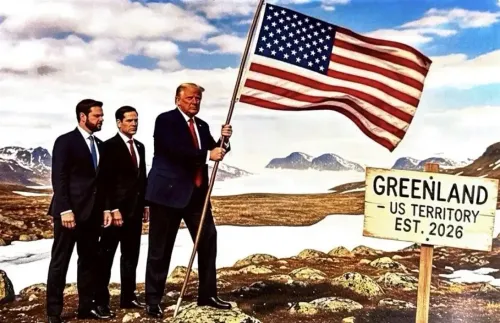
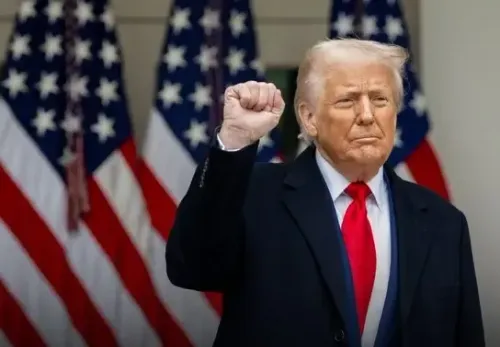
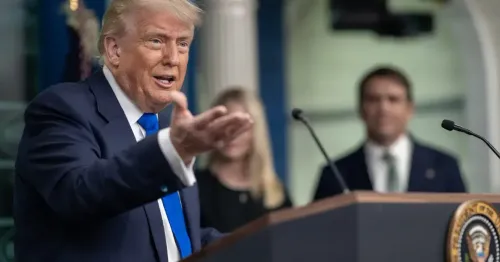
President Donald Trump has articulated Washington's interest in Greenland as primarily a matter of national security; however, the island's largely untapped mineral resources, including oil, gas, and rare earth elements, also pique US interest, the report noted.
While the announcement of a framework deal between the US and NATO has eased investor concerns, the specifics of the agreement remain vague," it added.
Escalating geopolitical tensions led to market instability after President Trump intensified his rhetoric regarding the annexation of Greenland and threatened economic measures against European nations opposing US strategies. In reaction, several European countries, such as France, Germany, and Sweden, increased military presence in Greenland, further heightening tensions.
Trump also announced a 10 percent additional tariff on goods from the UK, Denmark, Norway, Sweden, France, Germany, Netherlands, and Finland, effective February 1, 2026. The tariff rate was projected to rise to 25 percent by June 1, 2026.
Subsequently, he retracted his threat to impose tariffs on European nations during the World Economic Forum meeting in Davos.
aar/na
Point of View
The ongoing tensions regarding the US framework on Greenland signify a critical juncture in international relations. The potential for economic implications and heightened military presence calls for close monitoring as nations navigate this complex geopolitical landscape. We must remain vigilant as these discussions unfold.
NationPress
19 Sept 2026
Frequently Asked Questions
What are the main concerns regarding the US framework on Greenland?
Investors are worried about sticking points that could hinder negotiations, particularly around military presence and mineral resources.
How might the Greenland situation affect global markets?
Increased volatility is anticipated as investors react to geopolitical tensions and the evolving nature of negotiations.
What is the historical context of US-Denmark relations?
The current discussions may update the existing security agreement between the US and Denmark, established in 1951.