Will the Easing of Greenland Tensions Improve Market Sentiments and Aid Rupee Recovery?
Synopsis
In a significant turn of events, a de-escalation of Greenland tensions could provide much-needed relief to market sentiments. As the rupee recovers gradually, experts predict a mixed landscape for economic indicators. With trade agreements on the horizon and domestic growth projections looking promising, the financial outlook remains complex yet hopeful.
Key Takeaways
Greenland tensions easing could positively impact market sentiments.
The rupee has shown signs of gradual recovery .
Upcoming trade agreements may bolster economic growth .
Global market indicators remain volatile .
The fiscal situation will become clearer in the upcoming Budget .
New Delhi, Jan 22 (NationPress) Recent indications of a reduction in tensions related to Greenland are expected to ease market sentiments, though the volatility of the rupee may continue in the immediate future. However, its depreciation is anticipated to be more gradual compared to the recent sharp fluctuations, a report indicated on Thursday.
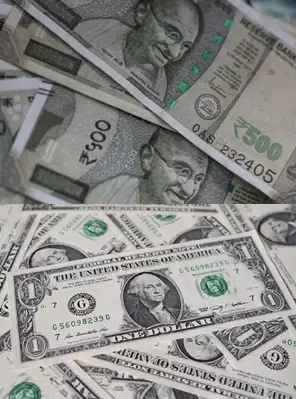
The rupee made a comeback from its historic lows, gaining 15 paise to trade at 91.50 against the US dollar during early transactions on Thursday.
Radhika Rao, Executive Director and Senior Economist at DBS Bank, pointed out that the bearish sentiment carried over from last year was exacerbated by a mix of both global and domestic factors.
“A significant rise in the global VIX pointed to weaknesses across market indicators, compounded by unfavorable geopolitical events and a spike in global bond yields. In this regard, the recent signs of a de-escalation in Greenland tensions will likely provide a boost to market sentiments,” she remarked.
A significant trade agreement with the European Union is on the horizon (expected to be finalized next week), and there is renewed optimism regarding US trade negotiations following positive comments from the World Economic Forum (WEF) held in Davos.
On the domestic front, the downward pressure on the rupee is occurring amidst signs of robust economic growth, with the average for Q1-Q2 FY being at 8 percent (year-on-year) and our projection exceeding 7.5 percent for FY26.
A weaker currency tends to benefit exporters impacted by rising tariffs, although it has created some distortions in other areas.
“The annual Current Account Deficit (CAD) is expected to remain manageable at about -1.0 to -1.2 percent of GDP. However, capital flows have been a larger concern. Following net outflows in 2025, equity markets have faced $3 billion in outflows this year, while bonds have drawn only tepid interest,” stated the DBS Bank report.
Net Foreign Direct Investment (FDI) is performing better than the previous year, though it still lags behind gross FDI due to repatriation pressures.
“The fiscal stimulus will be more evident in the upcoming Budget, as the total general government borrowings are projected to rise in FY27,” it added.
Point of View
I emphasize that while tensions ease, market recovery may take time. The interplay of global events and domestic economic indicators will shape our financial landscape. It's crucial we remain vigilant and informed as these developments unfold, focusing on a balanced approach that prioritizes national interests.
NationPress
30 Sept 2026
Frequently Asked Questions
What does the recent easing of Greenland tensions mean for the rupee?
The easing of Greenland tensions is expected to provide a boost to market sentiments, helping the rupee recover gradually from its recent lows.
How is the current economic growth affecting the rupee?
Despite strong economic growth projections, the rupee faces downward pressure, influenced by various global and domestic factors.
What are the implications of the upcoming trade deal with the EU?
The anticipated trade agreement with the EU could significantly enhance market confidence and positively influence the rupee's performance.