Prolonged Gulf Conflict Could Lead to Inflation Surge; India Remains Resilient, Says SBI Research

Synopsis
The Gulf conflict involving Israel and Iran may trigger inflation and economic instability globally, as highlighted by SBI Research. However, India exhibits resilience due to RBI interventions. Explore how this conflict impacts global markets and India's economy.
Key Takeaways
The Gulf conflict could drive inflation and recessionary pressures globally.
India shows resilience through RBI's interventions.
Crude oil prices have surged significantly.
Increased uncertainty may impact investor sentiment.
Central banks are shifting towards gold as a safe-haven asset.
New Delhi, March 7 (NationPress) The ongoing strife in the Gulf, involving Israel, Iran, and U.S. interests in the area, is expected to have significant economic implications, including potential global recession, inflation increases, and financial market instability, according to a report issued by SBI Research on Saturday.
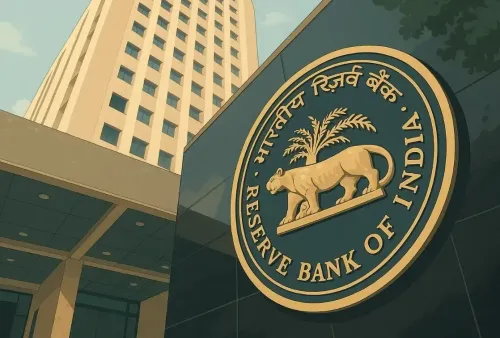
Nevertheless, the domestic financial landscape has benefited from RBI interventions, which include stabilizing G-sec yields and managing rupee fluctuations.
It cautioned that a prolonged conflict could still exert pressure on India’s macroeconomic metrics.
“Despite the criticism from certain commentators, the RBI’s actions in the spot market, aimed at reducing excessive volatility and bringing the rupee below the 92 mark, represent a decisive step amid ongoing exchange rate uncertainties,” the report stated.
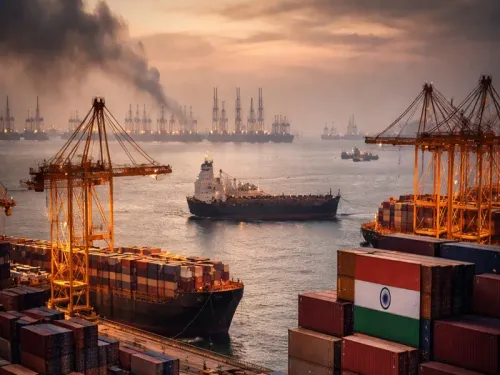
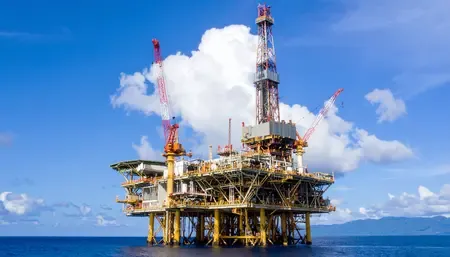
The closure of the Strait of Hormuz, through which nearly 20 percent of the world's crude oil transits, has already resulted in a surge in Brent crude prices.
Currently, crude oil prices have risen to $91.84 per barrel, while WTI stands at $89.62.
“Our regression analysis indicates that for every $10 per barrel increase in crude oil prices, the Current Account Deficit (CAD) could expand by 36 basis points in FY27,” the report elaborated.
In a worst-case scenario, GDP growth may plummet to 6 percent if oil prices reach $130 per barrel, according to SBI Research.
Historically, SBI Research pointed out that the ongoing conflict aligns with the later phases of a Kondratieff Wave, which theorizes long-term economic cycles, suggesting the war might have lasting structural effects on global economies.
The report also highlighted potential winners and losers in this scenario.
The United States could gain from increased oil and gas prices, as well as a transition away from Russian energy supplies to Europe, while many other regions may face economic challenges.
Furthermore, SBI Research noted that central banks are reportedly boosting their gold reserves as a safe-haven asset amid market turbulence, with India maintaining 17.6 percent of reserves in gold.
For India, specifically, the conflict could disrupt remittances from the Gulf, crude oil imports, and trade relations with West Asian countries, though immediate measures such as forward contracts and ongoing acquisitions of Russian crude might alleviate some supply risks.
Banks and the private sector also have exposure to the affected regions.
The report concluded that the increased uncertainty stemming from the Gulf conflict is likely to continue affecting global oil prices, inflation expectations, and investor sentiment in the short term, urging policymakers and investors to stay vigilant about ongoing developments.
Point of View
The analysis presented by SBI Research sheds light on the potential risks posed by the Gulf conflict. While global markets face challenges, India's proactive measures can mitigate some adverse effects. It is essential to adopt a vigilant approach towards these evolving circumstances.
NationPress
1 Oct 2026
Frequently Asked Questions
What impact does the Gulf conflict have on global oil prices?
The ongoing Gulf conflict has led to increased crude oil prices, with significant implications for global markets and inflation rates.
How is India affected by the Gulf conflict?
India may experience disruptions in remittances, crude oil imports, and trade with West Asian nations, though RBI interventions aim to stabilize the situation.
What is the expected GDP growth for India amid this conflict?
In a worst-case scenario, India's GDP growth could decline to 6 percent if oil prices surge to $130 per barrel.
What measures is the RBI taking to support the economy?
The RBI is intervening in the spot market to stabilize the rupee and manage G-sec yields to mitigate volatility.
How does the Gulf conflict influence central banks' asset allocations?
Central banks are increasing their gold holdings as a precautionary measure amid market volatility, with India holding a significant portion of reserves in gold.