HAL receives 7th GE F404 engine to boost Tejas Mk-1A fighter output
Synopsis
Months of engine-supply delays have been the hidden brake on India's most ambitious indigenous fighter programme — and the arrival of the seventh GE F404-IN20 at HAL's Bengaluru facility is a direct signal that the brake is easing. With completed airframes already on the floor and a 180-aircraft order on the books, the next 18 months will test whether HAL and GE Aerospace can finally synchronise production at the scale the IAF urgently needs.
Key Takeaways
HAL has received the seventh GE F404-IN20 engine from GE Aerospace for the Tejas Mk-1A programme, ending a delay of several months.
Multiple completed Tejas Mk-1A airframes at Bengaluru were awaiting engine integration before flight testing and IAF induction.
The IAF has ordered 83 Tejas Mk-1A fighters under a ₹48,000 crore contract, with a follow-on order for 97 more bringing the total fleet to 180 aircraft .
GE Aerospace has committed to supplying 24-26 F404 engines annually from 2026 ; the first batch of Tejas Mk-1A deliveries is expected by late 2026 .
The sixth engine, previously grounded over a technical snag, has been rectified by GE Aerospace and cleared for operational use after HAL verification.
India has also submitted a Letter of Request to France for 114 Dassault Rafale jets in a deal estimated at $31 billion , as part of the broader IAF modernisation drive.
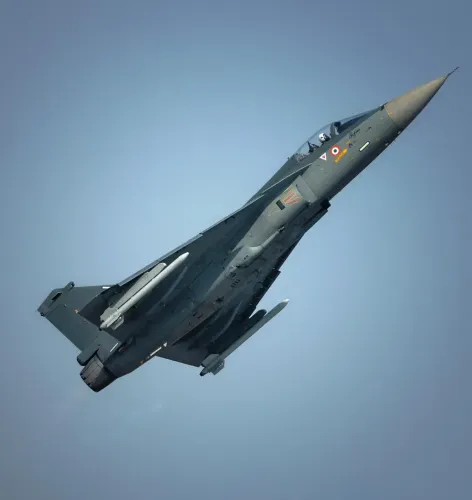
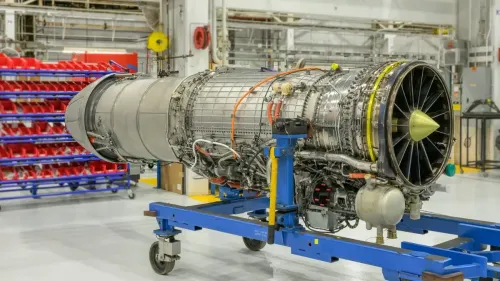
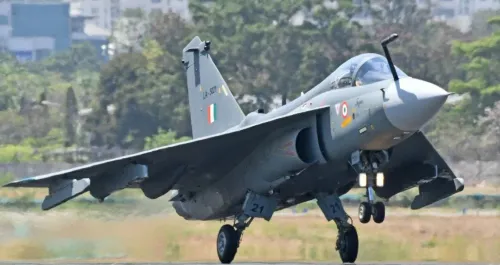
Hindustan Aeronautics Limited (HAL) has received the seventh GE F404-IN20 engine from GE Aerospace for the Tejas Mk-1A fighter jet programme, according to reliable sources. The delivery, which comes after a delay of several months, is expected to accelerate the assembly of Tejas Mk-1A aircraft at HAL's facilities in Bengaluru, where multiple completed airframes have been awaiting engine integration ahead of flight testing and induction into the Indian Air Force (IAF).
Why This Delivery Matters
Engine supply from the United States has emerged as the single biggest bottleneck in HAL's production schedule. Several fully assembled Tejas Mk-1A airframes have been sitting on the production floor, ready in every respect except for the powerplant. The arrival of the seventh F404-IN20 — the engine that powers both the Tejas Mk-1 and Mk-1A variants — now allows those airframes to move into the engine integration and flight-test phase.
Notably, the sixth engine delivered earlier by GE Aerospace had been held back after a technical snag was detected during testing at HAL. GE Aerospace engineers subsequently rectified the defect, after which HAL completed its own verification checks. That engine has since been declared fit for operational use, clearing another path in the assembly pipeline.
Scale of the Tejas Mk-1A Programme
Under an existing contract valued at ₹48,000 crore, the IAF has ordered 83 Tejas Mk-1A fighters. A follow-on order for 97 additional aircraft has expanded the planned fleet to 180 fighters in total. To sustain this ramp-up, GE Aerospace has committed to supplying 24 to 26 F404 engines annually from 2026 onwards.
HAL has also scaled up its manufacturing infrastructure, establishing multiple assembly lines across Bengaluru and Nashik. If engine deliveries continue on the revised schedule, HAL is expected to begin handing over the first batch of Tejas Mk-1A fighters to the IAF by late 2026.
IAF's Broader Modernisation Push
The Tejas programme is only one strand of a wider effort to reverse the IAF's declining squadron strength. Separately, India has submitted a formal Letter of Request to France for the procurement of 114 Dassault Rafale fighter jets for the air force in a deal estimated at roughly $31 billion. Together, the two acquisitions signal a significant acceleration in India's combat aviation modernisation, even as supply-chain dependencies on foreign engine manufacturers remain a structural vulnerability.
What Happens Next
The pace of future GE Aerospace deliveries will be the decisive variable. With HAL's assembly capacity now expanded and airframes ready, any further delays in engine supply would directly compress the IAF's induction timeline. Industry observers will be watching whether GE Aerospace meets its stated target of 24-26 engines per year from 2026 — a commitment that underpins the entire Tejas Mk-1A delivery schedule.
Point of View
Assembly lines are expanded — but the critical chokepoint sits in a GE Aerospace facility in the United States. A commitment of 24-26 engines per year from 2026 sounds adequate on paper, but it still leaves the IAF's induction timeline hostage to a foreign supply chain. India's push for engine indigenisation through the AMCA programme cannot move fast enough; until then, every delayed GE shipment is a delayed squadron.
NationPress
14 Jul 2026
Frequently Asked Questions
What is the GE F404-IN20 engine and why is it important for the Tejas Mk-1A?
The GE F404-IN20 is the turbofan engine that powers both the Tejas Mk-1 and Mk-1A variants of India's indigenous light combat aircraft. It is supplied by US firm GE Aerospace and is the single most critical component in HAL's Tejas Mk-1A assembly process — delays in its delivery have been the primary bottleneck slowing fighter production for the IAF.
How many Tejas Mk-1A fighters has the IAF ordered and what is the contract value?
The IAF has ordered 83 Tejas Mk-1A fighters under a ₹48,000 crore contract, with a follow-on order for 97 additional aircraft bringing the total planned fleet to 180 fighters. HAL is responsible for manufacturing and delivering all aircraft.
When will the first Tejas Mk-1A fighters be delivered to the IAF?
If engine deliveries from GE Aerospace continue on the revised schedule, HAL is expected to begin delivering the first batch of Tejas Mk-1A fighters to the IAF by late 2026. GE Aerospace has committed to supplying 24 to 26 F404 engines annually from 2026 to support the production ramp-up.
What happened to the sixth GE engine delivered to HAL?
The sixth GE F404-IN20 engine was held back after a technical snag was detected during testing at HAL. GE Aerospace engineers rectified the defect, after which HAL completed its own verification checks. The engine has since been declared fit for operational use.
How does the Rafale deal relate to the Tejas programme?
The two programmes are parallel tracks in the IAF's effort to reverse its declining squadron strength. India has submitted a formal Letter of Request to France for 114 Dassault Rafale fighter jets in a deal estimated at roughly $31 billion, while the Tejas Mk-1A represents the indigenous component of the same modernisation effort.