How is IAF Celebrating the 25th Anniversary of Tejas LCA's Inaugural Flight?
Synopsis
The Indian Air Force's celebration of the 25th anniversary of the Tejas LCA's first flight highlights the achievements in indigenous aircraft development and national defense. The event recognizes contributions from various organizations and the ongoing commitment to self-reliance in defense technology.
Key Takeaways
Tejas LCA's 25th anniversary celebrated by IAF.
Significant milestones in indigenous defense technology .
HAL's role in ongoing production and development .
Successful test launches of advanced weaponry.
Commitment to self-reliance in defense.
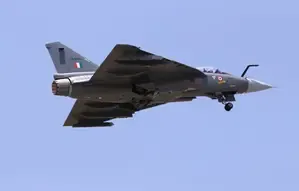
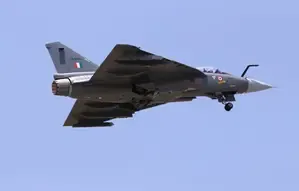
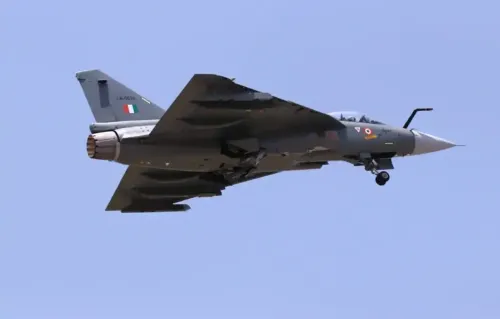
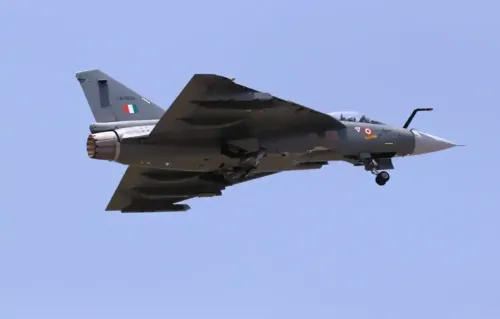
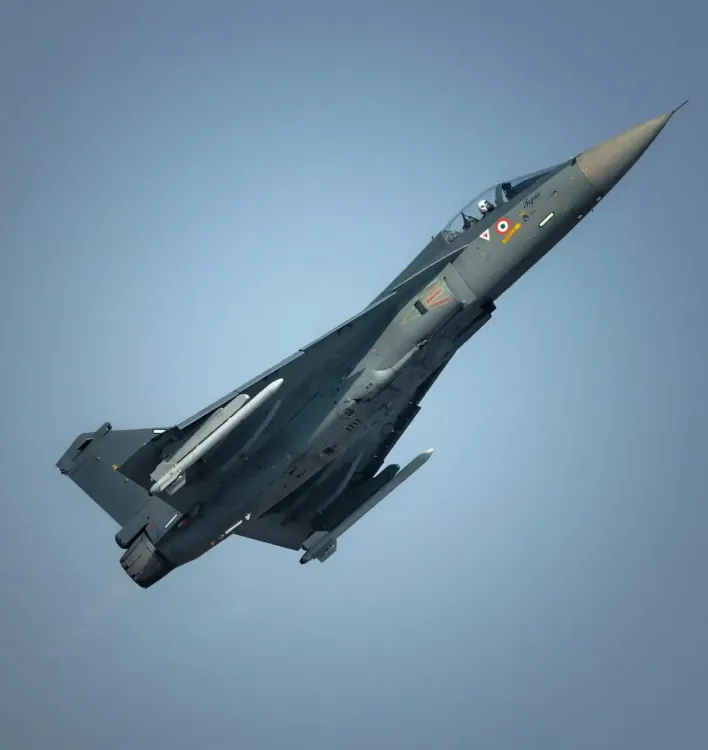
New Delhi, Jan 4 (NationPress) The Indian Air Force marked the 25th anniversary of the groundbreaking first flight of the indigenous Tejas Light Combat Aircraft (LCA) on Sunday.
“On this significant milestone, #IAF reflects on its lasting collaboration in developing this fighter jet. A heartfelt congratulations to the innovative minds at ADA, the dedicated engineers at HAL, the courageous test pilots from IAF & IN, and all personnel who have supported our journey toward self-reliance. The sky is the limit!,” stated the IAF via a social media announcement.
The inaugural flight of the Tejas took place on January 4, 2001, with Wing Commander Rajiv Kothiyal at the controls of the Technology Demonstrator (TD-1) from HAL Airport in Bengaluru.
This milestone marked the start of the flight testing phase for the aircraft, ultimately paving the way for its integration into the Indian Air Force and the advancement of models like the Tejas Mk1A.
The Light Combat Aircraft (LCA) program was initiated by the government in 1983 with the objective of creating a modern light combat jet to replace the aging IAF fleet.
Recently, Hindustan Aeronautics Limited (HAL) secured a substantial order for 97 additional LCA Tejas Mk-1A aircraft, valued at over Rs 62,370 crore, finalized in late 2025, supplementing existing orders for 83 jets.
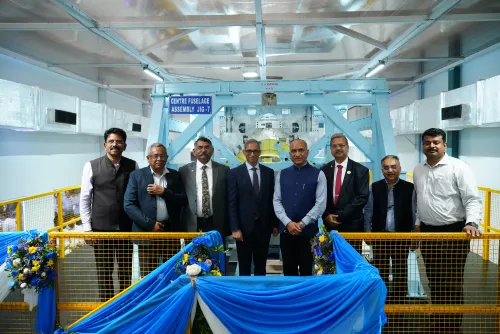
In May 2025, VEM Technologies in Hyderabad delivered the first center fuselage assembly for the Tejas Mk1A to HAL, marking a significant achievement as it was the first major sub-assembly of the LCA produced by a private Indian firm.
Earlier, in March 2025, the Aeronautical Development Agency (ADA) successfully conducted a test launch of the indigenous ASTRA, a Beyond Visual Range Air-to-Air Missile (BVRAAM), from an LCA AF MK1 prototype. This test, executed on March 12, 2025, off the coast of Chandipur, Odisha, successfully demonstrated a direct hit on a flying target.
All subsystems performed flawlessly, meeting all mission parameters. The ASTRA missile, designed and developed by DRDO, can engage targets beyond 100km and features advanced guidance and navigation systems for enhanced accuracy. The missile has already been inducted into the Indian Air Force.
In the same month, the Defence Bio-Engineering & Electro Medical Laboratory (DEBEL), a Bengaluru-based lab under the DRDO, conducted successful high-altitude trials of the Indigenous On-Board Oxygen Generating System (OBOGS)-based Integrated Life Support System (ILSS) for the LCA Tejas aircraft.
The OBOGS-based ILSS is a state-of-the-art system designed to produce and manage breathable oxygen for pilots during flight, removing the need for conventional liquid oxygen cylinder systems.
The ILSS underwent extensive testing on the LCA-Prototype Vehicle-3 from HAL/ADA, meeting strict aeromedical standards across diverse flight conditions, including altitudes of up to 50,000 feet Above Mean Sea Level and high-G maneuvers.
Point of View
The commemoration of the 25th anniversary of the Tejas LCA's first flight is not just a celebration of technological achievement but also a testament to India's strategic vision for self-reliance in defense. This milestone reflects the collaborative efforts of various sectors and highlights the importance of indigenous capabilities in ensuring national security. As the nation moves forward, it is imperative to continue investing in and supporting such initiatives that bolster our defense preparedness.
NationPress
21 Sept 2026
Frequently Asked Questions
What is the significance of the Tejas LCA's first flight?
The first flight of the Tejas LCA marked the beginning of India's journey towards developing an indigenous light combat aircraft, emphasizing self-reliance in defense capabilities.
When did the Tejas LCA have its first flight?
The Tejas LCA had its inaugural flight on January 4, 2001.
Who was the pilot of the first flight of Tejas LCA?
The first flight was piloted by Wing Commander Rajiv Kothiyal.
What advancements have been made in the Tejas program?
Advancements include the development of variants like the Tejas Mk1A and the successful test flights of advanced missiles like ASTRA.
What role does HAL play in the Tejas program?
Hindustan Aeronautics Limited (HAL) is responsible for manufacturing the Tejas LCA and has secured significant orders for its variants.