HDFC Bank Chairman: CASA, NIM pressure from merger is temporary, recovery due in quarters
Synopsis
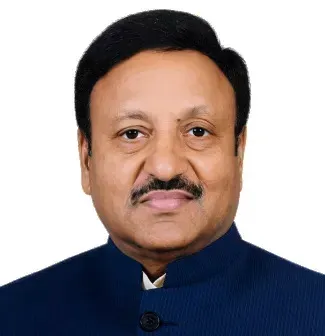
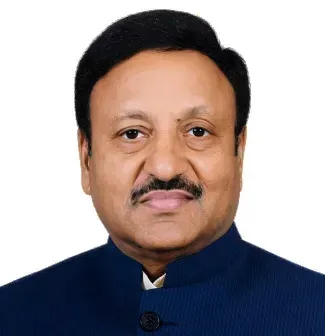
HDFC Bank's new part-time chairman Rajiv Kumar used his first AGM address to tackle the bank's two most-watched post-merger vulnerabilities — CASA ratios and NIMs — head-on, calling the pressure temporary and promising recovery within quarters. With a governance controversy still fresh after his predecessor's ethics-driven exit, Kumar's debut was as much about rebuilding institutional confidence as it was about balance sheet reassurance.
Key Takeaways
Rajiv Kumar addressed shareholders at HDFC Bank's 32nd AGM in Mumbai on Wednesday , his first as part-time chairman.
Kumar said pressure on CASA ratios and net interest margins (NIM) from the HDFC Limited merger is temporary and will improve in coming quarters.
Former chairman Atanu Chakraborty resigned in March citing ethics and values concerns; a subsequent independent legal review found no evidence supporting those concerns.
Kumar pledged future board appointments will be based strictly on merit, integrity, and professional competence .
Kumar did not address shareholder scrutiny over MD & CEO Sashidhar Jagdishan's reappointment for a third term during his opening remarks.
HDFC Bank's part-time chairman Rajiv Kumar on Wednesday assured shareholders that the structural pressure on the bank's current account savings account (CASA) ratio and net interest margins (NIM) — stemming from its merger with mortgage lender HDFC Limited — is temporary, and that both metrics are on course to recover over the coming quarters. Kumar made the remarks at the bank's 32nd Annual General Meeting (AGM) in Mumbai, his first as part-time chairman.
Key Assurances on Governance
Kumar opened his address with a strong reaffirmation of the bank's governance framework, signalling that internal controls and ethical standards remain intact. 'With a firm commitment to safeguard the trust that our shareholders, customers, and stakeholders have placed in us, the bank's ethos and internal control systems are strong. I assure you that this will be further strengthened and empowered,' he said.
His remarks carry particular weight given the context. They come months after the unexpected resignation of former part-time chairman Atanu Chakraborty in March, who cited differences over ethics and values that he said were not aligned with his personal beliefs. A subsequent independent legal review conducted by the bank found no evidence to support the ethical and governance concerns he had raised.
Merger's Impact on Balance Sheet
Kumar acknowledged that the integration of HDFC Limited into the bank had altered the composition of its balance sheet, placing downward pressure on both CASA ratios and NIMs — two metrics closely watched by analysts as indicators of a bank's funding cost efficiency and profitability.
'The merger has resulted in structural changes in our balance sheet, primarily in the CASA ratio and our NIMs. As we continue our progress on incremental deposit market share, and with stepped-up focus on the consumption side of the economy, we are confident of improving these metrics in a few quarters,' Kumar said.
The bank's strategy to address this involves strengthening its deposit franchise and expanding consumption-led lending — a deliberate pivot toward retail credit growth that analysts have been tracking since the merger closed.
Board Appointments to Be Merit-Driven
Kumar also signalled a clear direction on future board composition, stating that new directors would be inducted strictly on the basis of merit, integrity, and professional competence. 'It would be difficult to find that kind of excellence, but we will induct new directors who are best in class, strictly with the sole consideration of merit, integrity, and professional excellence,' he said.
Notably, Kumar did not address the heightened shareholder scrutiny around the reappointment of Managing Director and Chief Executive Officer Sashidhar Jagdishan for a third term — a matter that has drawn attention from both investors and regulators in recent months.
What to Watch
The bank's ability to rebuild CASA ratios and restore NIM levels will be a key performance indicator in the quarters ahead. Investors and analysts will be watching deposit growth trends and the pace of retail loan expansion as early signals of whether the post-merger normalisation is on track. The next set of quarterly results will be the first concrete test of Kumar's assurances.
Point of View
Business metrics second, and silence on the Jagdishan reappointment controversy. That last omission is telling. Shareholder and regulatory unease over a third CEO term is not a peripheral issue, and leaving it unaddressed at the AGM risks being read as avoidance rather than confidence. On the CASA-NIM front, the 'temporary' framing is reasonable given the mechanics of a large mortgage-book merger, but the bank has been saying 'a few quarters' for several reporting cycles now. The credibility of that assurance will be tested by the numbers, not the rhetoric.
NationPress
20 Sept 2026
Frequently Asked Questions
Why are HDFC Bank's CASA ratio and NIM under pressure?
The pressure stems from HDFC Bank's merger with HDFC Limited, which altered the composition of the bank's balance sheet. The integration brought in a large mortgage book that is structurally less CASA-friendly and compresses net interest margins compared to traditional retail banking assets.
When does HDFC Bank expect CASA and NIM to recover?
Chairman Rajiv Kumar said at the 32nd AGM that the bank is confident of improving both metrics 'in a few quarters,' contingent on growing its deposit franchise and expanding consumption-led lending.
Why did HDFC Bank's previous chairman resign?
Former part-time chairman Atanu Chakraborty resigned in March, citing differences over ethics and values that he said were not aligned with his personal beliefs. An independent legal review subsequently found no evidence to support the ethical and governance concerns he raised.
What did HDFC Bank's chairman say about future board appointments?
Rajiv Kumar stated that new directors will be inducted strictly on the basis of merit, integrity, and professional excellence, signalling a merit-first approach to board composition going forward.
Did the AGM address the controversy over CEO Sashidhar Jagdishan's reappointment?
No. Despite heightened shareholder and regulatory scrutiny over Managing Director and CEO Sashidhar Jagdishan's reappointment for a third term, Chairman Rajiv Kumar did not address the matter in his opening remarks at the AGM.