Hyundai Motor wage deal reached after 60-hour strikes, union vote set Aug 31
Synopsis
After 60 hours of strikes that wiped out an estimated 55,200 vehicles and over 2.3 trillion won in sales, Hyundai Motor and its union have tentatively agreed on wages — and, strikingly, on welcoming humanoid robots to the factory floor. The union vote on 31 August will determine whether South Korea's largest automaker can finally close the books on its most disruptive labour year in a decade.
Key Takeaways
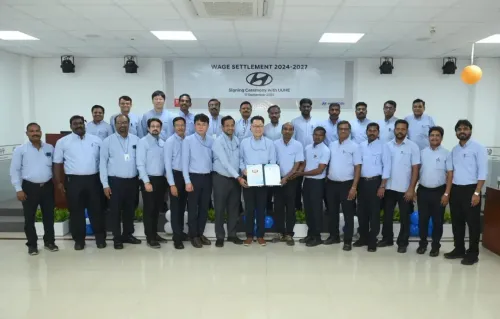
Hyundai Motor and its labour union tentatively reached a wage deal on 25 August at the 17th round of talks .
Monthly base pay will rise by 100,000 won (US$72.20) , with a performance bonus above 400% of monthly salary and an additional payment of 12.5 million won .
The 400,000-member union staged 60 hours of strikes , causing losses of approximately 55,200 vehicles and over 2.3 trillion won in sales.
The union's full-day walkout on Friday was its first such complete stoppage in 10 years .
Both sides agreed on sharing information about new technologies including physical AI and robotics , as Hyundai plans humanoid robot deployment at its Georgia plant from 2028 .
The deal requires ratification in a union vote on 31 August to take effect.
Hyundai Motor and its labour union tentatively reached a wage agreement on Tuesday, 25 August following a bruising round of industrial action that disrupted production lines at South Korea's largest automaker. The deal, struck at the 17th round of talks, now awaits ratification by union members in a vote scheduled for 31 August.
Key Terms of the Agreement
Under the tentative deal, Hyundai Motor will raise monthly base pay by 100,000 won (approximately US$72.20). Workers will also receive a performance bonus exceeding 400 percent of monthly salary, along with a one-time additional payment of 12.5 million won. The two sides further agreed to extend the retirement age from the current 60 to 65, contingent on revisions to relevant laws and regulations.
Strike Fallout: 55,200 Vehicles Lost
The agreement follows a sustained campaign of industrial action by the 400,000-member union, which staged a combined 60 hours of strikes this year, generating roughly 120 hours of production disruptions across two shifts. The labour action included a full-day walkout on Friday — the union's first such complete work stoppage in 10 years. According to industry sources, cumulative production losses are estimated at around 55,200 vehicles, with lost sales exceeding 2.3 trillion won.
AI and Robotics: A Shared Vision
Beyond wages, both sides acknowledged that the adoption of advanced technologies — including physical artificial intelligence (AI) and robotics — is essential to the company's future competitiveness. Hyundai Motor said the two parties 'agreed to transparently share information on new projects and their implementation processes, and jointly respond to future changes in the industry.' This signals a notable shift in the traditionally adversarial relationship between management and labour at the automaker.
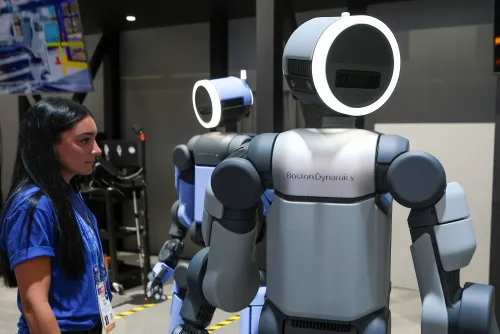
Notably, Hyundai Motor — which owns Boston Dynamics, the developer of the Atlas humanoid robot — plans to deploy humanoid robots at its US manufacturing plant in Georgia starting in 2028, with a phased rollout across other production facilities thereafter. The labour union's explicit buy-in on this front could smooth what is often a fraught negotiation over automation and job security.
What Happens Next
The tentative agreement must clear a union membership vote on 31 August to be formalised. If ratified, it will conclude this year's wage negotiations at Hyundai Motor. A rejection would likely send the two sides back to the table and risk further production disruptions at a time when the automaker is already counting the cost of a 2.3 trillion won revenue shortfall.
Point of View
And it almost certainly did not come free: the generous bonus structure and retirement-age extension look like the price management paid for automation buy-in. Whether this template holds as Boston Dynamics' Atlas robots begin displacing tasks in Georgia and beyond will be the defining labour question for Hyundai — and for South Korean manufacturing — through the rest of this decade.
NationPress
25 Aug 2026
Frequently Asked Questions
What did Hyundai Motor and its union agree on?
The two sides tentatively agreed to raise monthly base pay by 100,000 won, provide a performance bonus exceeding 400 percent of monthly salary, and pay an additional 12.5 million won. They also agreed to extend the retirement age from 60 to 65, subject to legislative changes.
How much did the Hyundai strikes cost the company?
According to industry sources, the strikes resulted in cumulative production losses of around 55,200 vehicles, with lost sales exceeding 2.3 trillion won. The union staged a combined 60 hours of industrial action, causing approximately 120 hours of disruption across two production shifts.
When will the union vote on the wage agreement?
A ratification vote by union members is scheduled for 31 August. If approved, it will formally conclude this year's wage negotiations at Hyundai Motor.
What role does robotics play in the Hyundai labour deal?
Both management and the union acknowledged that physical AI and robotics are essential to the company's future. Hyundai Motor, which owns Boston Dynamics, plans to deploy humanoid robots at its US plant in Georgia from 2028, and the two sides agreed to share information transparently on new technology projects.
Was this the first major strike by Hyundai's union in recent years?
The union's full-day walkout on Friday was its first complete work stoppage in 10 years, making this year's labour action particularly significant. The 400,000-member union had not staged a full-day strike since 2015.