IIP 2022–23 series launches June 1: 1,042 products, new sub-indices
Synopsis
India's industrial output benchmark gets its first base-year overhaul in over a decade. The new IIP 2022–23 series, launching 1 June 2026, expands the item basket to 1,042 products, introduces separate renewable energy tracking, and splits mining into three sub-indices — a structural upgrade that could meaningfully shift how India reads its own industrial pulse.
Key Takeaways
The new IIP 2022–23 series launches officially on 1 June 2026 , replacing the 2011–12 base year series.
The revised item basket covers 1,042 products across 463 item groups , aligned with NIC-2025 .
First release will include index values from April 2023 onwards, plus Quick Estimates for April 2026 .
New sub-indices introduced for renewable vs non-renewable electricity and three mining categories: Fuel, Metallic, and Non-Metallic Minerals .
The Geometric Mean method will be used to link the old and new series at General Index and Sectoral Index levels.
The Ministry of Statistics and Programme Implementation on Monday, 25 May released the full report of the Technical Advisory Committee on Base Year Revision of the All-India Index of Industrial Production (TAC-IIP), ahead of the official launch of the new IIP 2022–23 series on 1 June 2026. The report is intended to help data users understand and transition to the revised framework before the first figures go live.
What the New Series Covers
The first release under the new series will present index values from April 2023 onwards, including Quick Estimates for April 2026. Alongside the All-India General Index, the release will carry sector-wise indices for Mining and Quarrying, Manufacturing, Electricity and Gas Supply, and Water Supply, Sewerage and Waste Management.
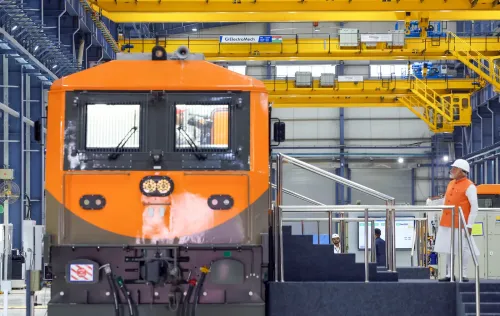
Manufacturing sector indices will be available at the 2-digit level of NIC-2025, along with indices based on Use-based Classification and a linking factor.
Revised Item Basket and Weights
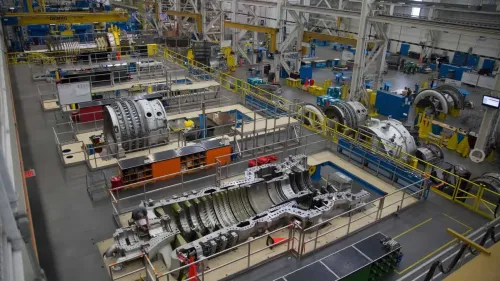
The ministry stated that the item basket has been comprehensively overhauled — outdated commodities removed and relevant ones added — to ensure each sector carries appropriate weight. The revised basket now comprises 1,042 products mapped to 463 item groups. The updated series is aligned with the National Industrial Classification (NIC-2025).
New Sub-Indices and Greater Granularity
A notable feature of the new series is its finer disaggregation. Electricity generation will now be tracked separately for renewable and non-renewable sources. The Mining and Quarrying sector is split into three sub-indices: Fuel Minerals, Metallic Minerals (including Rare Earth Minerals), and Non-Metallic Minerals (including Minor Minerals).
Methodological Enhancements
The new series introduces structural improvements to index compilation. Factories that have permanently closed or significantly altered their production lines will be substituted with comparable units. The panel of reporting factories will also be augmented by incorporating newly commissioned large-scale factories that begin producing relevant items during the currency of the series.
For linking the outgoing 2011–12 series with the new 2022–23 series, the Geometric Mean method will be used. Linking factors will be computed at aggregated levels — the General Index and the Sectoral Indices — according to the ministry.
What Comes Next
With the TAC-IIP report now public, stakeholders including industry bodies, researchers, and policymakers have a window before 1 June 2026 to familiarise themselves with the revised methodology. The transition to a more granular, NIC-2025-aligned framework is expected to improve the accuracy of industrial output measurement across India's evolving economic landscape.
Point of View
The formalisation of rare earth mining, and a wholesale shift in manufacturing composition. The overdue revision to 2022–23 is welcome, but the real test is whether the expanded 1,042-product basket and the new sub-indices translate into data that policymakers actually use to calibrate industrial policy. Notably, the introduction of renewable versus non-renewable electricity sub-indices arrives just as India races toward its 2030 clean energy targets — making the timing more consequential than a routine statistical update.
NationPress
10 Oct 2026
Frequently Asked Questions
What is the IIP 2022–23 series and when does it launch?
The IIP 2022–23 series is a revised version of India's Index of Industrial Production, updated to a new base year of 2022–23 from the earlier 2011–12 base. It launches officially on 1 June 2026, when the Ministry of Statistics and Programme Implementation will publish the first set of index values covering April 2023 onwards.
Why has the IIP base year been revised?
The base year revision ensures the index reflects the current structure of India's industrial economy. The updated basket removes outdated commodities, adds relevant new ones, aligns with the National Industrial Classification (NIC-2025), and introduces finer sub-indices — improvements that were overdue given the significant changes in India's industrial composition since 2011–12.
What is the TAC-IIP report released by the government?
The TAC-IIP report is the detailed findings of the Technical Advisory Committee on Base Year Revision of the All-India Index of Industrial Production. Released on 25 May 2026, it explains the methodology, revised item basket, new sub-indices, and linking approach for the 2022–23 series, giving users time to understand the changes before the 1 June launch.
Which new sub-indices are being introduced in the revised IIP?
The new series introduces separate sub-indices for electricity generated from renewable and non-renewable sources. The Mining and Quarrying sector is also split into three sub-indices covering Fuel Minerals, Metallic Minerals (including Rare Earth Minerals), and Non-Metallic Minerals (including Minor Minerals).
How will the old and new IIP series be linked?
The 2011–12 series will be linked to the new 2022–23 series using the Geometric Mean method. Linking factors will be computed at the level of the General Index and the Sectoral Indices, according to the Ministry of Statistics and Programme Implementation.