India-Brazil bilateral trade target: $30 billion by 2030 in focus
Synopsis
India and Brazil have set a bold $30 billion trade target for 2030 — nearly double the current $15.07 billion — with Brasilia talks advancing deals on pharma market access, MERCOSUR modernisation, and a new ApexBrasil office in New Delhi. The meeting signals a strategic economic pivot that goes well beyond routine diplomacy.
Key Takeaways
India and Brazil have reaffirmed a $30 billion bilateral trade target by 2030 , up from $15.07 billion in 2025-26 .
The 8th India-Brazil Trade Monitoring Mechanism (TMM) meeting was held in Brasilia on 31 August , co-chaired by Commerce Secretary Rajesh Agrawal .
India-MERCOSUR bilateral trade stood at $20.84 billion in 2025 ; both sides committed to early finalisation of the Terms of Reference.
Significant progress was reported on Indian pharmaceutical market access in Brazil, with India pushing for more predictable regulatory pathways.
An ApexBrasil office in New Delhi was welcomed as a step to boost Brazilian investment in India.
The Indian business delegation included representatives from Kirloskar Group , UPL , and Aditya Birla Group , among over 25 firms .
India and Brazil have reaffirmed their commitment to scaling bilateral trade to $30 billion by 2030, with both sides pledging a more diversified and balanced economic partnership spanning pharmaceuticals, chemicals, engineering goods, and machinery, according to an official statement released on Monday, 31 August. The pledge came at the 8th meeting of the India-Brazil Trade Monitoring Mechanism (TMM) held in Brasilia.
Key Developments at the Brasilia Meeting
The TMM session was co-chaired by Commerce Secretary Rajesh Agrawal on the Indian side and Tatiana Lacerda Prazeres, Secretary of Foreign Trade at Brazil's Ministry of Development, Industry, Commerce and Services (MDIC). Agrawal also held a separate bilateral meeting with MDIC Minister Marcio Elias Rosa to discuss deepening trade and investment ties and expanding economic cooperation in priority sectors.
Bilateral trade between the two countries has shown consistent upward momentum, reaching $15.07 billion in 2025-26 — roughly half the 2030 target, indicating the scale of ambition both governments are working toward.
India-MERCOSUR Trade Agreement in Focus
Both sides reviewed progress on the India-MERCOSUR Terms of Reference, with total India-MERCOSUR bilateral trade reaching $20.84 billion in 2025. The existing India-MERCOSUR Preferential Trade Agreement was acknowledged as offering considerable scope for expansion and modernisation. Both delegations committed to the early finalisation of the Terms of Reference, signalling intent to accelerate the broader regional trade architecture.
Pharmaceuticals, Agriculture and Market Access
Significant progress was reported in facilitating market access for Indian pharmaceutical products in Brazil. India specifically emphasised the need for more predictable regulatory pathways to ease entry for its drug manufacturers — a sector where Indian firms hold a globally competitive position.
On the agriculture front, discussions advanced work on priority phytosanitary requests for key products, with both sides laying out a time-bound agenda for reciprocal market access concessions. This is a critical area given Brazil's status as one of the world's largest agricultural producers and India's interest in expanding food and agri-exports.
Business Engagement and Institutional Ties
An India-Brazil high-level business reception was organised alongside the official talks, drawing participation from leading industry representatives of both nations. The Indian business delegation, led by Commerce Secretary Agrawal, comprised over 25 Indian businesses, including representatives from Kirloskar Group, UPL, and Aditya Birla Group, among others.
Both sides also welcomed the establishment of an ApexBrasil office in New Delhi, a move expected to strengthen business-to-business linkages and facilitate greater Brazilian investment flows into India. Both governments reaffirmed close coordination on multilateral platforms including BRICS, the G20, and the WTO, in support of an open, inclusive, and development-oriented global trade system.
Political Momentum Behind the Partnership
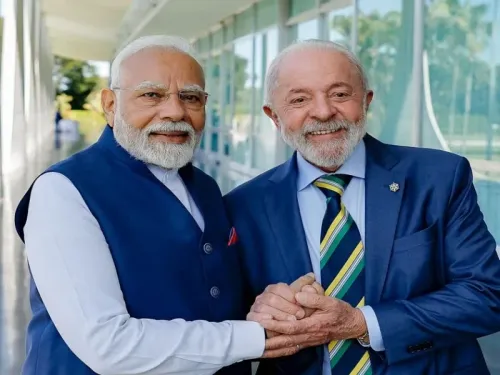
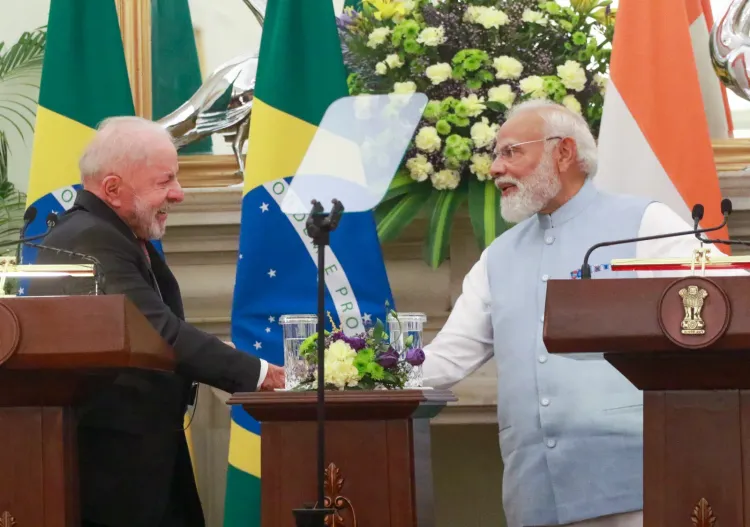
The meeting drew on the strong political momentum generated by Prime Minister Narendra Modi and Brazilian President Luiz Inacio Lula Da Silva, reflecting the institutional depth of the India-Brazil Strategic Partnership. With the 2030 trade target now firmly on the bilateral agenda, the next phase will test whether regulatory, agricultural, and investment frameworks can be aligned fast enough to close the gap from current levels.
Point of View
And the MERCOSUR framework provides a structural runway. The real bottleneck is regulatory friction: India's pharmaceutical firms have long flagged Brazil's approval pathways as unpredictable, and without a concrete fix, headline targets risk outpacing actual market access. The ApexBrasil office in New Delhi is a meaningful institutional signal, but investment flows will be the real test. Notably, both nations are leveraging their BRICS and G20 presence to frame this as part of a broader South-South trade realignment — a geopolitical dimension that mainstream trade coverage tends to underplay.
NationPress
31 Aug 2026
Frequently Asked Questions
What is the India-Brazil bilateral trade target for 2030?
India and Brazil have reaffirmed a target of $30 billion in bilateral trade by 2030, up from $15.07 billion recorded in 2025-26. The target was reaffirmed at the 8th India-Brazil Trade Monitoring Mechanism meeting in Brasilia on 31 August.
What is the India-MERCOSUR Preferential Trade Agreement?
The India-MERCOSUR Preferential Trade Agreement is an existing trade pact between India and the South American trade bloc MERCOSUR, which includes Brazil, Argentina, Uruguay, and Paraguay. Both sides have committed to expanding and modernising it, with India-MERCOSUR bilateral trade reaching $20.84 billion in 2025.
Which Indian companies participated in the Brasilia trade meeting?
The Indian business delegation comprised over 25 firms, including representatives from Kirloskar Group, UPL, and Aditya Birla Group. The delegation was led by Commerce Secretary Rajesh Agrawal.
What progress was made on Indian pharmaceutical exports to Brazil?
Both sides reported significant progress on facilitating market access for Indian pharmaceutical products in Brazil. India specifically pushed for more predictable regulatory pathways, a long-standing concern for Indian drug manufacturers seeking entry into the Brazilian market.
What is the ApexBrasil office in New Delhi?
ApexBrasil is Brazil's trade and investment promotion agency. The establishment of its office in New Delhi is intended to strengthen business-to-business linkages between the two countries and encourage greater Brazilian investment flows into India.