India holds 40% of global rice exports, anchoring world food security
Synopsis
India controls 40% of global rice exports — more than the next three largest exporters combined — yet its road-heavy logistics network remains a structural cost disadvantage against waterway-reliant rivals Thailand and Vietnam. With buffer stocks at 5.5–6 crore tonnes and an AI-driven market intelligence platform entering the sector, India is simultaneously the world's rice lifeline and a country with unfinished work on supply-chain efficiency.
Key Takeaways
India holds approximately 40 per cent of global rice exports, more than the combined share of the second, third, and fourth largest exporters.
India's rice buffer stock stands at 5.5 to 6 crore tonnes through the Food Corporation of India (FCI) , keeping domestic food security stable.
Geopolitical tensions in the Strait of Hormuz and the Red Sea have raised shipping times, insurance costs, and freight charges for Indian exporters.
Unlike rivals Thailand and Vietnam , India relies predominantly on road transport, pushing logistics costs higher.
Agriguru Online has launched what it describes as the world's first AI-based market intelligence platform for real-time rice trade data.
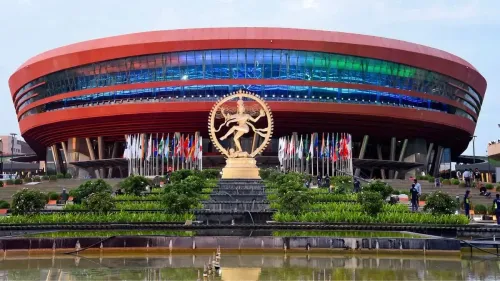
Industry leaders, exporters, and policymakers convened at the Bharat International Rice Conference 2026 in New Delhi on 25 October 2026 .
India commands approximately 40 per cent of global rice exports, making it the undisputed leader in international rice trade and an increasingly critical pillar of world food security, according to industry leaders, exporters, and agricultural experts gathered at the Bharat International Rice Conference 2026 in New Delhi on 25 October 2026.
India's Commanding Market Position
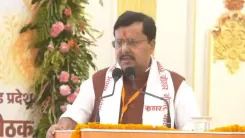
Tarun Bajaj, General Manager, Agricultural and Processed Food Products Export Development Authority (APEDA) under the Ministry of Commerce, said India's dominance in rice exports is unmatched. 'India holds about 40 per cent share in global rice exports and is the undisputed leader. It is important to have such a platform in India where people from the entire value chain — from farmer to consumer — can sit together and discuss challenges and solutions,' he said on the sidelines of the conference.
Dr. Rajiv Kumar, Executive Director of the Rice Exporters Association, reinforced this, noting that the combined share of the second, third, and fourth largest rice exporters globally is still less than India's alone. He added that government support has helped India sustain a 35–40 per cent global market share for several consecutive years.
Logistics: The Biggest Bottleneck
Despite its market strength, experts flagged logistics as the single largest challenge. Bajaj cited geopolitical tensions in the Strait of Hormuz and the Red Sea as factors that have disrupted vessel movement, lengthened shipping timelines, inflated insurance premiums, and pushed up freight charges. He said joint efforts by the central government, state governments, and industry have helped keep export flows relatively smooth despite these pressures.
Dr. Kumar added a structural dimension: while competitors such as Thailand and Vietnam rely predominantly on waterways for transport, India depends more heavily on road networks, which structurally raises its logistics costs. He suggested India focus on cultivating varieties with stronger international demand to command better pricing and offset the cost disadvantage.
Food Security and Buffer Stocks
Rajesh Paharia Jain, Chief Manager at KRIBHCO Agri, said that despite weather-related disruptions and a possible dip in crop output this season, India's food security position remains stable. 'Despite weather-related challenges and possible dip in crop output, the country has adequate buffer stock of about 5.5 to 6 crore tonnes through Food Corporation of India (FCI), so the situation remains secure,' he said. Bajaj also noted that India, as a responsible exporter, is carefully balancing its domestic requirements while supporting the food security needs of importing nations.
Technology and Industry Ecosystem
Hansa Singh Rakya, Founder of Agriguru Online, said her company has built what she described as the world's first AI-based market intelligence platform for the rice sector, offering real-time data on prices, freight costs, trade regulations, and global developments — a tool she said is particularly valuable amid shifting geopolitical landscapes and evolving trade policies.
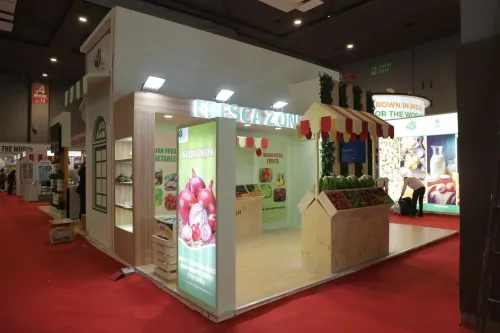
The event drew participation from across the value chain, including bag manufacturers, surveyors, custom house agents, farmers, exporters, testing laboratories, and research institutions. Prashant Raizada, Partner at EY (Ernst & Young LLP), described the conference as 'the biggest and most impactful event for the rice sector so far.' Dr. Pankaj Jaimini, Managing Director of Eurofins Analytical Services India, said the conference successfully brought the full industry ecosystem together to address future challenges. Purvi Shah, Head of SGS Food Testing Services, noted that such forums help streamline global trade by aligning exporters with evolving international quality and regulatory requirements, potentially reducing customs and quality-related rejections.
With geopolitical pressures on shipping lanes showing no immediate sign of easing, how India manages its logistics transformation in the coming years could be as decisive for global rice supply as the volumes it exports.
Point of View
But that approach has fiscal limits. The structural logistics gap versus Thailand and Vietnam is not new, yet investment in inland waterways and port-side cold-chain infrastructure has lagged behind the export volumes India ships. The Bharat International Rice Conference is a useful convening platform, but the real test is whether it produces actionable policy — particularly on freight-cost reduction and variety-development incentives — rather than another year of consensus-building. As Red Sea disruptions persist and importers diversify sourcing to hedge against Indian export policy swings, the window to lock in long-term market leadership is narrower than the headline share suggests.
NationPress
24 Oct 2026
Frequently Asked Questions
What share of global rice exports does India hold?
India holds approximately 40 per cent of global rice exports, making it the world's single largest rice exporter. The combined share of the second, third, and fourth largest exporters is still less than India's alone, according to the Rice Exporters Association.
How secure is India's domestic rice supply amid export pressures?
India's domestic food security position is currently stable, with buffer stocks of approximately 5.5 to 6 crore tonnes held through the Food Corporation of India (FCI). This provides a significant cushion even against weather-related crop shortfalls.
Why is logistics considered the biggest challenge for Indian rice exports?
Geopolitical tensions in the Strait of Hormuz and the Red Sea have disrupted shipping lanes, raised insurance costs, and increased freight charges. Additionally, India's heavier reliance on road transport — compared to competitors Thailand and Vietnam, which use cheaper waterways — structurally raises its export logistics costs.
What is the Bharat International Rice Conference 2026?
The Bharat International Rice Conference 2026 is an industry event held in New Delhi that brings together the entire rice value chain — from farmers and exporters to testing laboratories, policymakers, and research institutions. APEDA's Tarun Bajaj described it as one of the world's largest rice-focused events.
How is technology being used to support India's rice trade?
Agriguru Online, founded by Hansa Singh Rakya, has developed what it claims is the world's first AI-based market intelligence platform for the rice sector. The platform provides real-time data on prices, freight costs, trade rules, and global market developments to buyers and sellers simultaneously.