India's forex reserves rise $2.49 billion to $719.5 billion; gold holdings hit $104.8 billion
Synopsis
India's forex reserves snapped a multi-week losing streak, climbing $2.49 billion to $719.5 billion — with gold doing the heavy lifting at $2.205 billion of the gain. At $104.8 billion, gold now forms nearly 15% of total reserves, reflecting the RBI's sustained bullion strategy even as reserves remain $66 billion below their all-time high.
Key Takeaways
India's forex reserves rose $2.49 billion to $719.547 billion in the week ended 6 November 2026 , snapping a run of consecutive weekly declines.
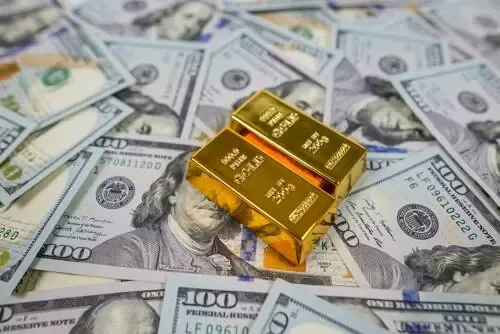
Gold holdings surged $2.205 billion to $104.796 billion , driving most of the weekly gain.
Foreign currency assets increased $232 million to $591.350 billion .
Reserves remain approximately $66 billion below the all-time high of $785.7 billion recorded in the week ended 4 September .
Despite the dollar-denominated gain, rupee-term reserves fell ₹49,742 crore due to currency valuation effects.
The RBI also eased forex reporting norms for small service exporters, with the EDF requirement simplified for remittances up to ₹10 lakh .
India's foreign exchange reserves climbed $2.49 billion to $719.547 billion in the week ended 6 November 2026, according to data released by the Reserve Bank of India (RBI) on Friday. The rebound breaks a streak of consecutive weekly declines that had pulled reserves down from $722.3 billion in the week ended 17 October to $717.057 billion by 30 October.
Gold Holdings Drive the Rebound
The primary engine of the weekly increase was a sharp surge in gold holdings, which jumped $2.205 billion to reach $104.796 billion — now accounting for roughly 14.6% of total reserves. The outsized gold gain signals continued RBI preference for bullion as a hedge against currency and geopolitical risk, a trend the central bank has sustained over the past two years.
Foreign currency assets (FCAs), the single largest component of the reserve basket, also edged higher by $232 million to $591.350 billion. FCAs are expressed in US dollar terms but include holdings in multiple currencies — notably the euro, pound sterling, and Japanese yen — meaning exchange-rate movements among those currencies can amplify or compress the reported dollar figure independent of actual purchases or sales.
IMF-Related Components Also Firm
India's Special Drawing Rights (SDRs) with the International Monetary Fund (IMF) rose $52 million to $18.610 billion, while the country's reserve position with the IMF edged up $1 million to $4.791 billion. Though individually small, these movements reflect marginal shifts in India's multilateral financial standing.
The Rupee Paradox
In rupee terms, India's total foreign exchange reserves stood at ₹67,58,986 crore as of 6 November. Notably, the same week that saw a $2.49 billion dollar-denominated gain also recorded a ₹49,742 crore decline in rupee terms — a divergence that reflects the rupee's depreciation against the dollar over the period. This statistical quirk underscores how currency valuation effects can create contradictory headline readings across the two reporting units.
Context: Distance from the All-Time High
India's forex reserves previously touched an all-time high of $785.7 billion in the week ended 4 September, buoyed by significant foreign currency inflows through a special concessional swap scheme for diaspora deposits. Current reserves of $719.5 billion remain approximately $66 billion below that peak, reflecting subsequent RBI dollar sales to stabilise the rupee amid global headwinds.
RBI Eases Forex Reporting for Small Exporters
Separately, the RBI this month amended the Foreign Exchange Management (Export and Import of Goods and Services) Regulations, 2026, easing reporting requirements for small-scale service exporters. Under the revised rules, individual service exporters will be deemed to have submitted the Export Declaration Form (EDF) once they provide the requisite payment information to their authorised dealer bank. For non-individual exporters, the simplified treatment applies when the inward remittance does not exceed ₹10 lakh or its equivalent in foreign currency. The move is aimed at reducing compliance friction for smaller exporters of services, a segment that has grown rapidly with India's digital and gig economy.
With reserves stabilising and gold holdings at a fresh high, all eyes will be on the RBI's next reserve management moves amid a volatile global dollar environment.
Point of View
The RBI's bullion accumulation pace has quietly repositioned India's reserve composition toward hard assets, a hedge that makes sense in a world of dollar weaponisation but also carries mark-to-market risk if gold prices correct. The rupee-dollar divergence in reported reserve values is a reminder that headline dollar figures are partly an exchange-rate artefact — investors and policymakers should track both units to get an accurate picture of reserve adequacy.
NationPress
14 Nov 2026
Frequently Asked Questions
What are India's total forex reserves as of 6 November 2026?
India's total foreign exchange reserves stood at $719.547 billion as of 6 November 2026, an increase of $2.49 billion from the previous week, according to RBI data. In rupee terms, the reserves were equivalent to ₹67,58,986 crore.
Why did India's forex reserves increase this week?
The weekly rise was primarily driven by a $2.205 billion surge in gold holdings to $104.796 billion. Foreign currency assets also contributed, rising $232 million to $591.350 billion.
How far are India's reserves from their all-time high?
India's forex reserves hit an all-time high of $785.7 billion in the week ended 4 September 2026, boosted by diaspora deposit inflows under a special concessional swap scheme. Current reserves of $719.5 billion are roughly $66 billion below that peak.
Why did rupee-term reserves fall even as dollar reserves rose?
The divergence is a currency valuation effect — the rupee depreciated against the dollar during the same week, causing the same pool of assets to be worth fewer rupees even as the dollar-denominated value rose. The rupee-term figure fell by ₹49,742 crore.
What changes has the RBI made to forex reporting for small exporters?
Under the amended Foreign Exchange Management (Export and Import of Goods and Services) Regulations, 2026, individual service exporters are now deemed to have filed the Export Declaration Form once they submit payment information to their authorised dealer bank. For non-individual exporters, the simplified rule applies if the inward remittance does not exceed ₹10 lakh or its foreign currency equivalent.